


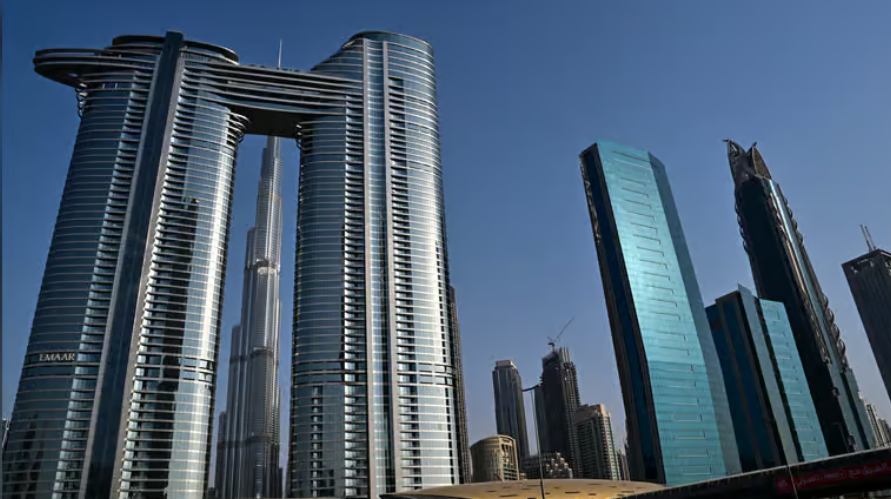
Web Desk: The United Arab Emirates was home to 59 billionaires with a combined fortune of $201 billion in 2025, keeping the country among the world’s 15 largest billionaire markets, according to a new report.
The findings, published in Altrata’s Billionaire Census 2026, showed that the UAE’s billionaire population fell 1.9% from the previous year. Despite the decline in numbers, the country’s ultra-wealthy residents held a combined $201 billion in assets.
The UAE ranked 14th globally for its billionaire population, behind Saudi Arabia, which counted 68 billionaires with total wealth of $175 billion.
The UAE’s 59 billionaires represented about 1.4% of the world’s 3,795 billionaires, while their combined wealth accounted for roughly 1.3% of the global billionaire fortune of $15.1 trillion.
Dubai continued to strengthen its position as a global wealth centre, ranking joint eighth worldwide for the number of billionaires, alongside Shenzhen.
The emirate was home to 43 billionaires in 2025, two more than a year earlier. It ranked behind New York, Hong Kong, San Francisco, London, Singapore, Los Angeles and Beijing.
According to Altrata, global business integration, technological growth and the movement of capital are reshaping where billionaires choose to live and operate.
Major international cities continue to draw wealthy individuals because they offer access to business networks, financial institutions and luxury services and infrastructure.
Dubai and Istanbul were among the emerging wealth centres highlighted in the report, reflecting the growing influence of Asian and other developing markets in the global billionaire landscape.
The UAE’s strong position comes as the Middle East recorded moderate growth in its billionaire population during 2025.
The region’s billionaire count increased 5% to 254 people. Altrata attributed the rise partly to efforts to diversify economies beyond oil and to large-scale sovereign infrastructure projects, particularly in the UAE and Saudi Arabia.
However, the region’s overall billionaire wealth moved in the opposite direction. Combined fortunes fell 4% to $700 billion during the year, with lower energy prices and weaker regional equity markets weighing on wealth levels.
Oil prices ended 2025 nearly 20% lower, marking their steepest annual decline since 2020, according to the report.
Worldwide, the billionaire population increased 8.2% in 2025 to a record 3,795 individuals, marking its fastest annual expansion in five years.
Their combined wealth rose 12.8% to $15.1 trillion.
The United States remained the world’s biggest billionaire market, with 1,265 billionaires, followed by China with 363 and Germany with 221. The 15 countries with the largest billionaire populations accounted for 83% of global billionaire wealth.
Artificial intelligence also played an increasingly important role in the creation of billionaire wealth.
Altrata said companies among the 150 publicly listed firms contributing most to billionaire fortunes that made significant investments in AI achieved 23% greater market-capitalisation growth than companies that did not make comparable investments during 2024 and 2025.
At the same time, wealth became increasingly concentrated among the world’s richest individuals.
The 29 billionaires whose fortunes exceeded $50 billion collectively controlled $4.1 trillion in 2025, equivalent to 27% of all billionaire wealth. Their share was just 7.2% in 2017.
The report noted that billionaire wealth is generally tied to ownership of companies rather than cash holdings. As a result, changes in stock prices and private-company valuations can quickly alter individual fortunes.
Around 73% of the average billionaire’s portfolio consisted of stakes in publicly listed or privately held companies, while liquid assets made up roughly one-quarter.
Meanwhile, the growing international mobility of wealthy individuals was also evident. About one in five billionaires worldwide was born in a country different from the one where they currently live and run their primary business.
The trend highlights the increasingly global and mobile nature of wealth, with financial centres such as Dubai continuing to attract high-net-worth individuals from around the world.
Read more: Pak suzuki axes two cultus variants