


High-level contacts have taken place between Pakistani and Iranian officials over the closure of the Pak-Iran border. The discussions were described as highly positive, raising the possibility that the border could reopen soon.
Reports of progress in the negotiations have brought relief to traders, while business communities associated with cross-border trade are awaiting the resumption of commercial activities.
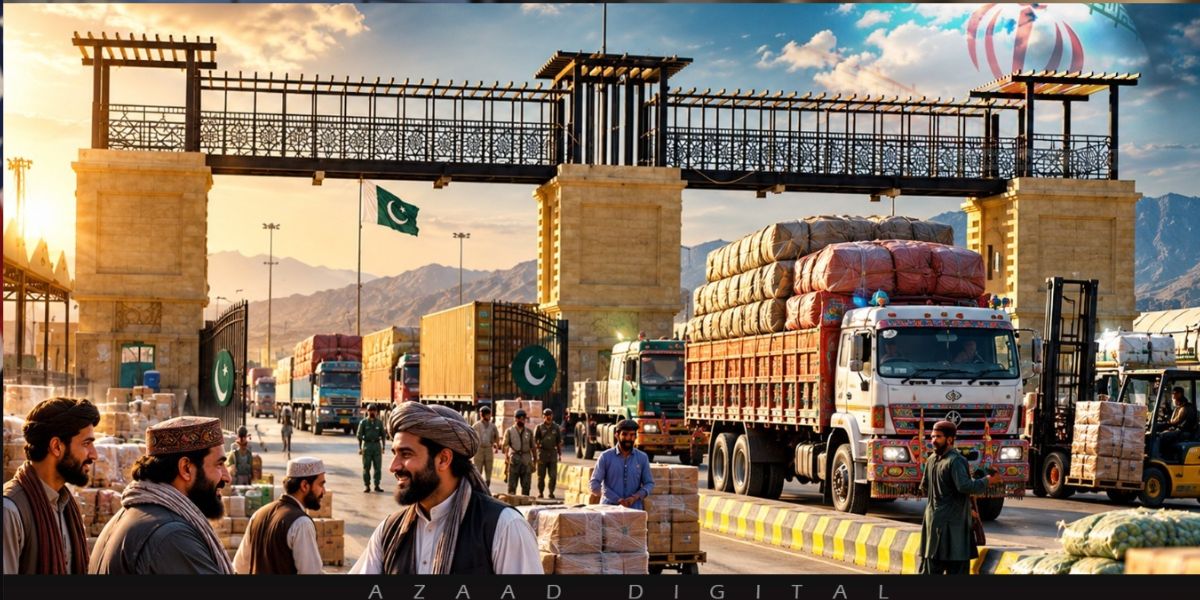
The Pakistan-Iran border stretches for a total of 909 kilometres, passing through various areas of Balochistan. It is important for trade, movement and economic ties between the two countries. Commercial goods are transported through various border crossings, including Taftan and Gabd-Rimdan. Pakistan imports various essential commodities from Iran through Taftan, while Pakistan also exports rice, fruit, meat and other products to Iran.
Pakistan-Iran border trade is also important for Balochistan’s economy and employment in border areas. Trade between the two countries supports the livelihoods of traders, transporters, customs-clearing agents and other business communities. Disruptions to commercial activities at border crossings can create difficulties in the transportation of goods and business operations.
Tensions between Iran and the United States, along with regional uncertainty, have also affected trade routes and the transportation of goods. However, according to available official information, LPG imports through the Gabd-Rimdan border crossing were continuing in June 2026. Therefore, it has not been confirmed that the entire Pakistan-Iran border was completely closed from a single date because of Iran-US tensions.
Recent contacts and positive talks between officials from the two countries have raised hopes for the resumption of cross-border trade. Traders expect the discussions to lead to progress towards reopening the border, allowing commercial activities to return to normal and improving business conditions.
Also Read: Pakistan, Iran aim for $10 billion trade target through long awaited FTA