
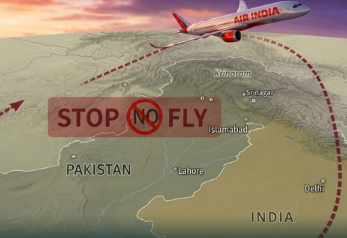
Web Desk: Indian airlines are facing mounting financial pressure after Pakistan’s continued airspace restrictions disrupted international flight operations, forcing carriers to take longer routes, consume more fuel and absorb rising operational costs.
The airspace closure, introduced following heightened tensions between Pakistan and India, has created major challenges for Indian aviation companies that rely on western flight corridors to connect passengers with destinations in Europe, North America and the Middle East.
The restrictions have increased expenses for airlines already struggling with global fuel price volatility and economic uncertainty.
Air India has pointed to the closure of Pakistan’s airspace as one of the factors behind its financial difficulties during the fiscal year ending March 31.
According to international aviation publication FlightGlobal, Air India suffered a loss of approximately $2.3 billion during the period, marking one of the airline’s worst financial performances.
The airline said restrictions on Pakistani air routes forced it to modify several international flight paths, increasing fuel consumption, aircraft operating costs and overall expenses.
The financial pressure came at a time when airlines were also dealing with higher fuel prices, inflationary pressures and instability in global markets.
The closure of Pakistan’s airspace has disrupted hundreds of Indian flights operating on international routes.
Aviation experts estimated that between 400 and 500 flights have been affected due to the restrictions, with airlines forced to adopt longer alternative routes.
The additional flying time has increased fuel requirements and placed pressure on airline schedules, aircraft availability and crew management.
Longer routes also reduce operational efficiency because aircraft spend more time in the air while completing fewer rotations, creating further financial challenges for carriers.
Fuel represents one of the largest expenses for commercial airlines, and extended flight paths have significantly increased fuel consumption for affected carriers.
Indian airlines have had to spend more on fuel and operations as they avoid Pakistani airspace and take alternative corridors.
The disruption has also affected passenger convenience, with some international flights experiencing longer travel times and schedule adjustments.
Meanwhile, rising energy prices linked to international conflicts have added another layer of pressure on airline finances.
India’s aviation industry has expanded rapidly in recent years, becoming one of the world’s fastest-growing markets. However, airlines continue to face challenges including high fuel costs, intense competition and infrastructure demands.
The prolonged airspace restrictions have created additional difficulties for carriers seeking to expand international operations and maintain profitability.
Geopolitical disputes can have a direct financial impact on aviation because airlines depend heavily on predictable and efficient air routes.
The aviation disruption highlights how political tensions can quickly reshape commercial travel networks.
Indian carriers operating long-haul routes have had to redesign flight schedules and adjust operations to manage the impact of restricted airspace access.
While airlines have developed temporary solutions, industry observers warn that prolonged restrictions could continue to increase costs and affect connectivity between South Asia and international markets.
The continued closure of Pakistan’s airspace has become a major operational challenge for Indian airlines, adding financial strain to an already pressured sector.
With billions of dollars in losses reported by major carriers and hundreds of flights affected, the disruption demonstrates the economic consequences of aviation restrictions in a politically sensitive region.
Restoring stable air connectivity remains crucial for reducing costs, improving efficiency and supporting the long-term growth of the aviation sector.
Read more: $3.6 billion and 8,000 jobs: How BTS became South Korea’s cultural currency