



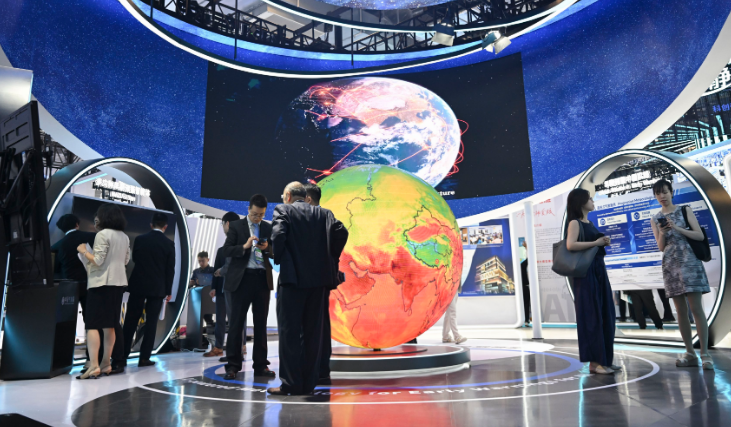
Web Desk: A Chinese artificial intelligence-powered weather warning platform Mazu AI is being deployed in seven developing countries to help governments improve disaster preparedness as extreme weather events become more frequent.
The system, known as Mazu, provides AI-driven forecasting and early warning services for threats including typhoons, heavy rainfall and other climate-related hazards. Chinese officials describe the platform as an international public service designed to support vulnerable countries facing growing weather risks.
Pan Jinjun, chief engineer at the China Meteorological Administration (CMA), said Mazu was developed as China’s response to the United Nations’ Early Warnings for All initiative, which seeks to ensure that communities worldwide have access to reliable extreme weather alerts.
The cloud-based version of the system has already been tested by 40 countries in the Global South, according to Chinese officials. Meanwhile, full operational versions have been installed in Pakistan, Djibouti, Ethiopia, Jordan, Mongolia, the Solomon Islands and Sri Lanka.
The platform’s name comes from Mazu, a Chinese sea goddess traditionally associated with protecting sailors. Officials said the system was designed from the beginning for international use and was first introduced at the World Artificial Intelligence Conference in Shanghai.
According to the CMA, the deployed versions of Mazu are tailored to meet the needs of individual countries, including weather monitoring, forecasting, emergency alerts and public information services.
At the 2026 World AI Conference and High-Level Meeting on Global AI Governance in Shanghai, Chinese meteorological authorities are set to introduce an upgraded “Djibouti 2.0” version of the system.
The enhanced package includes a meteorological chip equipped with short-term forecasting technology and AI prediction models, allowing more independent monitoring of severe weather and faster warnings before disasters occur.
The CMA said artificial intelligence is increasingly being used to shift weather services from traditional forecasting toward impact-based warnings that help communities prepare for potential damage.
Chen Zhenlin, head of the China Meteorological Administration, said climate change represented a shared challenge and emphasized that early warning systems were among the most effective tools for reducing disaster losses and protecting lives and property.
The Chinese meteorological sector said it plans to further improve Mazu by allowing more flexible customisation for different users and regions.
As discussions on global AI governance take center stage at the Shanghai conference, Chinese officials said AI-based meteorological technologies would continue to be developed and shared with countries facing rising climate and disaster risks.
Read more: Govt launches policy to turn $450 billion Gemstone treasure into foreign exchange earner