


Web Desk: The United States launched a ninth consecutive night of military strikes against Iran, intensifying its campaign to weaken Tehran’s ability to threaten commercial shipping through the Strait of Hormuz, as both sides exchanged fresh attacks and regional tensions deepened.
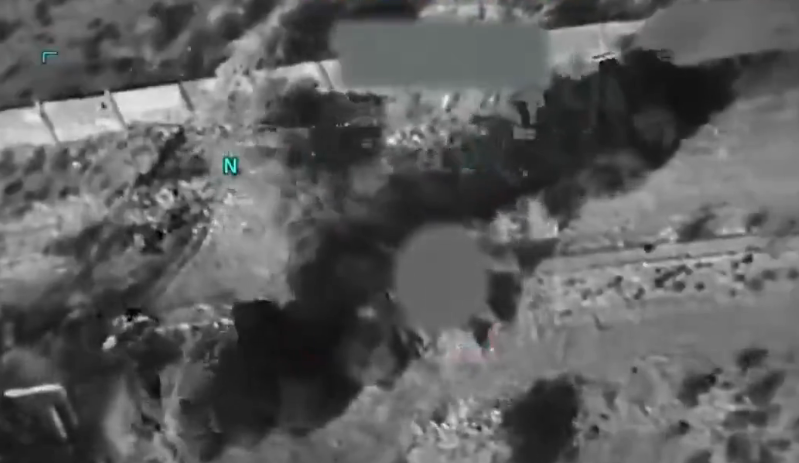
The US Central Command (CENTCOM) said the latest operation began around 10 pm ET on Sunday and lasted approximately three hours, targeting Iranian military command centers, air defense systems, coastal surveillance facilities, maritime assets, and missile and drone launch sites.
The military said the strikes were intended to further degrade Iran’s capacity to target commercial vessels and civilian shipping transiting one of the world’s most strategically important waterways.
President Donald Trump said the latest attacks struck Iran “very hard” and described the operation as being carried out in honor of three US service members killed in recent days, including two in Jordan and one in Iraq.
The Pentagon said the latest fatality raised the number of US military personnel killed since the conflict began nearly five months ago to 17. Officials also confirmed they had recovered unidentified remains in Jordan after another service member had previously been listed as missing.
Meanwhile, Iranian authorities said renewed US airstrikes this month had killed at least 50 people and wounded more than 500.
The Strait of Hormuz, which carried roughly one-fifth of global oil shipments before hostilities erupted on Feb. 28, has emerged as the focal point of the conflict.
Oil markets reacted sharply to the latest escalation. Brent crude futures climbed nearly 3% to around $90.70 per barrel, while US West Texas Intermediate crude gained about 2.5% to approximately $84.60.
Maritime intelligence firm Kpler reported that shipping traffic through the waterway had fallen to its lowest level in three weeks, with only eight vessel transits recorded on Thursday compared with 15 the previous day.
However, US Energy Secretary Chris Wright disputed reports that maritime traffic had largely stopped. Speaking to ABC News on Sunday, he said roughly two-thirds of normal shipping volumes about 14 million barrels of oil per day continued to move through the strait.
Iran’s Islamic Revolutionary Guard Corps (IRGC) claimed two oil tankers exploded while attempting to travel through what it described as an unsafe southern shipping corridor backed by the United States and Oman.
The IRGC maintained that only routes designated by Iranian authorities were considered safe and warned that the Strait of Hormuz would remain insecure for oil and petrochemical shipments as long as US military operations continued. It also vowed further retaliatory action.
CENTCOM disputed Iran’s account of the reported tanker incidents.
Iran said it had launched what it called a “surprise attack” in Syria and targeted US aircraft operating from Jordan’s Aqaba airport.
Elsewhere, Kuwait’s armed forces said air defense units intercepted Iranian drones, while the US Embassy in Bahrain warned of possible threats against unspecified locations in the capital, Manama. Authorities activated warning sirens and advised residents to seek shelter.
Iranian media also reported strikes in several cities, including Tabriz, Chabahar, Konarak, Bandar Mahshahr and Bandar Imam Khomeini.
The latest escalation comes after a memorandum of understanding reached in June effectively collapsed, with both Washington and Tehran accusing each other of violating its terms.
Michael Feller, chief strategist at Geopolitical Strategy, said the agreement failed to establish clear mechanisms for investigating violations or determining how alleged breaches would affect broader commitments, allowing disputes over compliance to escalate rapidly.
US Secretary of State Marco Rubio said Washington remained open to diplomacy despite the intensifying conflict.
“The world has to decide whether or not it’s going to allow an international waterway to be under the control” of Iran, Rubio said, arguing that Tehran was using the Strait of Hormuz as strategic leverage.
Negotiations toward a lasting ceasefire have made little progress since Trump declared the June understanding “over” earlier this month, raising fears that the conflict could widen further across the Gulf region.
Read more: Spain outclass Argentina in FIFA 2026 Final