


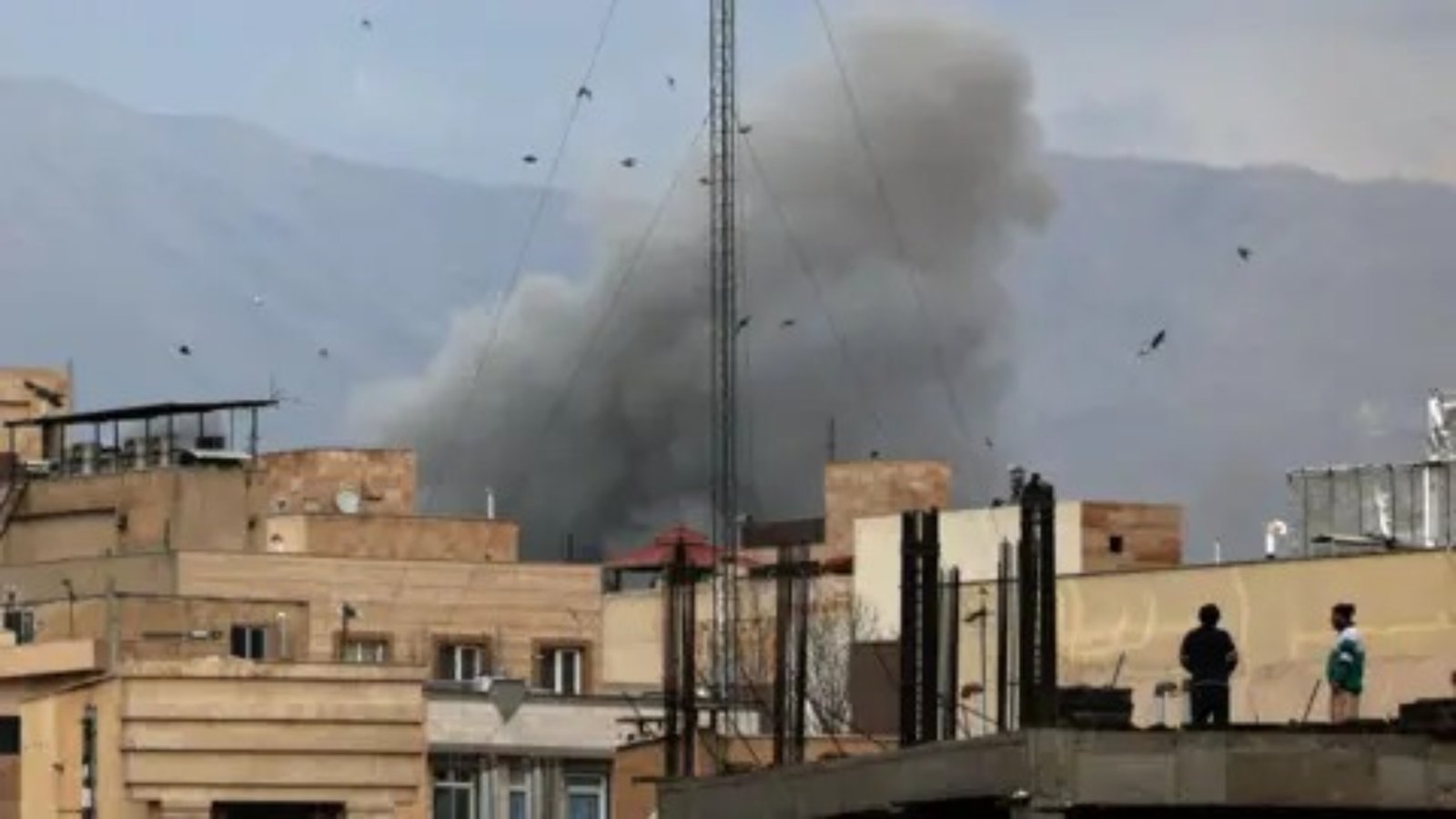
Web Desk: US and Israeli warplanes continued heavy bombardment across Iran, including strikes on the capital Tehran and several other cities, as the expanding military campaign entered its sixth day with reported fatalities rising above 1,000.
Israeli military officials said their forces carried out a new wave of aerial attacks on strategic targets and claimed to have shot down an Iranian fighter jet over Tehran during the latest operations.
Meanwhile, Israeli forces said they struck a ballistic missile facility in the central Iranian city of Isfahan as part of the ongoing campaign against Tehran’s military infrastructure.
Regional media reports also cited Israeli claims that several Iranian naval assets were destroyed, including a warship, although Iranian authorities have not publicly confirmed those losses.
The continuing air campaign has pushed the reported death toll in Iran to at least 1,045 people since the start of the strikes, according to media reports.
Meanwhile, the Israeli military said its air force has dropped more than 5,000 tons of munitions on Iranian targets during the operation.
The bombardment also extended beyond Iran, with Israeli forces carrying out attacks in Lebanon amid rising regional tensions.
Israel first announced the launch of strikes against Iran on Feb. 28, describing them as part of a large-scale military operation conducted jointly with the United States.
Initial attacks reportedly focused on destroying air defense systems across western and central Iran, allowing follow-up strikes on additional strategic targets.
Iranian authorities said several senior officials were killed in the early phase of the conflict. On March 1, Tehran announced the deaths of Supreme Leader Ali Khamenei, Defense Minister and armed forces Chief of Staff Abdolrahim Mousavi, and Islamic Revolutionary Guard Corps commander Mohammad Pakpour.
Officials also confirmed the death of Ali Shamkhani, a senior adviser to the supreme leader.
Following the first day of attacks, U.S. President Donald Trump said nearly 40 senior Iranian leaders had been killed and warned that military operations would continue “with full force” until Washington achieves its objectives.
In response, Iran launched large numbers of missiles and drones toward Israel and toward Gulf states hosting US military bases. Iranian strikes also targeted areas near Iraq and Jordan, signalling the conflict’s potential to widen across the region.
At the same time, Iranian Foreign Minister Abbas Araghchi warned of possible militant activity along Iran’s border with Iraq and called for strengthened security measures.
The conflict has also disrupted global energy markets. Shipping traffic has begun avoiding the Strait of Hormuz after Iran’s Islamic Revolutionary Guard Corps announced the closure of the strategic waterway.
The strait serves as one of the world’s most critical routes for oil and gas shipments, raising concerns among traders and governments about possible supply disruptions if the confrontation continues to escalate.
Read more: Pakistan Army conducts large-scale operation along Pak-Afghan border