


Different announcements and changing schedules regarding the long march have raised questions within Pakistan Tehreek-e-Insaf (PTI) about the party’s decision-making process.
A lack of organisational coordination, decisions made without consultation, and differing schedules announced by Chief Minister Sohail Afridi and the provincial organisation have created confusion among party workers and leaders. Questions have emerged over who is setting the march strategy, who has the authority to make final decisions, and whether the party leadership is following a unified plan.
According to sources, the party’s organisational weaknesses have become more apparent since Imran Khan’s imprisonment, while implementing decisions has also remained a persistent problem. It is therefore unclear whether the chief minister, the provincial organisation or the party’s central leadership is the main centre of political decision-making in the province.
Chief Minister and Provincial President Following Different Strategies
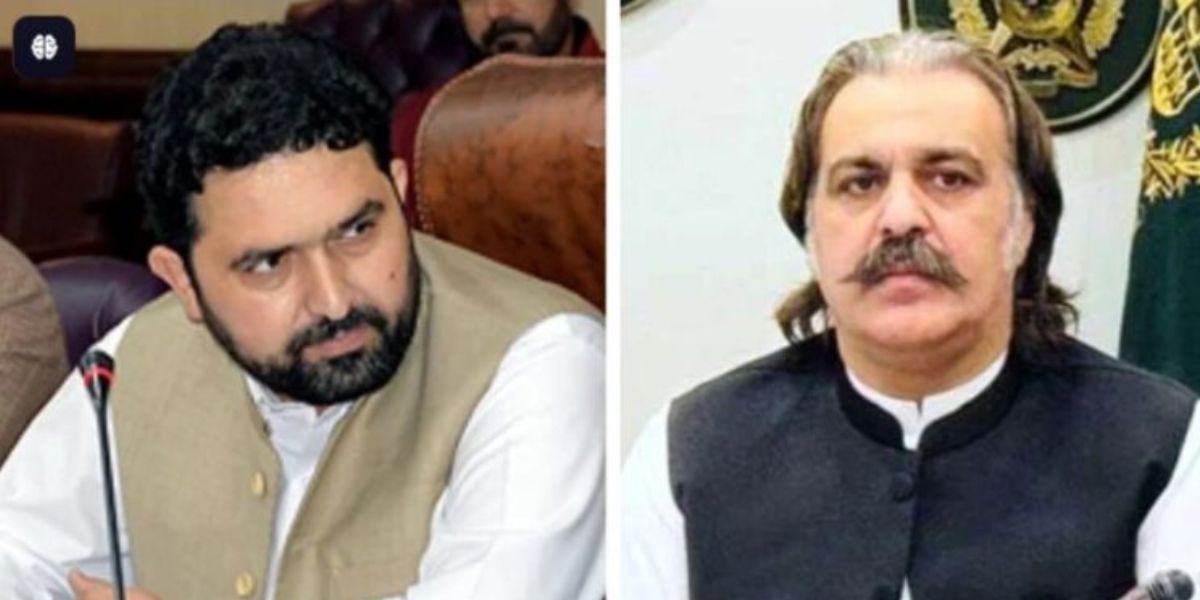
During Ali Amin Gandapur’s tenure as chief minister, provincial president Junaid Akbar’s role remained limited. Due to internal differences within the party, the Chief Minister’s House was generally regarded as the main centre for key decisions.
After Sohail Afridi became chief minister, Junaid Akbar appeared to become more active. According to party sources, differences between Gandapur and Junaid Akbar have contributed to the provincial president’s increased activity this time.
Despite the presence of central chairman Barrister Gohar, Secretary General Salman Akram Raja, the provincial president, the provincial general secretary and other organisational officials, debate has emerged within the party over who exercises the greatest authority in determining the direction of political activities.
Why Is There a Dispute Over the Long March Schedule?
The long march was planned by Chief Minister Sohail Afridi and his close associates. However, different announcements regarding its next stages have made the situation unclear.
According to sources, Sohail Afridi changed the march schedule without taking the political committee into confidence, prompting an objection from provincial president Junaid Akbar.
Sources say Junaid Akbar also expressed reservations about staying in Khyber district, as the location was not included in the previously agreed schedule.
The disagreement now concerns the march’s next destination. Sohail Afridi wants to proceed towards Nowshera and Khairabad after Swabi, while Junaid Akbar insists that the caravan should stay in Swabi.
People close to Junaid Akbar believe Swabi, because of its proximity to the Punjab border, could be a more suitable location for increasing political pressure.
Under this strategy, the party could attempt to push the federal government towards negotiations. Sohail Afridi, meanwhile, wants to move the march between Swabi and Nowshera to maintain pressure on Islamabad and give the caravan more time to advance.
How Influential Are Factions Within the Party?
Several groups operate within PTI’s provincial ranks. These include Atif Khan’s group in Mardan, Asad Qaiser’s group in Swabi, the Ayub family’s group in Hazara, and the group associated with Speaker Babar Saleem Swati.
These factions are seeking to maintain their representation in the provincial government and the decision-making process. During Ali Amin Gandapur’s tenure, complaints repeatedly emerged that decisions were being restricted to a small circle of individuals.
According to sources, complaints have also surfaced among lawmakers during Sohail Afridi’s tenure, with many claiming that they are not kept in contact and that the chief minister does not even answer their calls. Similar concerns have also been raised in party meetings.
These differences are not limited to the march’s route or overnight stops. They are also linked to the distribution of authority among the provincial government, the party organisation and different political factions.
When the chief minister and provincial president pursue different strategies, it becomes difficult for party workers to understand what the final party decision actually is.
What Is PTI’s Biggest Challenge?
A PTI organisational official in Khyber Pakhtunkhwa, speaking on condition of anonymity, said the party was currently facing challenges on two fronts in the province.
One is making the long march effective enough to increase political pressure on Islamabad. The other is adopting a unified strategy despite internal disagreements and factional divisions within the party.
Also Read: PTI MPA Abdul Salam among dozens in hiding to skip long march