
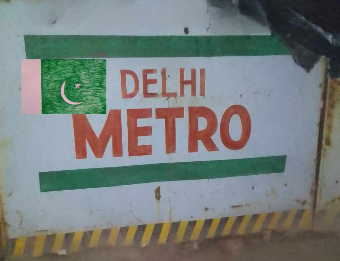
Web Desk: Graffiti depicting Pakistan’s national flag appeared at several locations in New Delhi, triggering political discussion and renewed debate on social media at a time when concerns over employment, inflation and governance are already shaping public discourse among India’s youth.
Authorities have not identified those responsible for the graffiti, and the motive behind the incident remains unclear.
Images of the painted flags spread rapidly across social media platforms, prompting a wide range of reactions and adding to ongoing conversations about domestic politics, regional relations and the future of South Asia.
The incident quickly evolved into a broader online debate, with users expressing sharply different views on foreign policy, regional diplomacy and internal political issues.
Some student groups and civil society voices argued that lasting peace and stability in South Asia would require greater emphasis on diplomacy, dialogue and confidence-building measures rather than confrontation.
At the same time, social media platforms often amplify unverified claims and politically charged narratives during periods of heightened public attention, making it difficult to distinguish between factual reporting and speculation.
The episode comes against the backdrop of growing public discussion over employment opportunities, the rising cost of living and broader economic pressures affecting young people across India.
Recent demonstrations and public gatherings have highlighted frustration among sections of the youth over economic and governance-related issues, although several of those protests have since subsided.
Opposition parties have continued to argue that concerns over jobs, inflation and youth-focused policies remain unresolved, urging the government to adopt measures aimed at improving employment prospects and easing economic pressures.
Criticism of government policies by younger citizens forms part of democratic political debate. However, they also warn that periods of heightened political engagement can create fertile ground for misinformation, exaggerated claims and misleading content circulating online, potentially influencing public opinion.
The graffiti incident has therefore become more than a local act of vandalism, evolving into another flashpoint in India’s increasingly polarised political and digital landscape as debates over governance, economic challenges and regional relations continue to intensify.
Read more: Leaked files reveal Taliban’s propaganda operations