



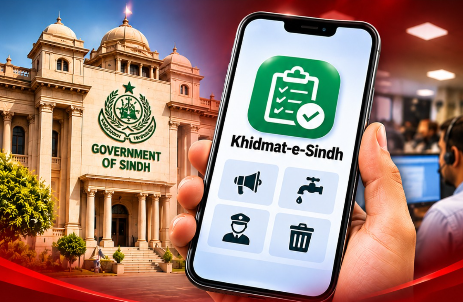
Web Desk: The Sindh government has introduced a mobile application allowing residents to report civic problems, lodge complaints against public services and monitor their resolution without visiting government offices.
Governor Syed Muhammad Nihal Hashmi inaugurated the Khidmat-e-Sindh application at a ceremony, marking a new initiative aimed at improving public access to government institutions and strengthening administrative accountability.
The digital platform brings together 65 federal and provincial departments, enabling citizens to communicate their concerns directly to the authorities responsible for addressing them.
The initiative seeks to simplify a complaint process that often requires citizens to approach government departments in person.
Through the application, residents can submit grievances using their smartphones, while the relevant departments receive the complaints for further action.
Moreover, users can check the progress of their submissions online, allowing them to monitor how government offices respond to their concerns.
Speaking at the launch ceremony, Governor Hashmi said the platform was designed to make public institutions more accessible and responsive to citizens.
He stressed that government departments must address complaints promptly and take responsibility for resolving problems affecting the public.
A key feature of the Khidmat-e-Sindh initiative is its integration of 65 government departments into a single digital complaint system.
The arrangement is intended to reduce the difficulties citizens face when identifying the appropriate authority for a particular problem.
Instead of approaching multiple offices, users can submit their concerns through the application for referral to the relevant department.
Furthermore, the system allows complainants to follow developments in their cases, providing greater visibility into the handling of public grievances.
The governor said cooperation among the participating departments had played an important role in developing the platform.
During a briefing, Principal Secretary to the Governor Dr Syed Saifur Rehman outlined the range of complaints citizens can register through the application.
He said the platform accommodates grievances concerning crime, cleanliness and other matters involving public services.
For example, residents facing sanitation problems or difficulties involving government services can use the digital channel to bring their concerns to the attention of the relevant authorities.
The initiative is also intended to encourage departments to respond more effectively by providing a centralized mechanism for receiving and monitoring complaints.
The launch reflects a broader effort to use digital technology to improve communication between citizens and public institutions.
By providing an online complaint mechanism, the government aims to make administrative procedures more convenient while improving oversight of how departments handle public concerns.
Meanwhile, Governor Hashmi emphasized the importance of collective responsibility in addressing the country’s challenges.
Responding to a question from journalists, he said citizens and institutions must work together to support development and improve conditions across Pakistan.
According to information released about the initiative, residents can register complaints through their mobile phones and subsequently monitor their status online.
The application is intended to serve as a common point of contact for grievances involving participating federal and provincial departments.
However, officials have not publicly specified the expected timeframe for resolving complaints or whether the application will be available across all major smartphone platforms.
Details regarding download links, registration procedures and potential service charges were also not included in the initial reports.
Nevertheless, the initiative could offer residents a more convenient way to seek assistance from government institutions if departments respond effectively to complaints.
The effectiveness of Khidmat-e-Sindh will ultimately depend on how quickly participating departments address grievances and whether the system delivers measurable improvements in public services.