


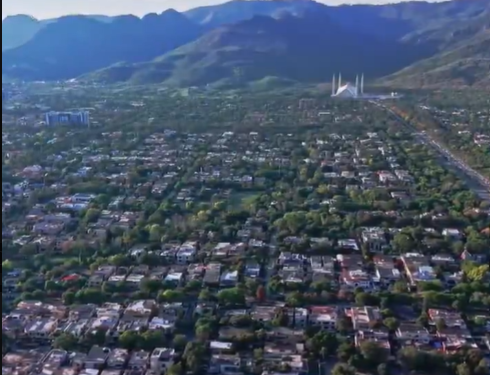
Web Desk: The Islamabad chapter of Pakistan’s ruling PML-N has endorsed a proposal to give the capital a provincial-style administrative structure, reviving debate over how the federal territory should be governed.
The proposal was recently put forward by Interior Minister Mohsin Naqvi, who argued that Islamabad’s residents contribute substantially to national revenues but do not receive a corresponding share under the National Finance Commission (NFC) Award.
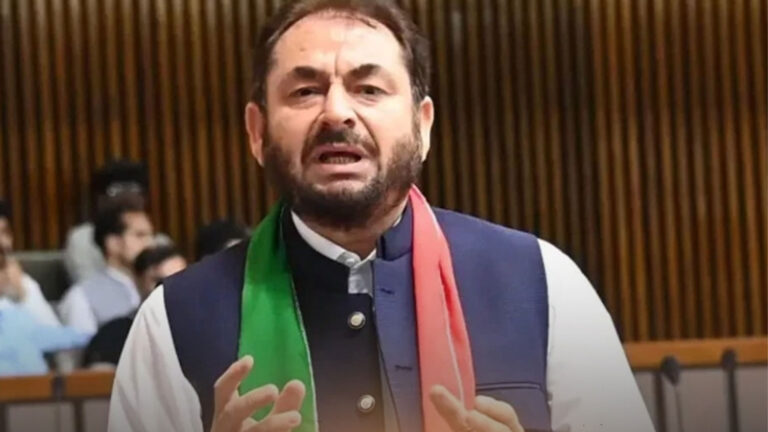
Raja Khurram Shahzad Nawaz, a PML-N lawmaker representing Islamabad and chairman of the National Assembly Standing Committee on Interior, said the party’s local leadership supported the proposal.
He described greater provincial-style representation as a longstanding demand among residents of the capital.
Under the plan, Islamabad could receive an elected assembly comprising 27 members.
The proposed legislature would include 21 directly elected representatives, with seven elected from each of Islamabad’s three National Assembly constituencies. The remaining seats would comprise five reserved seats for women and one for a minority representative.
The assembly would then choose a chief executive, who could be designated either chief minister or mayor.
The proposal would also replace the office of chief commissioner with that of a chief secretary, bringing several administrative departments under the authority of the proposed assembly.
However, key areas would remain under federal control. Law and order and master planning would continue to fall within the federal government’s jurisdiction under the proposed arrangement.
Nawaz said Prime Minister Shehbaz Sharif had established a committee headed by Planning Minister Ahsan Iqbal to examine the devolution of powers from the federal government to the Islamabad Capital Territory.
The committee has reportedly submitted its recommendations to the prime minister.
According to Nawaz, the proposed framework seeks to give Islamabad a government structure similar to that of a province while allowing the federation to retain control over certain sensitive functions.
He argued that the arrangement could provide a more effective mechanism for addressing the capital’s urban and rural development needs.
Supporters of the proposal have focused particularly on Islamabad’s contribution to federal revenues.
Nawaz said residents pay several forms of taxation, including income tax, stamp duties, land transfer charges and excise-related taxes, but the capital does not receive a share from the NFC Award in the same way as provinces.
He argued that this creates a financial imbalance, particularly for Islamabad’s rural areas, where development projects often depend on federal government allocations.
Supporters believe a formal share in national resource distribution could provide the capital with a more predictable source of funding for infrastructure and public services.
The proposal could also complicate Islamabad’s already delayed local government elections.
The Election Commission of Pakistan (ECP) is currently conducting the delimitation process for the capital. Under the existing schedule, it is due to publish the final details of constituencies and Union Councils on Oct. 14, 2026, after which an election schedule could be announced.
However, legal and administrative changes may become necessary if the government proceeds with the proposed provincial-style system.
Experts cited in the report said amendments to the Islamabad Local Government Act or the introduction of a new law, along with changes to the Capital Development Authority (CDA) Ordinance, could be required. Such changes could also trigger a fresh delimitation exercise.
As a result, the current election timetable could face another setback.
The capital has been without an elected local government since the previous administration’s term ended in February 2021.
Since then, successive governments have announced plans for elections but failed to complete the process, citing various legal and administrative reasons.
In January 2026, President Asif Ali Zardari approved an ordinance that amended the Islamabad Local Government Act 2015. Among other changes, it replaced the Metropolitan Corporation Islamabad with three town corporations and expanded the powers of the government-appointed administrator.
The ordinance also removed the previous six-month limit on the administrator’s tenure, allowing the official to remain in office until new local government elections take place.
It further authorized the administrator to impose various local charges, including taxes, fees, rents, tolls and surcharges.
The changes came shortly before local government elections were scheduled for Feb. 15, 2026. Thousands of candidates had already filed nomination papers across Islamabad’s 125 Union Councils.
The prolonged delay has left roughly 2.5 million residents without elected local representatives to handle municipal issues.
Residents continue to face problems involving water supply, roads and other basic services, particularly in areas outside the capital’s main urban centre.
Political parties have repeatedly blamed one another for the delays.
The PTI’s Islamabad chapter previously accused the government of seeking to avoid elections because it feared defeat. PML-N representatives rejected that allegation, arguing that changes to the legal framework were intended to create a more effective local government system.
The debate now faces another potential turning point as the government considers whether to move forward with a provincial-style structure for Islamabad.
If implemented, the proposal could fundamentally alter the capital’s political and administrative system while potentially pushing its long-awaited local government elections further into the future.
Read more: New tax proposed for Islamabad residents