


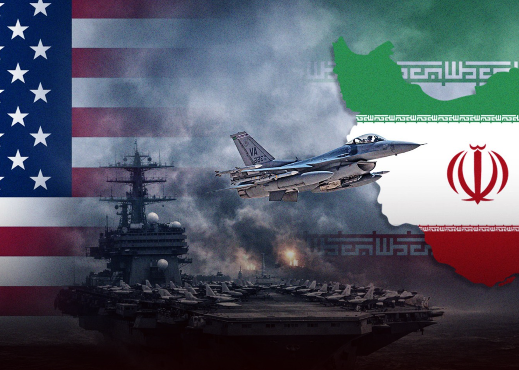
Web Desk: Former US Defense Secretary Leon Panetta says the conflict with Iran could continue for another six months, warning that the prolonged confrontation risks turning into another open-ended Middle East war as Washington struggles to find a path toward a settlement.
Panetta, who also served as CIA director under former President Barack Obama, said the United States and Iran remain locked in a stalemate with limited options available to end the fighting.
In an interview with The Guardian, Panetta said he expected the conflict to remain unresolved for at least another six months.
He described the situation as a dangerous impasse in which neither side appears prepared to make the concessions needed to end hostilities.
Panetta said the United States could ultimately face another prolonged Middle East conflict similar to the wars in Iraq and Afghanistan, which he described as failed campaigns.
His assessment comes more than six months after Trump launched the military campaign against Iran, according to the information provided.
Panetta also criticised what he described as instability inside the Pentagon and the US military command structure.
His comments came days after Army Secretary Dan Driscoll resigned unexpectedly amid reported tensions with Defense Secretary Pete Hegseth and a series of senior military personnel changes.
Panetta said US troops were entering combat while facing uncertainty within the Pentagon’s leadership structure. He argued that such turmoil could create an impression among US adversaries that Washington lacks the ability to effectively use its military power.
He said that perception could prove particularly dangerous as the United States confronts threats from China, Russia, North Korea, terrorism and Iran.
The Pentagon rejected Panetta’s characterization of the department as being in disarray.
Chief Pentagon spokesman Sean Parnell said the department remained fully operational under Hegseth and dismissed suggestions that its leadership structure was failing.
The White House was also contacted for comment.
Panetta said President Donald Trump faces three broad choices.
First, Trump could end the campaign and declare the operation over, although Panetta said he believed the president would be reluctant to acknowledge that the conflict had failed to achieve its objectives.
Second, the United States and Iran could continue the current pattern of limited retaliatory strikes while avoiding a wider confrontation. Panetta said that approach could allow the stalemate to persist indefinitely.
The third option, he said, would involve the United States taking action to reopen the Strait of Hormuz, which Panetta considers Iran’s most significant source of leverage.
The waterway is a crucial global trade route, and any prolonged disruption could have consequences well beyond the region.
Panetta said he would consider the conflict winnable only if Washington fundamentally changed its approach and made reopening the Strait of Hormuz its primary objective.
He also criticized Trump for making repeated claims that a settlement was close and that the waterway was already open, arguing that such statements had weakened the president’s credibility.
Panetta said Trump’s difficulty in delivering on those claims could make future threats less effective.
Earlier this week, Vice President JD Vance declined to describe the confrontation as a “war” and said he could not predict whether the fighting would end before the November US midterm elections.
Panetta also pointed to growing doubts among Americans over Trump’s handling of the conflict.
He said public opinion polls showed that many Americans increasingly viewed the confrontation with Iran as a mistake and wanted the fighting to end.
According to Panetta, that loss of public confidence could further complicate the administration’s efforts to sustain its current strategy.
Panetta also raised concerns about the strain placed on US service members during the conflict.
He cited the deployment of the USS Abraham Lincoln, which spent more than 260 days supporting US operations against Iran without a port visit before arriving in Thailand this week.
Reports have raised concerns about deteriorating living conditions and the mental health of sailors during the unusually long deployment.
Panetta said the military should not keep personnel in a war zone indefinitely without establishing proper rotation plans.
He argued that the issue went beyond whether the campaign itself was succeeding, saying Washington also needed to demonstrate that it was adequately supporting the troops carrying out the mission.
The former defense secretary’s assessment leaves the prospect of a swift resolution uncertain, with the United States and Iran still facing a prolonged standoff and few obvious routes toward ending the conflict.
Read more: Taliban Rule Has Left Afghanistan Increasingly Isolated: Sami Yousafzai