



After suffering continuous humiliating defeats and heavy human and material losses at the hands of security forces in Balochistan, Fitna-al Hindustan, in a state of panic and desperation, once again attempted to target innocent civilians in a barbaric act of violence.
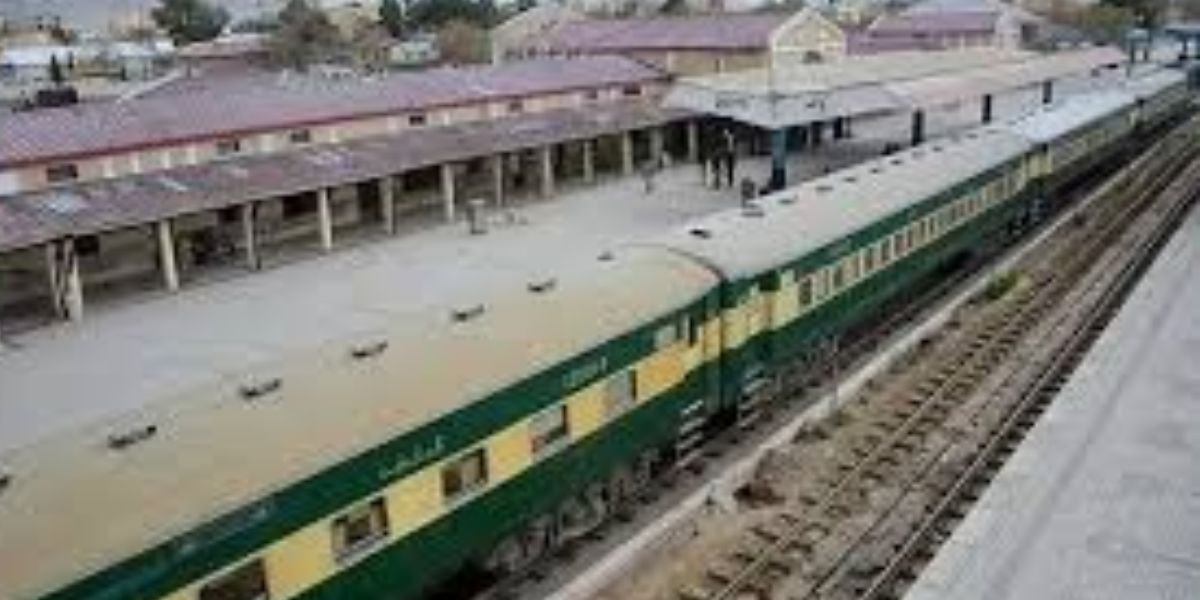
On Sunday in Quetta, the provincial capital of Balochistan, terrorists belonging to “Fitna al-Hindustan” once again chose the passenger train “Jaffar Express” as a soft target and attempted a heinous suicide attack, resulting in a powerful explosion that left 10 people injured.
According to security sources, the terrorists of Fitna al-Hindustan attempted to ram an explosives-laden vehicle into the Jaffar Express. The intensity of the suicide blast was so severe that several bogies of the passenger train derailed and suddenly caught fire.
Authorities confirmed the incident, stating that security forces and law enforcement agencies immediately reached the site and launched a large-scale rescue and clearance operation.
According to security sources, the real targets of this brutal attack were innocent civilians traveling on the train, placing the lives of women, children, and elderly passengers in grave danger.
Eyewitnesses said the explosion caused severe damage to the train engine, bogies, surrounding areas, and railway tracks.
Authorities made a sensational revelation, stating that terrorists linked to the dangerous foreign-sponsored network “Fitna al-Hindustan” were involved in this cowardly act.
Security forces have recently carried out extensive punitive operations against these terrorist elements across Balochistan. Following repeated failures and humiliating losses in those operations, the terrorists allegedly resorted to this cowardly attack in an attempt to take revenge.
Security officials said the terrorists are no longer capable of confronting the brave security forces directly on the battlefield. Therefore, in order to conceal their humiliating defeats, they are attempting to create fear, panic, and rumors in the province by targeting “soft targets” — ordinary civilians, women, and children.
Immediately after the explosion, heavy contingents of the Pakistan Army, Frontier Constabulary (FC), and police cordoned off the entire area. Rescue teams and army personnel remained busy evacuating passengers from the burning train bogies and shifting the injured to nearby hospitals in Quetta for urgent medical treatment.
Authorities said a high-level investigation has been launched to determine the exact nature of the explosion, the quantity of explosives used, and the identities of facilitators involved in the attack. Security across Quetta city and all entry and exit points has been placed on high alert, with checkpoints further tightened.
Provincial and military authorities strongly condemned the attack, calling it an extremely cowardly act against innocent civilians. They stated that such heinous incidents can never weaken the resolve of the people of Pakistan, especially the brave people of Balochistan, who stand shoulder to shoulder with their armed forces against terrorism and foreign-sponsored violence.
“Fitna al-Hindustan” and Previous Attacks on Jaffar Express
Targeting the Jaffar Express has long been a tactic used by anti-state elements and terrorists allegedly working on behalf of foreign agencies.
The Jaffar Express connects Quetta with Machh, Sukkur, and various cities of Punjab before reaching Peshawar, making it one of the cheapest and most important travel lifelines for the province’s poor and middle-class population. An attack on this train is effectively viewed as an attempt to disconnect Balochistan from the rest of Pakistan.
In recent times, security forces, through intelligence-based operations, have destroyed terrorist hideouts, training camps, and financial support networks. Many commanders have either been killed or forced to flee.
The term “Fitna al-Hindustan” is used for extremist groups allegedly operating under cross-border patronage with the objective of sabotaging Pakistan’s economic development and CPEC-related projects. When these elements fail to confront the military on the front lines, they allegedly resort to attacking railway tracks and passengers in an attempt to project a negative image of Pakistan internationally.
Terrorists’ Desperation and the Security Forces’ Foolproof Response
If this serious attack in Quetta on Sunday is analyzed from a strategic and defense perspective, several aspects become clear:
Admission of Failure in Direct Warfare
The suicide attack on a passenger train is a clear admission by the terrorists that they no longer possess the capability to attack security checkpoints or military convoys directly. This attack reflects not strength, but their “deep desperation” and declining operational capacity.
Attack on National Unity
Targeting women and children aims to create a sense of insecurity among the public against the state. However, such cowardly acts only increase public hatred toward these terrorist groups and further alienate people from their ideology.
Rescue and Emergency Measures
The speed with which security forces launched rescue operations and evacuated passengers from the bogies immediately after the blast played a key role in preventing greater loss of life. Railway authorities now face the challenge of repairing the tracks and restoring communication lines as quickly as possible.
Need to Further Strengthen Intelligence Networks
The ability of the Fitna al-Hindustan network to access a passenger train near an important city like Quetta highlights the urgent need to increase surveillance of railway stations and tracks through thermal cameras and drone technology so that such networks can be neutralized before carrying out attacks.
Also Read: Timely response by Security agencies saved Jaffar Express from major tragedy