


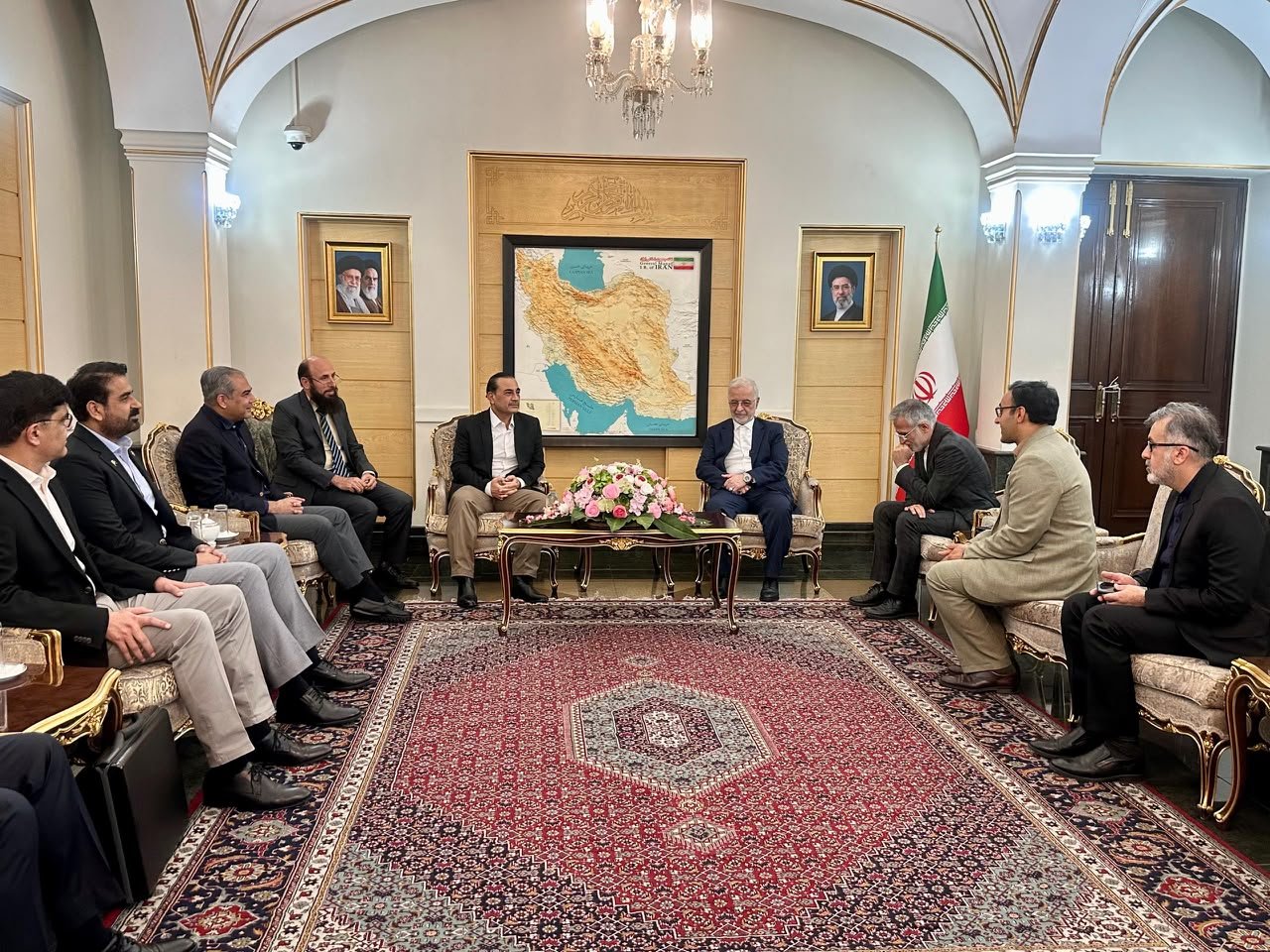
Web Desk: Chief of Defence Forces and Army Chief Field Marshal Syed Asim Munir held talks with senior Iranian officials in Tehran on Monday as Islamabad stepped up diplomatic efforts to ease tensions between Iran and the United States and promote stability across the region.
Munir was accompanied by Interior Minister Mohsin Naqvi during a meeting with Iranian Interior Minister Eskandar Momeni, according to official information.
The talks come at a sensitive time, with Washington preparing new sanctions against Tehran, while Iran has warned that continued economic pressure could trigger a response.
Munir’s meeting with Momeni formed part of his official visit to Tehran, aimed at strengthening bilateral ties and supporting Pakistan’s broader diplomatic efforts in the region.
The visit followed a telephone conversation between Munir and Iranian Foreign Minister Abbas Araghchi, during which the two discussed regional developments and ways to strengthen peace, stability and security in West Asia.
Iranian Foreign Ministry spokesman Esmaeil Baghaei had earlier said Munir would lead an official Pakistani delegation and hold talks with senior Iranian officials.
Islamabad has sought to maintain communication between Tehran and Washington as tensions between the two sides continue.
Pakistan previously helped facilitate a framework for dialogue between Iran and the United States, but subsequent disagreements have complicated efforts to secure a lasting diplomatic settlement.
Against that backdrop, Munir’s visit provides Islamabad with another opportunity to exchange messages with Tehran and explore avenues for reducing tensions.
Discussions are also expected to touch on the existing peace framework, US pressure on Iran, the regional security situation and Pakistan’s recent engagement with Saudi Arabia and Turkiye.
The timing of the visit is significant as Washington prepares to announce additional economic measures against Tehran.
US officials have warned of severe sanctions, while President Donald Trump has threatened economic consequences for countries providing support that helps Iran withstand the pressure campaign.
Iran has rejected the planned measures and warned that continued economic pressure could prompt retaliation.
The standoff has also created uncertainty for countries maintaining trade and energy links with Iran.
The Strait of Hormuz is another key issue facing regional policymakers.
The strategically important waterway carries a significant portion of global oil and gas shipments, and disruptions to maritime traffic have raised concerns about energy supplies and international markets.
Iran has warned against unauthorized vessels attempting to use the strait and has threatened consequences if the pressure campaign against Tehran continues.
For Pakistan, which shares a border with Iran and remains closely connected to the region through trade and energy interests, preventing further escalation carries significant economic and security implications.
Beyond the Iran-US confrontation, Munir and Iranian officials are expected to discuss Pakistan-Iran relations.
The neighboring countries share a long border and have common interests in border security, trade, energy cooperation and regional connectivity.
Security coordination has gained additional importance as both countries continue to deal with challenges along their frontier.
Munir’s discussions with Iranian officials therefore offer an opportunity to reinforce direct communication between the two countries’ security establishments.
The Tehran visit also comes after Pakistan strengthened its defense engagement with Saudi Arabia and Turkiye, adding another layer to the evolving regional security environment.
Tensions involving the Houthis, Gulf security and maritime traffic through the Strait of Hormuz have further complicated efforts to establish a durable regional security framework.
Pakistan has consequently faced the delicate task of maintaining its relationship with Iran while also preserving ties with the United States and its partnerships with Saudi Arabia and Turkiye.
With tensions between Tehran and Washington still high, Pakistan appears determined to keep diplomatic channels open.
Munir’s visit could allow Islamabad to assess Iran’s position, convey messages and explore whether conditions exist for a return to negotiations.
As sanctions loom and uncertainty around the Strait of Hormuz persists, Pakistan’s diplomatic engagement with Tehran reflects its broader effort to prevent the conflict from spreading and protect regional peace and stability.