


Web Desk: Pakistan faces growing military and economic risks as fighting intensifies around Yemen’s Bab al-Mandab Strait, putting Islamabad’s defence commitments to Saudi Arabia alongside potential disruptions to trade, energy supplies and shipping.
The Houthis have strengthened their position around the strategic Red Sea chokepoint, while Saudi-backed Yemeni government forces have launched a military operation to recover territory. For Pakistan, the escalation comes at a sensitive time after Islamabad, Riyadh and Ankara established the Makkah Joint Defence Agreement, creating a framework for collective defence.
Although commercial vessels continue to use Bab al-Mandab, any prolonged disruption could increase Pakistan’s shipping and energy costs while placing additional pressure on its external account.
Yemen remains divided between the Iran-aligned Houthi movement, which controls Sanaa and large parts of the north and west, and the internationally recognized government backed by Saudi Arabia.
President Rashad al-Alimi announced on Oct. 4 that government forces had begun a major military operation aimed at reclaiming Houthi-held territory, including areas along the Red Sea coast and around Bab al-Mandab.
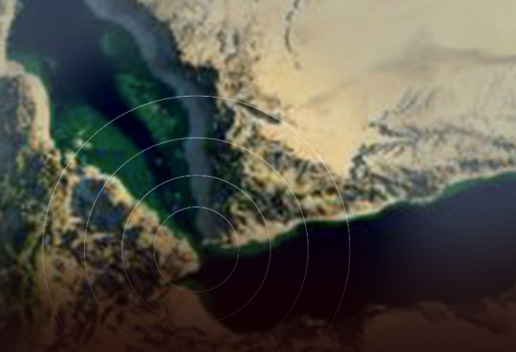
Bab al-Mandab connects the Red Sea with the Gulf of Aden and provides a major maritime link between the Indian Ocean and the Suez Canal.
Recent Houthi advances around the waterway have increased their ability to threaten commercial shipping moving between the Red Sea and the Gulf of Aden. Reuters has reported that Saudi Arabia is seeking to break the Houthi hold over the strategic maritime passage through a Saudi-backed military operation.
The strait, however, has not been completely closed.
Islamabad has repeatedly highlighted the importance of keeping the waterway open.
Foreign Office spokesperson Sajjad Haider Khan described the situation around Bab al-Mandab as “exceptionally serious” in September and said Pakistan wanted the conflict resolved through dialogue and diplomacy rather than coercion.
Prime Minister Shehbaz Sharif also told the United Nations General Assembly in September that Bab al-Mandab and the Strait of Hormuz were vital arteries of the global economy and should remain open.
“The Strait of Hormuz and Bab al-Mandab are arteries of the global economy,” Sharif said, calling for the waterways to remain open rather than become flashpoints for confrontation.
The Yemen escalation comes less than two months after Pakistan, Saudi Arabia and Türkiye signed the Makkah Joint Defence Agreement in August.
The pact’s Strategic Political and Defence Committee, comprising the three countries’ foreign and defence ministers and military chiefs, is scheduled to meet in Riyadh on Oct. 5 to discuss the regional situation, including the Houthi attacks on Saudi Arabia. Pakistani Foreign Minister Ishaq Dar confirmed the emergency meeting.
Military chiefs from the three countries had already met in Riyadh in September as the Houthi threat intensified.
The Strategic Political and Defence Committee of the Makkah Joint Defence Agreement is meeting today in Riyadh, bringing together senior officials from Pakistan, Saudi Arabia and Türkiye as tensions over Yemen and the Bab al-Mandab intensify.
Pakistan’s Deputy Prime Minister and Foreign Minister Ishaq Dar, Defence Minister Khawaja Asif and Chief of Army Staff Field Marshal Syed Asim Munir are attending the meeting, alongside senior Saudi and Turkish officials.
The meeting will review recent regional developments and progress in institutionalising the alliance, while Pakistan’s proposal for political engagement with Yemen’s Houthis, conveyed by Iran, is also expected to be discussed.
The gathering comes as Saudi-backed Yemeni forces launch a major campaign against the Houthis, increasing pressure on the strategically important Bab al-Mandab shipping route.
Pakistan’s defence commitment has been stated publicly at the highest levels.
Defence Minister Khawaja Asif said Islamabad would support Saudi Arabia in the event of a conflict involving the Houthis or any other force threatening the kingdom.
“We are there to help Saudi Arabia in any conflict,” Asif said, adding that Pakistan would defend Saudi Arabia against threats to its security.
Earlier, Asif said that aggression against any member of the Makkah pact would be treated as aggression against all three members, leaving “no ambiguity” about Pakistan’s obligations under the agreement.
Those statements have increased scrutiny of what the pact could mean if Houthi attacks against Saudi territory intensify.
However, Pakistan has not publicly confirmed that its forces have participated in Saudi airstrikes against the Houthis. Asif has also emphasised Pakistan’s continuing diplomatic engagement with Iran and the need to avoid unnecessary escalation.
The country’s textile industry depends heavily on international markets, including Europe. If shipping companies impose higher risk premiums or divert vessels away from the Red Sea, Pakistani exporters could face increased freight charges and longer delivery times.
That could make Pakistani products less competitive against goods shipped from countries facing shorter or less expensive routes.
The consequences could therefore extend beyond shipping companies to Pakistan’s export earnings and foreign-exchange inflows.
The crisis could also affect Pakistan through energy prices.
A prolonged disruption around Bab al-Mandab could increase shipping and insurance costs for energy cargoes while adding uncertainty to international oil markets.
For Pakistan, higher global energy prices could increase the country’s import bill and put upward pressure on petrol, diesel, transportation and industrial costs.
Higher freight charges would make imports more expensive. Longer routes would increase exporters’ costs, while higher energy prices could widen the country’s import bill.
Militarily, the Houthi threat to Saudi Arabia comes as Pakistan has entered a new collective defence framework with Saudi Arabia and Türkiye.
Economically, the same conflict threatens a maritime corridor that connects major global trading and energy markets.
A major escalation could therefore require Islamabad to devote greater attention to Saudi Arabia’s security while simultaneously dealing with higher shipping and energy costs at home.
The current situation does not amount to a complete closure of Bab al-Mandab.
More vessels could be forced around Africa, increasing voyage times, fuel consumption, insurance premiums and freight charges. Pakistan could subsequently face higher import costs, more expensive energy and greater pressure on exporters.
The battle around Bab al-Mandab is primarily a Yemen conflict, but its consequences now extend directly into Pakistan’s strategic calculations.
The Makkah Joint Defence Agreement has created a framework for collective defence with Saudi Arabia and Türkiye, while Pakistan’s longstanding relationship with Riyadh gives the kingdom’s security particular importance for Islamabad.
At the same time, Pakistan has a direct economic interest in keeping Bab al-Mandab open and preventing the Yemen conflict from disrupting maritime commerce and increasing energy costs.
For now, commercial shipping continues through the strait and Pakistan has not confirmed direct combat participation in Yemen.
But with Saudi-backed forces launching a major operation, Houthi attacks continuing and the Makkah alliance’s senior officials meeting in Riyadh, Bab al-Mandab is emerging as a test of Pakistan’s defence commitments, regional diplomacy and economic resilience.
Read more: Fact Check: Al Jazeera claim of Islamabad road blockades inaccurate