


Web Desk: Formula 1 Dutch Grand Prix is taking its final bow at Zandvoort on Sunday, bringing an emotional end to the modern revival of one of the sport’s most distinctive races.
The seaside circuit returned to the F1 calendar in 2021 after a 36-year absence, but organizers have decided not to continue hosting the event beyond 2026. The final race has therefore combined a farewell to Zandvoort with a crucial chapter in the Formula 1 championship battle.
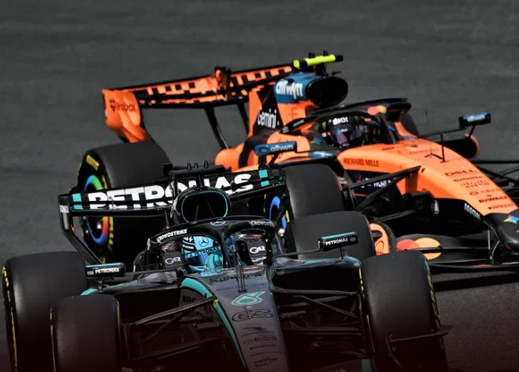
McLaren’s Lando Norris started the final Dutch Grand Prix from pole position, while Mercedes drivers George Russell and championship leader Kimi Antonelli occupied the next two places on the grid.
Norris secured pole with a late flying lap in qualifying, edging Russell by 0.102 seconds and Antonelli by 0.133 seconds.
Oscar Piastri completed the second row for McLaren, while Ferrari’s Lewis Hamilton and Charles Leclerc started fifth and sixth respectively. Home favorite Max Verstappen lined up seventh, giving the Dutchman a difficult task in what is expected to be his final home race at Zandvoort under the current F1 calendar.
The qualifying session became increasingly tense as rain threatened to disrupt the final runs. Norris nevertheless found enough grip for a decisive lap and secured his second consecutive Grand Prix pole after winning the Hungarian Grand Prix before the summer break.
While Norris has the advantage at the front of the grid, the bigger championship story centers on Antonelli.
The 19-year-old Italian entered the Dutch weekend leading the drivers’ standings. After Saturday’s sprint, his advantage over Hamilton stood at 53 points, while Russell had reduced his deficit to 56 points after winning the 24-lap sprint.
Russell’s sprint victory gave Mercedes further momentum heading into Sunday’s race. He led from start to finish, with Charles Leclerc taking second and Norris third. Antonelli finished fourth and collected valuable points without allowing his main title rivals to make significant gains.
The final race was set to provide a dramatic contest between Norris, the Mercedes pair and Ferrari’s leading drivers.
Zandvoort’s narrow and undulating layout makes overtaking difficult, placing added importance on qualifying position, tire strategy and race starts. The circuit stretches 4.259 kilometers and features 72 laps, with its fast corners and steeply banked sections giving the venue a character unlike most modern F1 tracks.
Norris therefore had a major opportunity to convert pole into another victory, while Russell looked to build on his sprint success. Antonelli, meanwhile, needed to balance the fight for race victory with the bigger objective of protecting his championship lead.
For Verstappen and his Dutch supporters, the race marked the end of a particularly memorable chapter.
Zandvoort became synonymous with the Red Bull driver’s home success after he won the first three Dutch Grands Prix following the circuit’s return to the calendar in 2021. The venue also became famous for the huge orange crowds that turned the event into one of F1’s most distinctive fan gatherings.
However, Verstappen started his final Dutch GP from seventh after struggling to extract more performance from his Red Bull during qualifying.
The position left him with considerable ground to recover if he was to challenge the leading Mercedes, McLaren and Ferrari cars.
Russell entered Sunday’s race with confidence after producing a lights-to-flag victory in Saturday’s sprint.
The Mercedes driver started the sprint from pole and held off Leclerc and Norris, while Antonelli finished fourth. The result helped Russell close the gap to his teammate in the championship and demonstrated that Mercedes had strong pace around the Zandvoort circuit.
Moreover, Russell qualified second for the main race, giving him another strong opportunity to challenge Norris from the front row.
The Dutch Grand Prix’s departure comes despite the event becoming one of the most popular stops on the modern F1 calendar.
The race returned in 2021 following years of efforts to upgrade the historic circuit and overcome logistical and environmental challenges. Since then, the event has attracted huge crowds and helped turn Verstappen’s home race into a major fixture on the championship calendar.
Organizers have cited financial considerations in their decision to end the event after 2026, despite its popularity and strong fan support. Sporting director Jan Lammers has described the return of Formula 1 to Zandvoort as a project that succeeded despite significant obstacles.
The final Dutch Grand Prix carried significance on several fronts.
For Norris, pole provided a chance to secure another victory after his breakthrough win of the season in Hungary. For Russell, Saturday’s sprint triumph and second place on the grid offered an opportunity to continue his title challenge.
For Antonelli, however, the priority was even greater: protecting his championship advantage.
And for Verstappen, the race represented a final opportunity to win in front of the famous Dutch crowd at a circuit where he had previously dominated.
As the lights went out for the final time at Zandvoort, the championship fight and the circuit’s farewell combined to create a fitting finale for one of Formula 1’s most distinctive modern races.
Read more: Pakistan stuns India in historic ACC election sweep, wins all three seats