



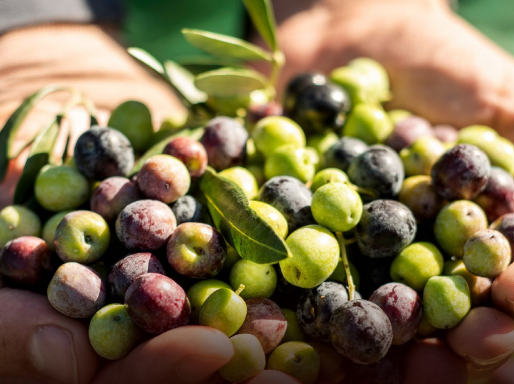
Web Desk: Pakistan has expanded olive cultivation across much of the country, with more than 7.6 million trees now planted over 60,456 acres in 131 districts as authorities seek to build a domestic source of edible oil and reduce dependence on imports.
The latest figures show that the programme has moved beyond a handful of traditional growing areas, extending from Balochistan and Punjab to Khyber-Pakhtunkhwa, Azad Jammu and Kashmir, Sindh, Islamabad Capital Territory and Gilgit-Baltistan.
Balochistan has emerged as the largest centre of Pakistan’s olive expansion, with 3,199,393 trees planted across about 24,620 acres in 31 districts.
Punjab follows with 2,235,962 olive plants covering 17,000 acres across 31 districts. The province’s plantations have been developed through multiple programmes, including the Olive Valley initiative, PSDP projects, PIDSA and private investment.
Khyber-Pakhtunkhwa ranks third, with 1,656,499 plants spread over 14,690 acres in 32 districts. Its plantations include projects supported by PIDSA, PSDP, the 5 Million Olive initiative and private growers.
The expansion is not limited to the country’s major olive-producing regions.
Azad Jammu and Kashmir has 205,929 olive plants across 1,542 acres, while Sindh has 129,384 plants covering 939 acres.
Islamabad Capital Territory accounts for another 117,958 plants across 976 acres. Gilgit-Baltistan has 92,296 olive plants planted over 690 acres.
Taken together, the figures show that olive cultivation has become a nationwide agricultural initiative, with plantations being developed under both government-backed schemes and private investment.
The expansion comes as Pakistan continues to spend billions of dollars importing edible oil.
The federal government has said Pakistan spends around $4 billion a year importing crude edible oil, making domestic production an important part of its food-security and import-substitution strategy.
However, olive oil represents only a portion of that broader import bill. World Bank trade data show Pakistan imported about 2,050 tonnes of olive oil in 2024, with the total value of olive-oil imports estimated at about $9.57 million.
That means a successful expansion of domestic olive production could directly save foreign exchange currently spent on imported olive oil, while the wider impact would come from developing olives as an additional domestic edible-oil crop.
Pakistan’s olive industry is still developing, so the existing 7.6 million trees should not be treated as an immediate source of commercial oil revenue. Many plantations require years to reach full production, and yields vary according to variety, tree age, climate, irrigation and farm management.
Pakistan currently produces about 1,500 tonnes of olive oil annually, according to the Pakistan Horticulture Development and Export Company. The country has set a target of reaching 16,000 tonnes of olive-oil production by 2027.
Using Pakistan’s 2024 olive-oil import value and volume as a simple benchmark, an output of 16,000 tonnes would represent roughly $75 million worth of oil at the average 2024 import value. This is an indicative import-substitution calculation, not an official government revenue forecast, and actual earnings would depend on future prices, production costs, quality and whether the oil is consumed domestically or exported.
The larger opportunity could come if Pakistan develops a complete commercial value chain and begins exporting premium extra-virgin olive oil and processed olive products.
To support the growing plantation base, Pakistan has established 51 olive-oil extraction units.
Balochistan has the largest share with 23 units, followed by Khyber-Pakhtunkhwa with 16 and Punjab with nine. Islamabad has two extraction units, while Azad Jammu and Kashmir has one.
The government has also developed laboratories, fruit-processing facilities, weather stations and nursery infrastructure to strengthen production and quality control.
Four national reference laboratories are located in Islamabad, Chakwal, Tarnab and Quetta, while the sector also has three value-addition laboratories, six fruit-processing units and five weather stations.
The long-term potential is considerably larger than the land currently under olive plantations.
Government documents estimate that nearly four million hectares could be suitable for olive cultivation, while Pakistan also has millions of wild olive plants that could potentially contribute to future expansion.
Earlier government data also identified large areas of potentially cultivable wasteland across Balochistan, Punjab, Sindh and Khyber-Pakhtunkhwa, highlighting the possibility of expanding olive cultivation without relying solely on prime agricultural land.
The scale of the programme suggests Pakistan is attempting to build more than an olive-growing industry.
Government initiatives have supported nurseries, processing, testing, farmer training and commercial plantations, while the country has also joined the International Olive Council as a permanent member in 2026. Officials say the sector now has a developing farm-to-fork value chain, with more than seven million trees and 51 extraction units.
If the plantations mature successfully and productivity improves, locally produced olive oil could replace part of Pakistan’s imports, generate income for farmers and create opportunities for processing and exports.
For now, the clearest financial opportunity lies in import substitution rather than a proven multi-billion-dollar olive export industry. But with millions of trees already planted and millions more hectares identified as potentially suitable, olives are increasingly being positioned as a long-term tool for reducing Pakistan’s dependence on imported edible oils.
Read more: Gold prices soar again after sharp fall