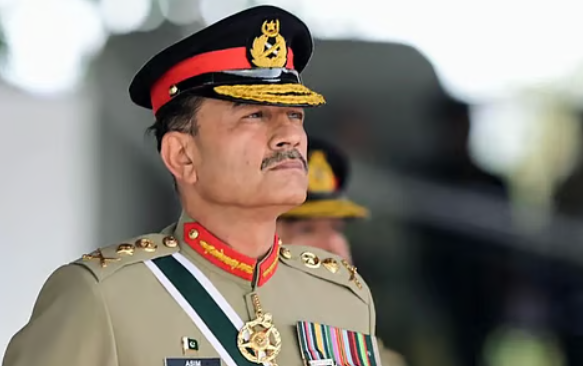



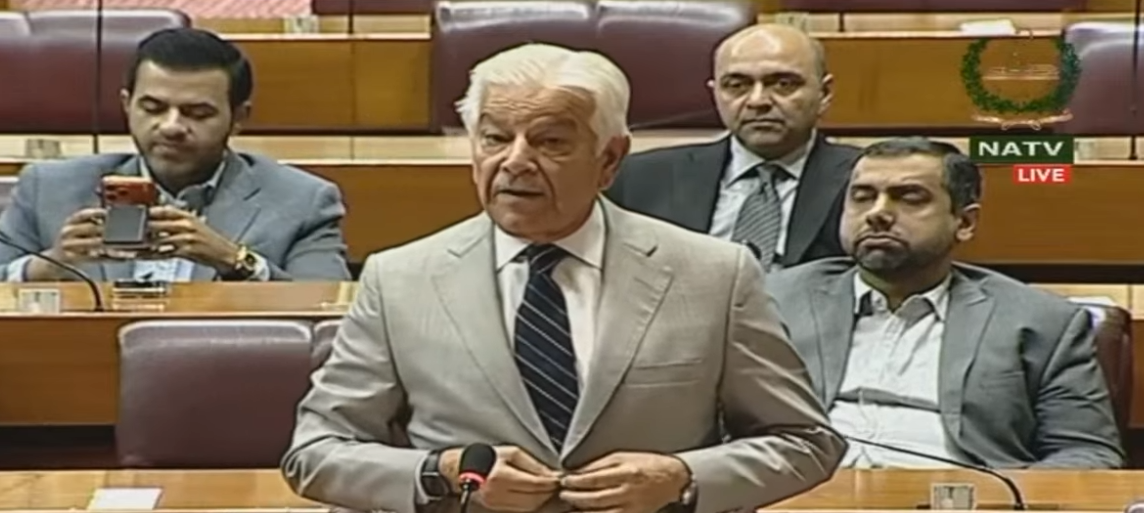
Web Desk: Defence Minister Khawaja Asif questioned Jamiat Ulema-e-Islam-Fazl (JUI-F) chief Maulana Fazlur Rehman’s political record in the National Assembly, urging political leaders to reflect on their past decisions before criticising others. He also defended Field Marshal Asim Munir’s visit to Tehran, saying Pakistan’s efforts there focused on promoting regional peace rather than discussing defence matters.
Asif said political differences should not prevent leaders from recognising one another’s contributions or acknowledging Pakistan’s role in international diplomacy. He maintained that political disagreements must not undermine mutual respect among parties that have previously worked together in governments and political alliances.
Referring to Fazlur Rehman’s offer to facilitate negotiations in Iran, Asif questioned the context in which the JUI-F chief had proposed his services.
The defence minister said Fazlur Rehman had served during former military ruler General Pervez Musharraf’s tenure and had chaired parliament’s Kashmir Committee. He challenged the JUI-F leader to explain what he had accomplished for the Kashmir cause during his time in that position.
Asif also accused Fazlur Rehman of failing to consistently uphold the principles he had advocated throughout his political career. He criticised the JUI-F’s approach to religion, alleging that the party had turned religious sentiment into a source of political and financial gain.
However, Asif acknowledged that Fazlur Rehman had an established place in Pakistan’s political history and came from a politically significant family. He said political leaders should recognise such contributions while remaining free to disagree over policies and political positions.
Asif urged politicians to examine their own records before holding others accountable. He acknowledged that he had supported former military ruler General Zia-ul-Haq’s government but said he had subsequently apologised for his position in light of later developments.
He argued that no political leader should consider himself beyond criticism and said public figures must accept scrutiny of their past decisions.
Asif also defended the right of political parties to make decisions according to their circumstances and political interests. Referring to Pakistan Tehreek-e-Insaf (PTI) lawmakers, he said political realignments were emerging as parties reassessed their positions.
He called on political leaders to exercise restraint and maintain dignity despite their differences, noting that parties with opposing views had previously shared power and cooperated on political matters.
Separately, Asif clarified that no defence agreement was under discussion in Tehran and that the talks did not concern Pakistan’s defence arrangements.
He said Field Marshal Munir had travelled to Tehran to support regional peace and help create conditions for reconciliation between the parties involved in the conflict.
According to Asif, Munir had played an important role in promoting peace and negotiations for Pakistan following a war that began last year. He said the diplomatic efforts in Tehran fell outside the Defence Ministry’s direct responsibilities.
The minister stressed that Munir’s visit should be understood in the context of efforts to reduce tensions and facilitate dialogue, rather than as a defence-related engagement.
Asif said Pakistan had already concluded a defence agreement with Saudi Arabia, while defence agreements involving Qatar, Turkey, Pakistan and Indonesia had also been reached.
He emphasised that these arrangements were separate from the diplomatic efforts underway in Tehran and were not the subject of the discussions there.
Responding to questions about his own role in the process, Asif said his presence in Tehran had not been necessary because the activities taking place there did not fall within the Defence Ministry’s remit.
He reiterated that Pakistan’s diplomatic engagement aimed to ease regional tensions and create opportunities for a peaceful resolution, adding that political differences at home should not overshadow the country’s efforts to contribute to peace abroad.
Read more: Afghan Taliban unfair levies and trade restrictions deepen Afghan grape farmers’ miseries