


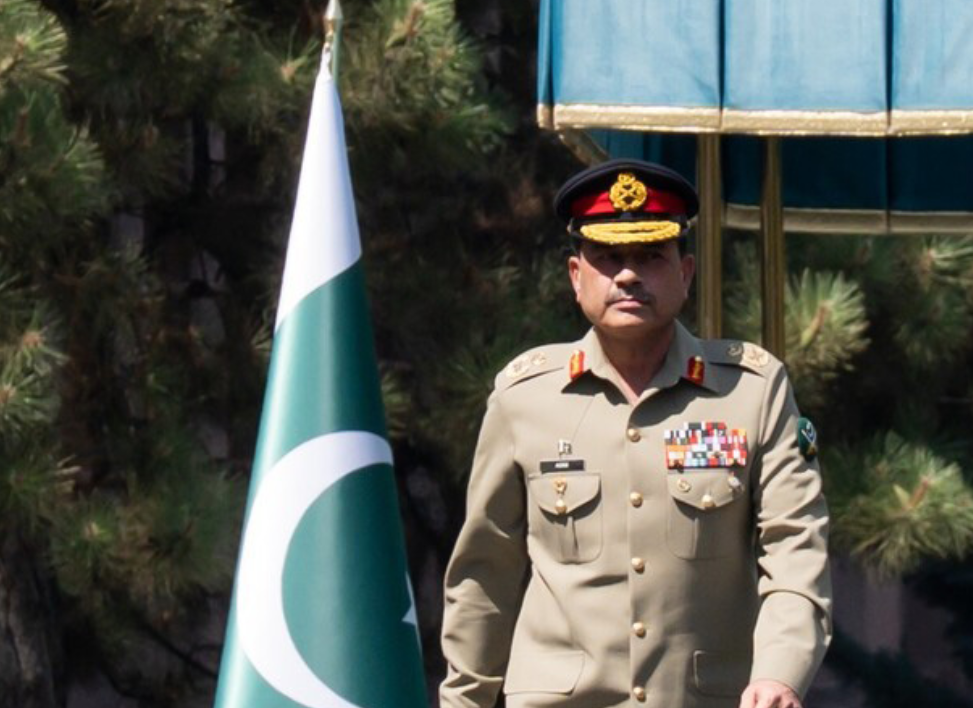
Web Desk: Chief of Defence Forces and Army Chief Field Marshal Asim Munir is scheduled to visit Tehran on Monday, as Islamabad steps up diplomatic efforts to help ease tensions between Iran and the United States and promote wider regional stability.
Iranian Foreign Ministry spokesman Esmaeil Baghaei announced the visit on Sunday, saying it was part of Pakistan’s efforts to strengthen peace and security in the region. Pakistani government sources also confirmed the trip.
The visit comes at a particularly sensitive moment, with US-Iran diplomacy stalled, Washington preparing new sanctions on Tehran and the strategic Strait of Hormuz facing severe disruption.
Munir’s visit is expected to focus on regional security and Pakistan’s efforts to facilitate dialogue between Tehran and Washington.
Pakistan has increasingly positioned itself as a mediator in the conflict, maintaining contacts with both sides as attempts to revive direct negotiations have run into disagreements over security guarantees and freedom of navigation through the Strait of Hormuz.
The latest trip follows a phone conversation between Munir and Iranian Foreign Minister Abbas Araghchi on Sunday. The Iranian government said the two discussed regional developments and ways to reinforce peace, stability and security across West Asia.
The situation around the Strait of Hormuz is likely to feature prominently in discussions.
Traffic through the waterway, a crucial route for global energy supplies, has fallen sharply amid the conflict. Iran has warned against unauthorized tanker movements and has threatened consequences for countries that support Washington’s economic pressure campaign.
The disruption has raised concerns well beyond the Middle East because the strait normally carries a significant share of global oil supplies. Any prolonged closure could therefore put further pressure on energy markets, inflation and international trade.
Pakistan, which borders Iran and depends heavily on stable regional trade and energy flows, has a direct interest in preventing further escalation.
Munir’s visit also comes as Washington prepares to impose additional sanctions on Iran.
U.S. Treasury Secretary Scott Bessent has warned of severe new economic measures and has urged countries, including China, to cooperate with Washington. Beijing remains a major buyer of Iranian oil and has called for diplomacy.
Tehran has rejected the planned sanctions, arguing that Washington cannot impose its laws on independent countries through secondary measures. Iranian officials have also warned neighboring states against assisting the U.S. campaign.
Against that backdrop, Pakistan’s diplomatic engagement could become increasingly important as regional governments seek to prevent the conflict from widening.
Beyond the immediate crisis, the two sides are expected to discuss bilateral cooperation.
Iran and Pakistan share a long border and have longstanding interests in trade, border security, energy cooperation and regional connectivity. Both countries have also faced security challenges along their frontier, making sustained military and diplomatic communication important.
Iran’s Foreign Ministry said Munir would meet senior Iranian officials during the visit, while describing the trip as an effort to deepen bilateral cooperation and support regional peace.
The talks are also taking place amid a broader reshaping of security relations in the region.
Recent developments involving Pakistan, Saudi Arabia and Turkiye have added another dimension to regional diplomacy, while tensions involving armed groups and competing regional interests continue to complicate efforts to establish a durable security framework.
Munir’s discussions in Tehran could therefore extend beyond the immediate US-Iran standoff to wider questions of regional stability and security cooperation.
The visit comes as Tehran faces mounting economic pressure and uncertainty over the future of its confrontation with Washington.
Iranian President Masoud Pezeshkian has said his government wants to move beyond a prolonged state of uncertainty but has also rejected what Tehran considers unacceptable concessions. At the same time, Iranian officials have warned that continued economic pressure could provoke a stronger response.
For Pakistan, the challenge is to maintain its relationship with Iran while continuing its engagement with the United States and other regional powers.
Munir’s Tehran visit could consequently serve two purposes: strengthening Pakistan-Iran ties and advancing Islamabad’s broader effort to prevent the conflict from escalating further.
With the Strait of Hormuz under severe strain, new US sanctions looming and diplomatic channels facing uncertainty, the talks could provide an important opportunity to explore ways of reducing tensions and reopening the path toward negotiations.
Read more: Political speculation over Rawalpindi Army deployment is baseless: Muneeb Farooq