


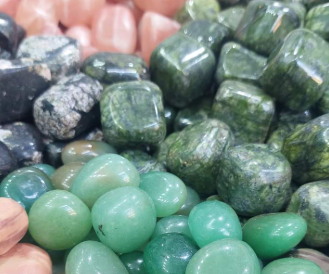
Web Desk: In the cramped, weathered lanes of Peshawar’s Namak Mandi market, the steady buzz of polishing machines blends with the sounds of commerce, as craftsmen turn rough stones from Pakistan’s mountainous regions into brightly coloured gems.
For 64-year-old gemstone trader Fayaz Khan, the work represents more than a family business. It offers a livelihood to miners, traders, cutters, polishers and jewellery makers while providing a potential source of income for communities facing rising living costs and limited employment opportunities.
Inside his workshop, young artisans work on emeralds from Swat, rubies from Chitral, peridot from Kohistan and topaz from Mardan. Their work illustrates the economic value that can be created when Pakistan processes its mineral resources locally rather than sending them abroad in raw form.
“Every stone we handle carries a story of struggle, travel and aspiration,” Fayaz said, holding a deep-green emerald beneath the workshop lights. “We need support to train miners, modernize the industry and present KP’s gemstones to international markets.”
Fayaz’s family entered the gemstone business in the early 1980s. The small enterprise has since passed through two generations, creating jobs and transferring cutting, polishing and trading skills to workers in the city.
His experience mirrors that of thousands of people whose incomes are tied directly or indirectly to the gemstone trade in Khyber Pakhtunkhwa, a province with some of Pakistan’s most diverse deposits of precious and semi-precious stones.
Alongside Gilgit-Baltistan, Azad Jammu and Kashmir and parts of Balochistan, KP lies within a geological zone known for deposits of emerald, ruby, sapphire, aquamarine, peridot and topaz.
Industry representatives estimate that more than 350,000 people are connected to the gemstone trade in KP. Namak Mandi has served as a major trading hub since the 1970s, linking miners and local dealers with buyers from Pakistan and abroad.
Yet the industry remains far smaller than its resource base suggests.
Traders say the province’s gemstone industry faces a persistent gap between what lies underground and what reaches international markets.
Traditional extraction techniques can damage or discard valuable material, while miners often work without modern equipment, geological information or adequate safety measures. Limited technical expertise also makes it difficult to maximize recovery from deposits.
“Valuable material is lost because much of the mining still relies on traditional techniques,” traders said, calling for modern machinery, professional training and safer working conditions.
The problem continues after extraction. Pakistan lacks sufficiently accessible, internationally recognized grading and certification infrastructure, making it harder for locally produced stones to secure the premium prices available in established global markets.
Consequently, some gemstones are exported as rough or partly processed material. That limits the income retained by miners, traders, manufacturers and other businesses in Pakistan.
Fayaz said high-quality emeralds can command prices of up to Rs25,000 per carat, while well-processed rubies can generate considerably higher returns depending on quality and market conditions.
Those figures point to the value of processing gemstones domestically through cutting, polishing, grading and certification.
For industry representatives, the objective is not simply to increase the volume of stones extracted. Instead, they want Pakistan to capture a larger share of the value created between the mine and the final customer.
Mamoor Khan, patron-in-chief of the All Pakistan Commercial Exporters Association, said Pakistan had the capacity to export millions of carats of rubies, emeralds and peridots.
However, gemstone exports by APCEA members amounted to about $4 million in the 2021-22 financial year, he said, underscoring the distance between the country’s geological potential and its current export performance.
Khan said gemstones should be developed as a formal, export-driven industry rather than treated primarily as a traditional trade.
Such a shift, he said, could generate employment, attract investment and increase foreign-exchange earnings.
Training is emerging as one of the key pieces of the industry’s development puzzle.
Over the past two years, more than 4,500 students from KP and its merged districts have reportedly received instruction in gemstone mining, cutting and polishing through master trainers linked to the Gems and Gemological Institute Peshawar.
For young people in areas where formal employment remains scarce, such technical skills can create opportunities beyond the mines and trading markets.
Better training could also help Pakistan improve the quality and consistency of locally processed stones, strengthening its ability to compete in international markets.
Federal authorities have also begun placing greater emphasis on gemstones as part of Pakistan’s trade ambitions.
Sabaz Ali, a director at the Trade Development Authority of Pakistan, said a draft law establishing a Gems and Jewellery Authority had been approved. He also said gemstones had been designated a priority sector under the Strategic Trade Policy Framework.
According to Ali, the federal government has launched the National Gemstone Policy 2026-2030, with an export target of between $500 million and $1 billion over five years. The strategy focuses on increasing local cutting and polishing, strengthening certification and bringing more mining activity into the formal economy.
The proposed Gemstone City in Peshawar could further support the industry by concentrating traders, cutters and polishers alongside modern machinery, laboratories, packaging facilities and marketing services.
If implemented effectively, such infrastructure could alter the economics of the sector.
A rough emerald that leaves Pakistan at a relatively modest price could instead pass through local cutting, polishing, grading, jewellery production and marketing before reaching international consumers. Each additional stage could generate jobs and retain more economic value inside the country.
The resulting activity could extend well beyond mining and trading, creating demand for engineers, laboratory technicians, jewellery manufacturers, packaging companies, logistics providers and international marketing specialists.
Dr Muhammad Naeem, an economics professor at the University of Swabi, described gemstones as a possible component of Pakistan’s strategy to diversify exports.
He estimated that Pakistan has about $450 billion in untapped gemstone reserves, while annual official gemstone exports remain only a fraction of that potential, at roughly $5.8 million. He attributed the weak export performance in part to informal trading and smuggling.
Naeem called for affordable financing, public-private partnerships and modern gemological laboratories in major mining and trading centres.
Access to finance could help small businesses invest in equipment and processing facilities, while stronger laboratories could provide the internationally recognized certification needed to build buyer confidence.
For Fayaz, however, the industry’s future is ultimately measured in human terms.
He has watched young workers arrive at his workshop with limited experience and gradually learn how to cut and polish stones. Their growing expertise can translate into higher earnings and more stable livelihoods for their families.
Each finished gemstone represents not only mineral wealth but also hours of skilled labour and the possibility of greater income for the people involved in producing it.
His workshop offers a glimpse of what the wider industry could achieve with sustained investment, modern technology and stronger institutions.
“Every stone has a story,” Fayaz said, looking again at the emerald in his hand. “We want the world to see what KP has.”
As the polishing machines continue their steady rhythm in Namak Mandi, the stones moving through its workshops embody both the promise and the challenge facing Khyber Pakhtunkhwa.
The province has the geological resources, a long-established trading network and a workforce capable of developing specialized skills. What remains is to connect those strengths with modern mining methods, credible certification, financing, training and an effective export strategy.
If those pieces come together, KP’s gemstones could become more than luxury products. They could help create jobs, attract investment, earn foreign exchange and give a new generation a stake in one of Pakistan’s most promising but underdeveloped natural-resource industries.
Read more: Schools closed until August 31? Education department issues clarification