



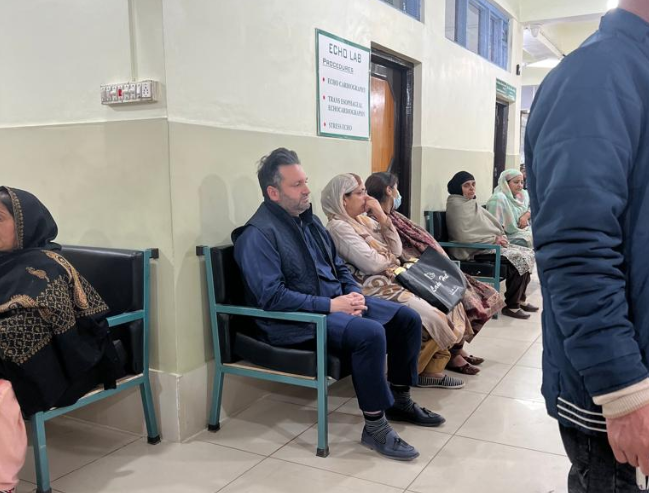
Web Desk: A discrepancy involving more than 135,000 laboratory tests at Peshawar’s Khyber Teaching Hospital has raised serious questions about billing controls, financial oversight and access to sensitive patient data. An inquiry reportedly identified a monthly revenue shortfall of about 7 million rupees, while hospital laboratory income rose sharply after investigators began examining the matter.
The case highlights a broader challenge for public-sector hospitals: digital health systems can improve efficiency, but weak oversight and limited audit access can leave gaps in financial accountability. The allegations require an independent investigation, particularly because the available information does not establish who was responsible for the missing records or whether the discrepancy resulted from deliberate misconduct, technical failures or flawed billing procedures.
According to the inquiry findings cited in the report, Khyber Teaching Hospital’s pathology laboratory conducted approximately 930,000 tests, but its records contained only 794,000 invoices. The difference amounted to roughly 136,000 tests, raising concerns that some services may not have been properly recorded or billed.
The report estimated that the discrepancy was associated with a monthly revenue shortfall of around 7 million rupees. However, investigators would need to reconcile test records, invoices, receipts and bank deposits before determining the actual financial loss.
The allegations concern the evening outpatient department, where the hospital uses medical software associated with Shaukat Khanum Memorial Cancer Hospital and Research Centre. The same system is reportedly installed at other teaching hospitals in Khyber Pakhtunkhwa, including Lady Reading Hospital and Hayatabad Medical Complex.
If the system operates across multiple institutions, the findings could have implications beyond a single hospital. Nevertheless, investigators should establish whether the same weaknesses exist elsewhere rather than assume that one hospital’s reported discrepancies reflect a province-wide problem.
One of the most striking claims in the report is that laboratory revenue increased by more than 130% after the inquiry began.
Such a sharp rise warrants a detailed examination. It could reflect tighter billing controls, the recovery of previously unrecorded revenue, changes in patient volumes or adjustments to accounting procedures. Alternatively, it could point to earlier weaknesses in the collection process.
Without monthly financial statements, patient-volume figures and a clear account of any procedural changes, the increase alone cannot establish wrongdoing. Investigators should compare revenue before and after the inquiry, examine the number and type of tests performed, and determine whether the additional income came from improved billing or other factors.
The inquiry also reportedly identified around 100 patients a day whose categories were changed. According to the report, some patients’ records were transferred from the evening outpatient department to the morning department, allegedly affecting the prices charged for their tests.
This claim requires particular scrutiny. Investigators should establish who authorised the changes, whether the transfers had legitimate clinical or administrative reasons, how they affected invoices and whether patients paid charges that differed from approved rates.
The report alleges that investigators sought original records from Shaukat Khanum but could not locate entries corresponding to the disputed tests. It also says the hospital director subsequently instructed the software provider’s relevant IT section not to supply further records.
If confirmed, restricting access to information needed for an inquiry could undermine efforts to establish what happened. However, the reasons for the instruction and the scope of the records withheld should be verified through official correspondence.
A senior hospital official reportedly dismissed the matter as a minor IT error, saying the software had been provided free of charge and that the hospital director controlled access to its records. An inquiry official, speaking anonymously according to the report, maintained that the investigation remained incomplete.
These competing accounts underline why the matter should not be resolved through informal assurances or unsubstantiated allegations. The hospital administration should explain the discrepancies in writing, while investigators should preserve the relevant records and document every attempt to obtain them.
The fact that software was supplied without a purchase price would not, by itself, settle questions about its operation, maintenance, access controls or the accuracy of the financial records it generates.
The allegations also raise questions about the hospital’s technical safeguards. The report points to the absence or weakness of a modern barcode-based tracking system, which can connect each laboratory test to a patient, a billing entry and the corresponding result.
A properly implemented system can help hospitals detect duplicate entries, missing invoices and unauthorised changes. Yet barcode technology alone cannot guarantee accountability. Hospitals also need reliable access logs, role-based permissions, secure backups, routine reconciliation and independent audits.
Every change to a patient’s category, test record or invoice should leave a trace showing who made the change, when it occurred and why. Administrators should not be able to erase or alter records without generating an auditable history.
Moreover, hospitals should reconcile the number of tests performed with invoices issued and payments received on a regular basis. Automated alerts could flag unusual gaps between clinical activity and recorded revenue before discrepancies grow.
Because the software reportedly handles sensitive medical information, investigators must also examine whether access complied with applicable confidentiality requirements. Any disclosure to unauthorised parties should be assessed on the evidence, with patient privacy protected throughout the process.
The central issue is not simply whether laboratory revenue fell or later increased. It is whether the hospital can account for every test performed, explain every billing adjustment and demonstrate that its digital records remain complete and secure.
An independent inquiry should examine the original laboratory logs, billing records, payment receipts, software audit trails and correspondence between the hospital and the software provider. Investigators should also establish whether the disputed entries affected patients’ charges, hospital revenue or both.
The inquiry should identify responsibility only after reviewing the evidence and giving the officials concerned an opportunity to respond. If investigators establish deliberate financial misconduct, the authorities should pursue the appropriate disciplinary or legal action. If the discrepancy resulted from technical or procedural failures, the hospital should correct those weaknesses and make the findings public to the extent permitted by law.
The case also offers an opportunity to strengthen controls across Khyber Pakhtunkhwa’s teaching hospitals. A province-wide audit of comparable systems could help determine whether the problem was isolated or reflected wider weaknesses in digital billing and financial oversight.
Public hospitals must account for the services they provide and the money they collect. Until the reported discrepancy is independently reconciled, questions over the missing test records will remain unresolved. Transparent findings, rather than competing claims, are necessary to establish what happened and restore confidence in the hospital’s financial and administrative systems.
Read more: Financial and administrative corruption cases surface in KP