


Web Desk: Pakistan has agreed to scrap a planned fuel subsidy for motorcycles and small cars as part of a broader agreement with the International Monetary Fund, putting an end to a government initiative designed to cushion lower-income motorists from rising petrol costs.
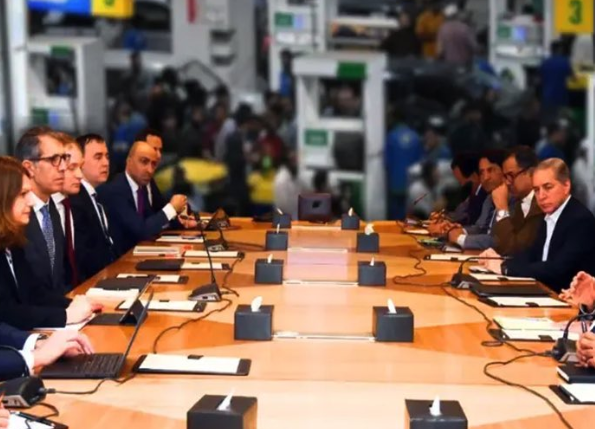
The decision came as Islamabad and the IMF reached a staff-level agreement on a $1.21 billion loan tranche following negotiations held in Karachi and Islamabad between Sept. 23 and Oct. 7.
The subsidy plan had offered a Rs100-per-litre reduction in petrol prices for eligible consumers. Under the scheme announced by Prime Minister Shehbaz Sharif, motorcycle owners could receive the discount on up to 20 litres of petrol a month, while owners of vehicles with engines of up to 800cc could claim it on 30 litres.
The government had earmarked Rs75 billion for the three-month programme.
However, the IMF opposed the measure, arguing that a broad fuel subsidy would impose a significant burden on public finances without adequately directing assistance toward the people most in need.
The fund has now called for the programme to be withdrawn immediately as part of the conditions surrounding the latest agreement.
The IMF said any future response to an unexpected increase in international oil prices should follow a more limited approach.
Under the agreed framework, Islamabad would need to make any fuel assistance temporary and narrowly targeted. Such support would also have to operate through existing social protection mechanisms and remain consistent with the government’s fiscal plans for the 2026-27 financial year.
The shift marks a setback for the government’s effort to provide direct relief to motorcycle and small-car users, who form a significant segment of Pakistan’s road users.
The fuel subsidy was one element of wider discussions between Pakistan and the IMF covering the country’s latest economic reform programme.
The negotiations also included the IMF’s fourth review of Pakistan’s Extended Fund Facility and the third review under the Resilience and Sustainability Facility, alongside consultations under the IMF’s Article IV process.
In addition, Pakistan committed to improving expenditure on social and health programmes while strengthening the performance, management and governance of public institutions.
The government had previously maintained that the petrol relief programme would proceed despite IMF reservations. Prime Minister Shehbaz Sharif had also raised the issue during discussions with the IMF’s managing director in an effort to secure support for the initiative.
That effort ultimately failed to produce an exemption.
With the latest staff-level agreement now in place, Islamabad will have to abandon the subsidy in its existing form and adjust its policy in line with the IMF’s requirements.
The development highlights the difficult balance Pakistan faces between providing immediate relief to consumers and maintaining the fiscal discipline required under its IMF programme.
Read more: Sindh CM Approves Expansion of Education Foundation Schools