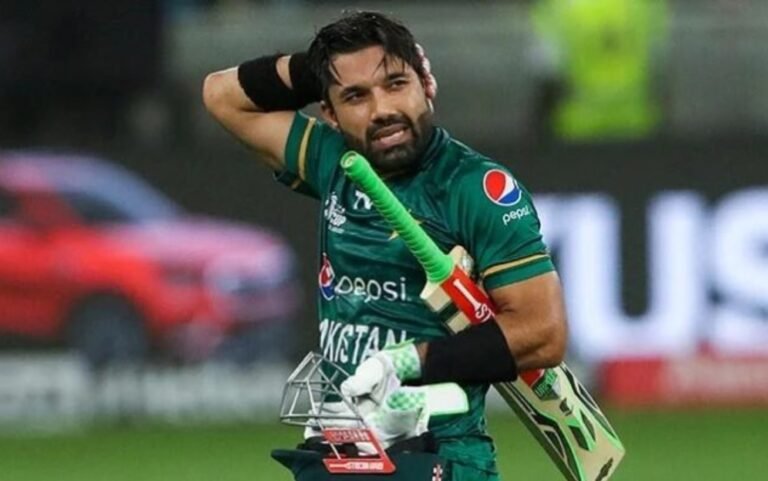

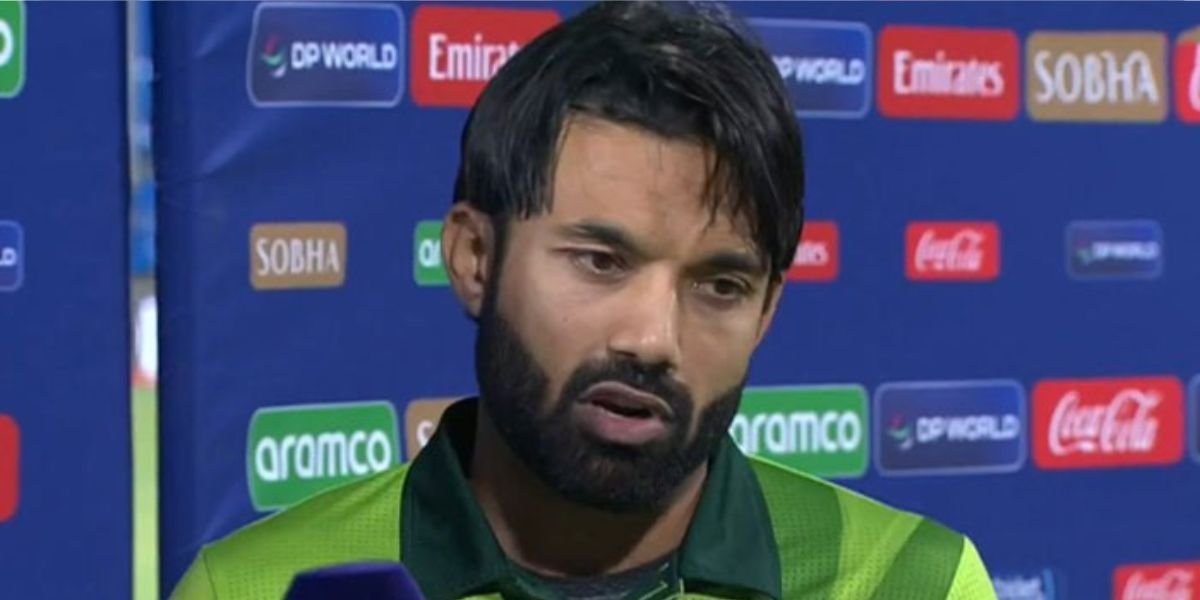
Close sources of Mohammad Rizwan have revealed that the cricketer was not allowed by board officials to speak to the media.
According to sources, Rizwan had sought permission from the Pakistan Cricket Board (PCB) to hold a media talk. He requested permission twice, but the board refused on both occasions.
Sources said that Rizwan wanted to make the entire controversy public. He wished to share details about the mobile phone confiscated after the Lord’s Test, as well as disclose details of the allegations levelled against him.
According to sources, Rizwan also wanted to share details regarding the letter written to the International Cricket Council (ICC). He intended to invoke Clause 16 while respecting Clause 4.1 of the central contract.
It is pertinent to mention that under Clause 4.1, a player cannot make a public statement without permission, while Clause 16 states that there should be mutual cooperation between the PCB and the player.
Lahore High Court Directs NCCIA Not to Harass Mohammad Rizwan
The Lahore High Court, while issuing a written verdict dismissing cricketer Mohammad Rizwan’s petition against the NCCIA inquiry, has directed the agency not to harass him.
Chief Justice of the Lahore High Court Justice Aalia Neelum issued the written verdict on Mohammad Rizwan’s petition.
The verdict stated that the NCCIA is conducting an inquiry against Mohammad Rizwan regarding online betting and gambling. According to the government lawyer, the matter falls under Section 14 of the Prevention of Electronic Crimes Act (PECA) 2016, concerning unlawful financial gain. Information obtained during cyber patrolling revealed Mohammad Rizwan’s connection to the matter.
The verdict stated that, at this stage, it was appropriate to allow the relevant agency to continue investigating the allegations. The ICC Anti-Corruption Code does not override or terminate proceedings under other applicable laws. An attempt cannot be made to avoid criminal proceedings by relying on the ICC’s regulations. The ICC’s own code also requires cooperation with relevant criminal or regulatory authorities, and the existence of the ICC disciplinary framework does not obstruct a lawful inquiry by a state-authorised agency.
The court observed that a call-up notice, in itself, does not accuse a person of committing a crime. The NCCIA inquiry is neither beyond its jurisdiction nor motivated by malice. The purpose of the inquiry is to detect and eliminate corruption in sports, and the court cannot intervene at this preliminary stage before the inquiry is completed and the need for further proceedings is determined.
The court stated that Mohammad Rizwan could seek appropriate legal remedy if he had any complaint regarding the final outcome of the inquiry. The verdict further stated that he could approach the relevant court for the return of items seized from or taken into possession from him.
The court directed Mohammad Rizwan to participate in and cooperate with the NCCIA inquiry. It also instructed the NCCIA not to harass or unnecessarily trouble Mohammad Rizwan and to conduct the inquiry in accordance with the law.
Also Read: What did the NCCIA ask Mohammad Rizwan?