



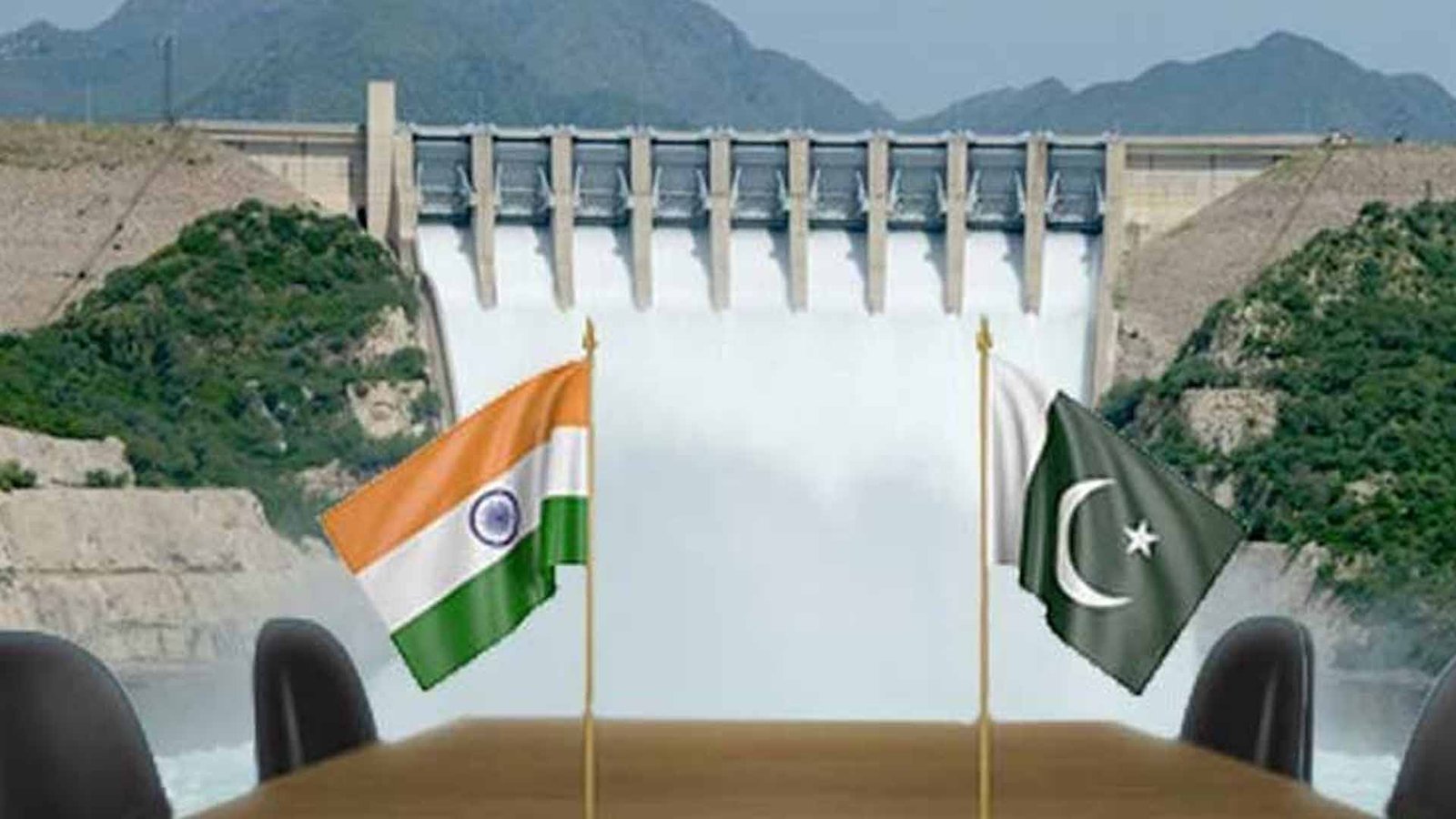
Web Desk: The Permanent Court of Arbitration said on Monday that the Indus Waters Treaty between India and Pakistan remains legally in force, rejecting the argument that either country could unilaterally suspend the decades-old water-sharing agreement.
The ruling comes amid a renewed dispute over Indian hydroelectric projects in the Himalayan region and heightened tensions between the two nuclear-armed neighbours.
The Hague-based court said India must continue to comply with its obligations under the treaty, which governs the use of the Indus river system and sets out limited rights for India to develop hydroelectric projects on rivers allocated to Pakistan.
The latest proceedings relate to long-running disagreements over the design and operation of Indian hydroelectric projects on the western rivers of the Indus system.
Pakistan has argued that certain features of Indian projects could affect downstream water flows and undermine its rights under the treaty.
The dispute has focused particularly on the Kishenganga and Ratle hydroelectric projects, located on tributaries of the Jhelum and Chenab rivers.
The treaty permits India to build run-of-the-river hydroelectric facilities on the western rivers, but places technical restrictions on their design and operation.
The court has previously held that those exceptions must comply with the treaty’s specific requirements rather than broader standards or interpretations proposed by either side.
The court said a neutral expert appointed by the World Bank is expected to determine by July 2027 whether the construction of the disputed hydroelectric facilities complies with the treaty’s provisions.
The process reflects the treaty’s dispute-resolution mechanisms, which provide for arbitration and neutral-expert proceedings in different circumstances.
The court’s rulings and decisions under the applicable mechanisms are binding on the parties, according to the material provided.
The ruling reinforces the legal status of the Indus Waters Treaty, which India and Pakistan signed in 1960 after negotiations facilitated by the World Bank.
Under the agreement, India received rights over the eastern rivers Ravi, Beas and Sutlej while Pakistan received the principal use of the western rivers Indus, Jhelum and Chenab.
India nevertheless retains restricted rights to use the western rivers for purposes including hydropower generation, subject to conditions designed to protect Pakistan’s downstream interests.
The treaty has survived several wars and prolonged periods of diplomatic hostility, making it one of the longest-standing frameworks for cooperation between the two countries.
Relations deteriorated sharply after an April 2025 attack in Pahalgam that killed 26 people. India blamed Pakistan for the incident, while Islamabad rejected the accusation.
India subsequently announced the suspension of the Indus Waters Treaty and introduced several diplomatic and travel restrictions against Pakistan.
Military tensions then escalated in May 2025, when the two countries exchanged strikes before agreeing to a ceasefire following international diplomatic efforts.
The dispute over the water treaty has remained a major point of contention since then.
Pakistan depends heavily on the Indus river system for agriculture, food production and livelihoods.
The western rivers covered by the treaty form a critical part of Pakistan’s irrigation network, making the country’s downstream position particularly sensitive to changes in water availability and river management.
Pakistan has repeatedly raised concerns that Indian hydroelectric projects could allow temporary changes in water flows or storage and potentially affect downstream users.
India, meanwhile, maintains rights under the treaty to develop hydroelectric facilities within specified technical limits.
The latest decision does not remove India’s treaty-based right to develop hydropower projects on the western rivers.
Instead, it reinforces the requirement that such projects comply with the treaty’s technical provisions while leaving specific compliance questions to the treaty’s established dispute-resolution mechanisms.
Pakistan on Monday welcomed a unanimous Hague Court of Arbitration ruling that India’s decision to place the Indus Waters Treaty in “abeyance” was unlawful, saying the treaty remains fully in force and India must honour its obligations.
Islamabad said the court also restricted certain construction work on the Ratle Hydroelectric Project until 90 days after a Neutral Expert’s decision, expected in July 2027.
Pakistan said it would review the full ruling once published and assess its implications for future engagement with India.
While Defence Minister Khawaja Muhammad Asif also lauded the International court’s ruling saying ‘Modi has humiliated India not just during the war but in International court too”, he further said that the court’s ruling is the validation of Pakistan’s stance on Indus water sharing framework.
For India, the decision preserves the framework under which it can pursue hydropower development while requiring disputed projects to remain within the treaty’s limits.
The Indus Waters Treaty remains particularly significant because both countries face growing pressure on water resources from population growth, agricultural demand and climate-related changes.
The latest ruling therefore extends beyond the immediate dispute over individual power projects. It also reinforces the treaty as the principal legal framework governing the shared river system.
With the neutral expert expected to assess project compliance by 2027, the water dispute is likely to remain an important element of India-Pakistan relations in the coming years.
Read more: Defence breakthrough as Pakistan develops D-248 Drone with 3,000-Km Range