

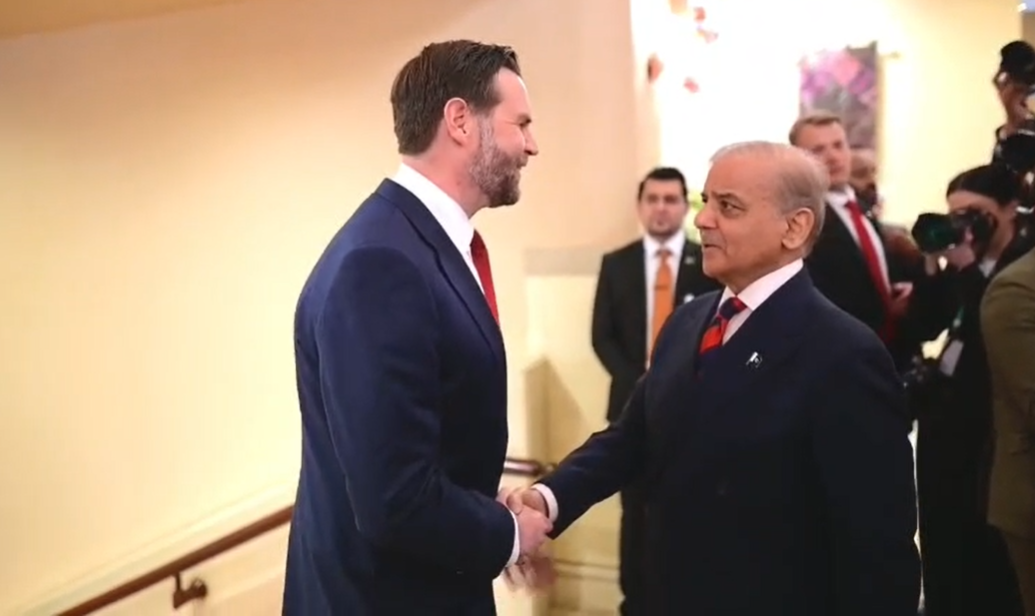
Web Desk: Historic peace talks between the United States and Iran formally began in the federal capital on Saturday, as Pakistan intensified its role as a neutral mediator. Prime Minister Shehbaz Sharif met US Vice President JD Vance to discuss regional stability and prospects for a lasting ceasefire.
During the meeting, both sides exchanged views on the broader regional situation and explored pathways toward de-escalation. Vance was accompanied by President Donald Trump’s special envoy Steve Witkoff and senior adviser Jared Kushner.
Sharif was joined by Deputy Prime Minister and Foreign Minister Ishaq Dar and Interior Minister Mohsin Naqvi, underscoring Pakistan’s coordinated diplomatic and security engagement.
Sharif welcomed the commitment shown by both delegations to engage constructively in the negotiation process. He expressed optimism that the Islamabad talks could become a significant milestone toward achieving sustainable peace in the region.
Furthermore, the prime minister reaffirmed Pakistan’s position as a responsible global mediator, pledging continued facilitation to help both sides move toward long-term stability.
Following the meeting, diplomatic sources indicated that the Islamabad dialogue is beginning to lay a concrete foundation for rebuilding trust between Washington and Tehran. Meanwhile, the US delegation praised Pakistan’s efforts, highlighting the country’s sincerity and effective arrangements in hosting the talks.
In addition, analysts view the direct negotiations in Islamabad as a major success for Pakistan’s foreign policy. Under Sharif’s leadership, Pakistan has positioned itself as a credible and neutral intermediary trusted by both sides.
The meeting between Vance and Pakistani leadership signals that Washington is taking a more serious approach to reducing tensions in the Middle East through diplomatic channels. At the same time, the involvement of senior officials like Dar and Naqvi reflects Pakistan’s intent to ensure both diplomatic progress and security support for the talks.
As discussions continue, observers say the Islamabad initiative could mark a turning point if both sides sustain engagement and translate dialogue into tangible outcomes.
Read more: Islamabad Talks: No third-party role, say sources