

Web Desk: Oil prices slid sharply on April 17 as global markets reacted to easing geopolitical tensions following Pakistan’s high-level diplomatic outreach to Iran, according to market data and regional officials.
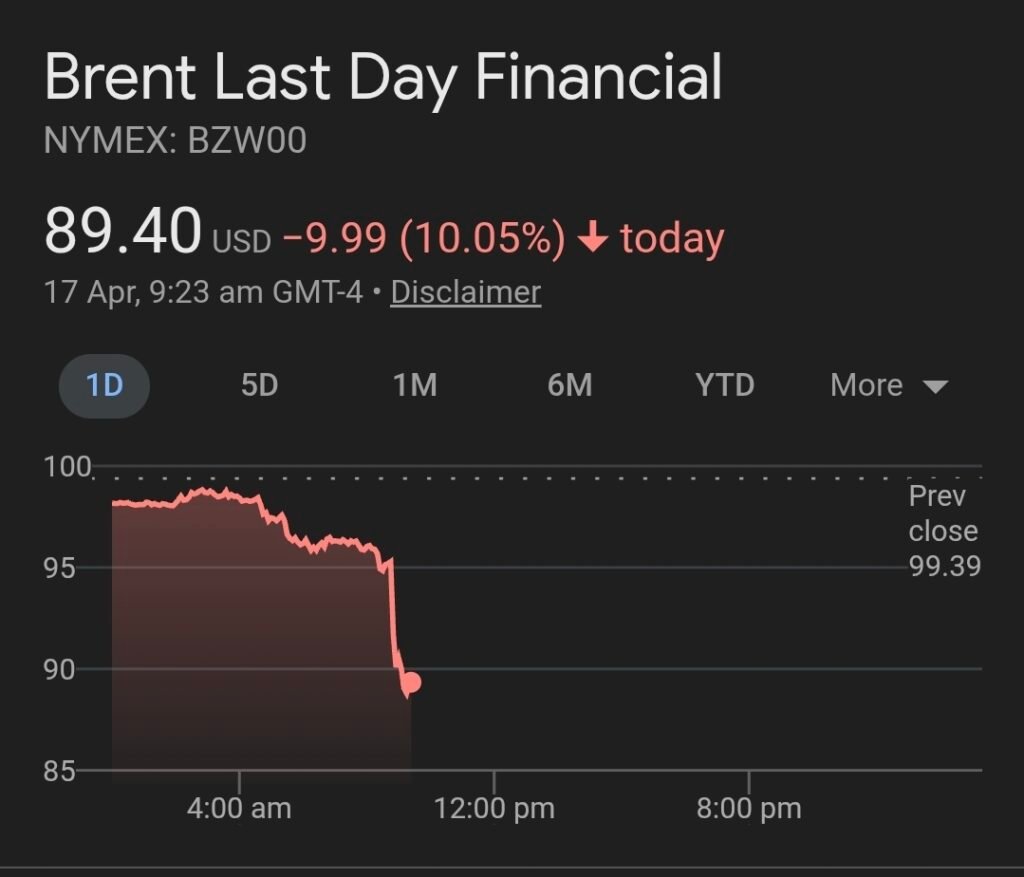
Brent crude futures fell to $89.40 per barrel, down nearly 10% on the day, marking one of the steepest single-day declines in recent months. Analysts attributed the drop to improved sentiment after Pakistan’s Chief of Army Staff, Field Marshal Syed Asim Munir, concluded a key visit to Tehran aimed at de-escalating regional tensions.
During the visit, Pakistani and Iranian officials held talks focused on border security, trade cooperation, and regional stability. As a result, investors responded quickly, pricing in reduced risk of supply disruptions from the Middle East a region that accounts for a significant share of global oil output.
Consequently, energy markets saw heavy selling pressure. Traders, who had earlier priced in geopolitical risk premiums, began unwinding positions as diplomatic signals pointed toward stability rather than conflict. Moreover, the decline was amplified by algorithmic trading and stop-loss triggers as prices breached key technical levels.
In addition, market participants noted that improved Pakistan-Iran coordination could strengthen regional security corridors, thereby reducing uncertainty around energy transportation routes. This development further reassured investors about uninterrupted oil supply chains.
However, analysts cautioned that volatility may persist. While the diplomatic breakthrough is a positive signal, broader geopolitical dynamics including tensions in other parts of the Middle East and global demand fluctuations continue to influence oil markets.
Meanwhile, financial markets beyond energy also reflected cautious optimism. Equity indices in parts of Asia showed modest gains, while safe haven assets such as gold edged lower, indicating a shift in investor sentiment toward risk assets.
Looking ahead, traders will closely monitor follow-up actions from both Islamabad and Tehran. If diplomatic engagement translates into sustained regional stability, oil prices could remain under pressure in the near term. Conversely, any reversal in sentiment could quickly push prices higher again.
Read more: Iran opens strait of Hormuz amid ceasefire in Lebanon