
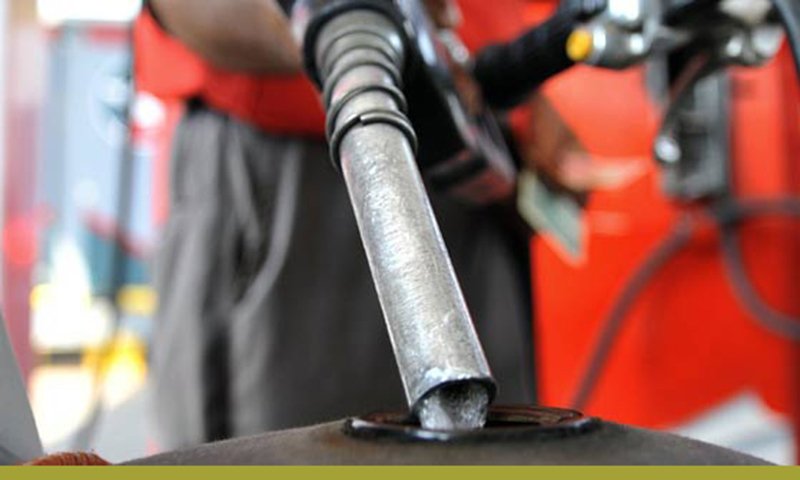
Web Desk: The federal government of Pakistan sharply increases fuel prices, with petrol and diesel rise by about 55 rupees per litre with immediate effect, government officials said, as global energy markets react to escalating tensions in the Middle East.
A sharp rise in global oil prices driven by the Iran war has forced Pakistan to consider a significant increase in domestic fuel prices, although the prime minister intervened to scale back the proposed hike in an effort to ease the burden on consumers.
The surge in international crude prices is placing heavy pressure on Pakistan’s fuel import bill, prompting urgent discussions within the government on adjusting domestic petroleum rates.
During a briefing to the prime minister earlier in the day, government officials said that rising international oil prices would justify an increase of roughly 110 rupees per litre in Pakistan to fully reflect global market trends.
However, the prime minister instructed authorities to limit the price increase in order to shield consumers from the full impact of global price shocks. He also ordered strict action against fuel hoarders.
Following the directive, officials revised the proposed adjustment and moved to cap the increase at around 55 to 60 rupees per litre instead of the larger rise initially recommended by energy authorities.
The decision reflects the government’s attempt to balance fiscal pressures with public concerns over rising living costs.
Experts said a wide price gap between Pakistan and neighboring countries can encourage cross-border fuel smuggling. In such cases, cheaper fuel purchased in Pakistan may be illegally transported across borders, particularly toward Afghanistan and India.
Officials said such smuggling would not only distort domestic supply but could also deepen Pakistan’s economic losses by diverting subsidized fuel out of the country.
Government officials said authorities are continuing to monitor global oil markets and will adjust domestic pricing policies to maintain supply stability while limiting economic damage.
In recent weeks, the government has adopted a policy of revising fuel prices on a weekly basis instead of the previous fortnightly schedule. Officials say the move allows authorities to respond more quickly to fluctuations in international oil prices and exchange rates.
The planned price hike comes as the ongoing conflict between Iran and Israel continues to disrupt regional stability and energy supply routes.
Shipping activity through the Strait of Hormuz one of the world’s most critical oil transit chokepoints has slowed significantly during the crisis. Analysts estimate that roughly 20 percent of global oil trade passes through the narrow waterway connecting the Persian Gulf with international markets.
Any disruption in that route can quickly ripple across global oil prices, pushing import costs higher for countries like Pakistan.
Pakistan imports a large portion of its crude oil and refined petroleum products, making its economy highly sensitive to international price swings.
Officials say the latest increase reflects both higher global crude prices and rising freight costs linked to the regional security situation.
At the same time, authorities have been working to secure additional crude shipments to maintain domestic fuel supplies and avoid shortages as uncertainty persists in global markets.
Government officials say they will continue monitoring the international situation and adjust domestic fuel prices in line with global trends under the weekly review mechanism.
Read more: Big breakthrough as govt arranges four oil tankers to avoid fuel shortage