



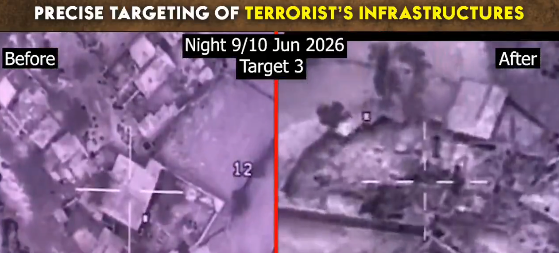
Web Desk: The United States carried out airstrikes inside Iran early Wednesday, blaming Tehran for the crash of an American attack helicopter and escalating a conflict that is spreading across the Middle East and straining fragile ceasefire efforts.
In response, Iran fired missiles at US linked sites in Bahrain and Kuwait, triggering air raid sirens and defensive fire in both Gulf states. Jordan’s military said it intercepted five missiles aimed at an air base hosting American troops, underscoring the widening geographic scope of the confrontation.
The renewed exchanges risk undermining diplomatic efforts to turn an April truce into a lasting settlement.
US Air Force and Navy jets targeted Iranian military infrastructure, including air defense systems, radar installations and ground control facilities, US Central Command said. Iranian authorities confirmed strikes near Bandar Abbas and Qeshm Island but did not disclose the extent of the damage.
Central Command described the operation as a measured response to recent attacks on US forces and commercial vessels navigating regional waters.
Tehran swiftly signaled retaliation. Foreign Minister Abbas Araghchi warned that foreign military deployments near Iran’s borders remain vulnerable and said Iranian forces would respond to any threat. “Leave our region if you want to be safe,” he wrote on social media.
Meanwhile, Jordan said the missiles it shot down were headed toward Muwaffaq Salti Air Base, which has hosted US F-35 fighter jets and other aircraft. The Jordanian military reported no casualties and said explosives specialists inspected debris from the intercepted projectiles.
The latest flare-up follows an exchange of fire between Israel and Iran a day earlier — their first since the April ceasefire took hold. Iranian state television reported that Israeli strikes killed at least two members of Iran’s air defense units.
The immediate trigger for the US strikes was the loss of a US Army AH-64 Apache helicopter near the Strait of Hormuz. A US official, speaking on condition of anonymity, said the aircraft collided with an Iranian drone during a patrol off Oman’s coast. Investigators are still examining whether the encounter was deliberate.
Both crew members survived. In what officials described as the first mission of its kind, an unmanned surface vessel located and recovered the aviators around 3:30 a.m. local time, roughly two hours after the helicopter went down. The drone boat transferred them to another position at sea, where a rescue helicopter completed the evacuation, according to Central Command spokesman Capt. Tim Hawkins.
President Donald Trump said the pilots were safe and unharmed.
The AH-64 Apaches have played a central role in US operations to enforce restrictions on Iranian oil shipments, part of Washington’s broader effort to pressure Tehran into concessions. The aircraft have also been used by regional allies, including the United Arab Emirates, to counter Iranian drone activity.
Since the United States and Israel launched coordinated strikes against Iran on Feb. 28, the conflict has unsettled global markets. Energy prices have climbed, feeding inflationary pressures that have driven up the cost of essentials, including food, in multiple countries.
Diplomatic attempts to cement the April ceasefire into a comprehensive agreement have faltered. Mediators, led primarily by Pakistan, have pushed both sides for weeks, but key differences remain unresolved.
Washington is demanding that Iran surrender its stockpile of highly enriched uranium, which U.S. officials believe was largely destroyed or buried during last year’s 12-day war. Tehran has rejected that demand and is pressing for sanctions relief and access to frozen assets before any final accord conditions Trump has dismissed.
At the same time, Israel has intensified operations in southern Lebanon against Hezbollah, the Iranian-backed militia. The Israeli military said it carried out several strikes over the past day targeting the group’s infrastructure.
The fighting along Israel’s northern frontier remains a strategic concern for Tehran. Although Lebanon’s government has adopted a tougher tone toward Hezbollah, it has yet to disarm the powerful armed faction.
As strikes and counterstrikes continue, officials warn that each new incident increases the risk of a broader regional war and further dims prospects for a negotiated end to the conflict.
Read more: Pakistan targets terrorist hideouts inside Afghanistan