



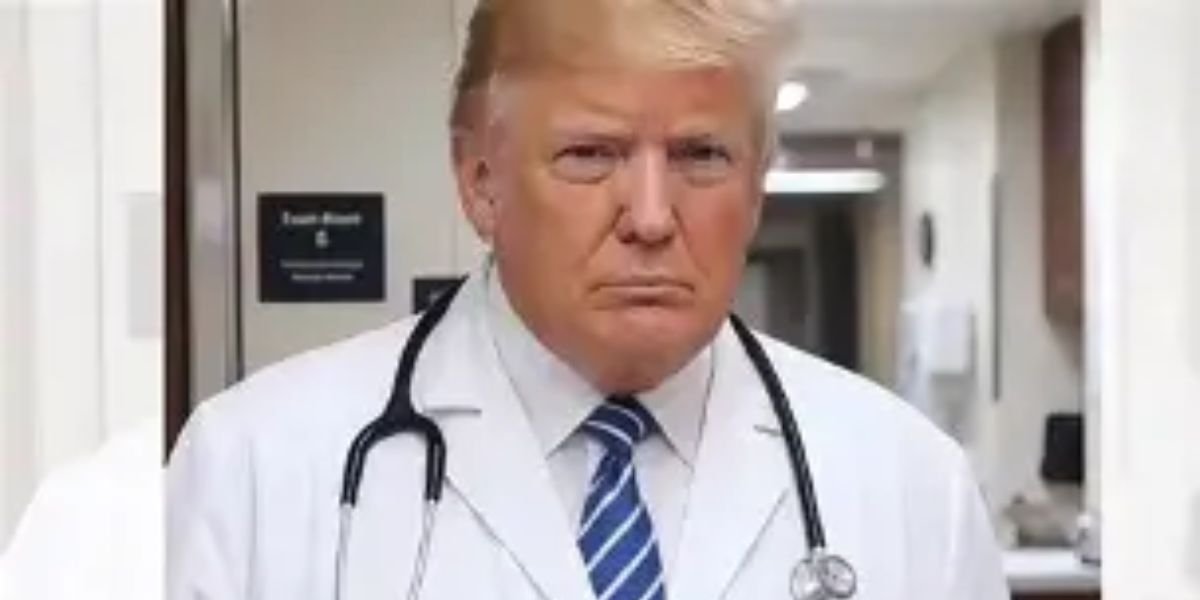
US President Donald Trump has sparked fresh political debate after sharing an AI-generated video on social media in which he portrays himself as a doctor treating critics for a fictional condition dubbed “Trump Derangement Syndrome.”
According to international media reports, the video uses AI-generated likenesses and voices of several well-known American celebrities, including Robert De Niro, Whoopi Goldberg, Edward Norton, Julia Roberts, and Rosie O’Donnell.
The celebrities are depicted as if they regret opposing Trump. Wearing a white doctor’s coat and a stethoscope, Trump claims his critics suffer from the fictional condition and jokingly prescribes staying away from “fake news,” praying, and drinking Diet Coke as the cure.
Rosie O’Donnell strongly criticized the video, saying she believes Trump’s mental condition is worsening. She argued that the US Constitution’s Twenty-fifth Amendment to the United States Constitution exists for situations like this and should be considered.
This is not the first time Trump has shared controversial AI-generated content. He has previously posted AI-generated images and videos depicting himself as Jesus healing the sick, dressed as the Pope, and portrayed as a king, all of which drew criticism.
The White House defended the post, saying the president has the right to share content reflecting his views and style of expression. White House spokesperson Davis Ingle said “Trump Derangement Syndrome” is a term commonly used by the president’s supporters to mock his critics.
However, the White House did not clarify whether permission had been obtained from the celebrities whose AI-generated images and voices appeared in the video.
Experts say AI-generated political videos like this are fueling a broader debate over free speech, political satire, and digital ethics, particularly when they use the likenesses and voices of real people without clear consent.