


Web Desk: Former Pakistan fast bowler Sarfraz Nawaz is set to launch a new memoir at Lord’s on Thursday, offering his account of controversies that have surrounded Pakistan cricket, including allegations of betting, match-fixing and political maneuvering inside the dressing room.
Nawaz, who has spent decades speaking publicly about corruption in cricket, told BBC Urdu in London that the book contains accounts of events he says he witnessed or learned about during his career. He also said he faced threats over his allegations, including warnings that he could be killed if he continued speaking out.
The former paceman said the book, which runs to about 100 pages, examines a range of controversies and includes references to official inquiries and allegations involving former Pakistan captains and other figures.
Nawaz said he had repeatedly raised concerns about alleged corruption in cricket and had formally approached authorities over the issue.
He said he registered police complaints in 2010 and 2017 and also wrote to senior state officials, including the prime minister, president, chief justice and army chief, seeking action over what he described as corruption in cricket.
According to Nawaz, his outspoken position also led to threats against him.
He said he had twice met Britain’s National Crime Agency while living in London and that authorities had provided additional security monitoring because of concerns about his safety.
Nawaz also discussed allegations of betting in Sharjah and referred to an investigation conducted in 2001 by the International Cricket Council’s Anti-Corruption Unit under former Metropolitan Police Commissioner Sir Paul Condon.
He said the findings of the inquiry documented concerns surrounding betting in Sharjah and that the venue subsequently faced restrictions.
The former fast bowler said his memoir would also revisit major corruption investigations involving Pakistani cricket.
He referred to reports prepared by Justice Fakir Muhammad Yousuf and the Justice Malik Muhammad Qayyum inquiry, as well as allegations involving former captains and statements by various individuals.
Nawaz also cited the 2010 spot-fixing scandal involving former Pakistan captain Salman Butt and fast bowlers Mohammad Asif and Mohammad Amir. The three players were convicted in Britain and received prison sentences in 2011 over a spot-fixing case.
Nawaz has long maintained that corruption in cricket was not a hidden issue and said his book would provide his account of how betting and manipulation allegedly developed within the sport.
Nawaz’s memoir also looks back at his long cricketing partnership and friendship with former Pakistan captain Imran Khan.
Khan made his Pakistan debut in 1971 before spending time in Britain for his studies. Nawaz recalled his return to international cricket and said their partnership continued until 1984, helping establish Pakistan as a major force in fast bowling.
Nawaz said Khan had considerable confidence in him on the field and described their friendship as exceptionally close.
Other fast bowlers of that era included Asif Masood, Salim Altaf and Sikander Bakht, although Nawaz said he and Khan carried much of the team’s fast-bowling workload.
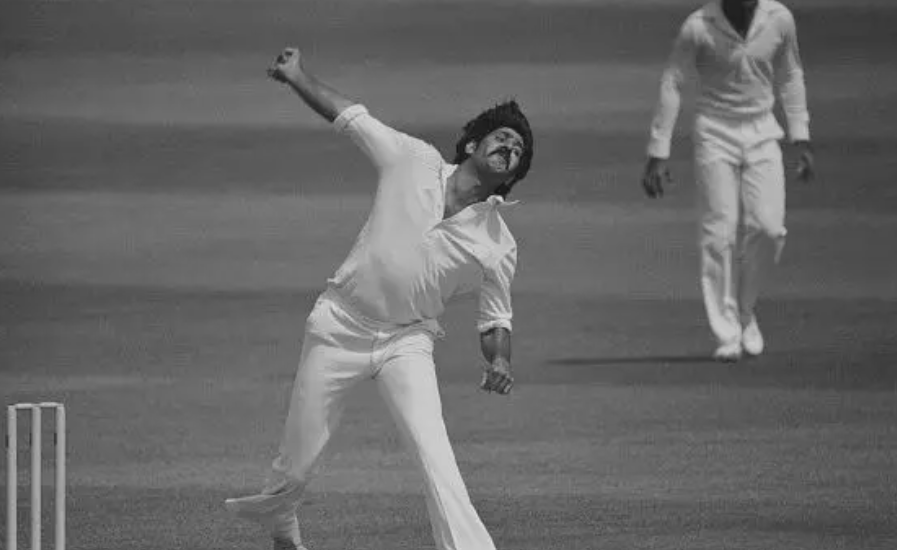
Nawaz played 55 Tests for Pakistan between 1969 and 1984, taking 177 wickets. He also claimed 63 wickets in 45 one-day internationals.
Widely regarded as one of the leading fast bowlers of his generation, Nawaz is credited with pioneering the use of reverse swing in international cricket.
He recalled beginning his cricket journey by playing in the streets of Lahore’s Mazang area before becoming involved in his father’s construction business.
However, he said the 1965 war between Pakistan and India disrupted construction funding and prompted him to pursue cricket more seriously.
His cricketing ability eventually helped him gain admission to Government College Lahore, where he continued to develop as a player.
After ending his Test career in 1984, Nawaz also ventured into Pakistani politics.
He said he announced his retirement at Lahore’s Anarkali bazaar and declared his intention to contest elections and enter politics.
Over the years, he was associated with several major Pakistani political parties, including the Pakistan Muslim League-Nawaz, Pakistan Peoples Party and Muttahida Qaumi Movement.
Nawaz said his decision to enter politics was partly driven by what he viewed as persistent injustices in cricket. He hoped that winning an election could eventually allow him to secure a senior position in the Pakistan Cricket Board and influence the sport’s administration.
However, he said the experience left him disappointed.
The new memoir is expected to provide Nawaz’s personal account of his playing career, his relationship with Khan, cricket’s internal politics and the corruption allegations that he has discussed publicly for decades.
Read more: PTI March: Key Islamabad-Rawalpindi routes face restrictions