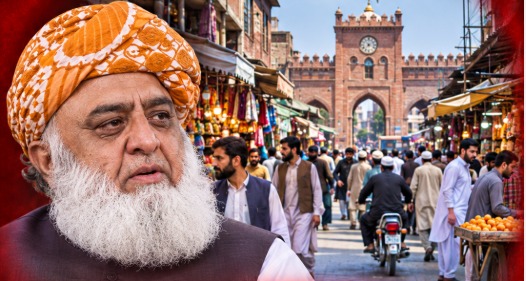



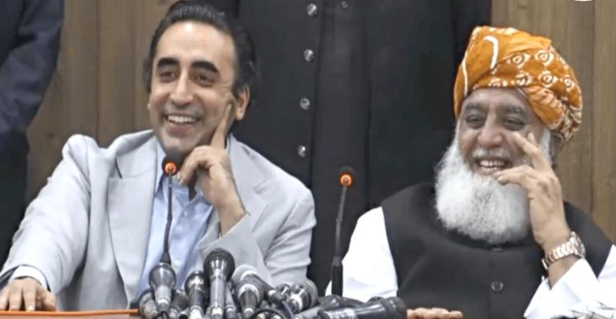
Web Desk: Pakistan Peoples Party (PPP) Chairman Bilawal Bhutto Zardari’s reported telephone conversation with Jamiat Ulema-e-Islam-Fazl (JUI-F) chief Maulana Fazlur Rehman on November 15 has drawn attention to a possible shift in political alignments, amid disputes over accountability and renewed debate about creating additional provinces.
According to political sources, Bilawal contacted Fazlur Rehman to express solidarity and raise concerns about what he described as government pressure on the JUI-F leader.
The reported exchange has prompted questions about whether the outreach reflects broader political cooperation between two leaders whose parties have different ideological traditions and priorities.
Fazlur Rehman has faced public scrutiny over allegations concerning assets and financial dealings involving him and members of his family.
However, the allegations require independent examination, and questions about assets or financial affairs do not, by themselves, establish wrongdoing.
Sources familiar with the political discussions claim that Fazlur Rehman sought support from Bilawal as pressure surrounding the allegations increased.
Such an arrangement, if confirmed, could offer the JUI-F leader an additional political channel at a time when his party is navigating a challenging political environment.
Meanwhile, proposals to create additional administrative units and provinces have become another point of political contention.
Supporters of new provinces argue that smaller administrative units could improve governance, distribute development resources more effectively and bring public services closer to underserved communities.
Opponents, however, raise concerns about constitutional complexities, political representation, provincial boundaries and the possible consequences for existing administrative arrangements.
Against this backdrop, political sources suggest that Bilawal is seeking support for opposition to proposals that would divide existing provinces.
The sources claim that cooperation with Fazlur Rehman could help reinforce that position as debate over administrative restructuring continues.
The timing of the conversation has also prompted speculation about whether the two parties could find common ground on issues beyond their immediate disagreements with the federal government.
Sources cited in the original account allege that Fazlur Rehman wants political backing amid scrutiny of his family’s financial affairs, while Bilawal seeks support against proposals to establish additional provinces.
Those claims remain unverified. Neither party has publicly confirmed a reciprocal arrangement, and there is no independently established evidence that support on accountability matters was exchanged for a commitment on provincial restructuring.
Bilawal’s opposition to dividing Sindh, however, is documented. On October 27, he publicly called for an end to the debate over creating new provinces, citing the position of Sindh’s elected representatives.
The conversation is particularly significant because the PPP supports the Pakistan Muslim League-Nawaz-led federal government in Parliament, even as Bilawal has criticised its handling of opposition parties.
According to the PPP’s statement, Bilawal urged the government to respect political criticism and avoid measures that could undermine parliamentary democracy.
The exchange also follows his recent appeals for greater cooperation between the government and opposition, suggesting that the contact with Fazlur Rehman could form part of a wider effort to reduce political confrontation.
For now, the reported conversation establishes a public expression of political solidarity, not a formal alliance.
The PPP and JUI-F have previously cooperated on parliamentary matters despite their ideological differences. Their latest engagement could create opportunities for further discussions, particularly as the government faces disputes over provincial autonomy, political accountability and constitutional reforms.
The next indication of their relationship may come through their parliamentary positions and public statements as debate over new provinces and the federal government’s treatment of opposition parties continues.
Read more: JUI-F protest fizzles across KP as peshawar markets buzz with activity