Web Desk: Pakistan Muslim League-Nawaz (PML-N) secured a landslide victory in the Gilgit-Baltistan Assembly elections, positioning itself to form the next regional government after winning a commanding share of seats in the strategically important mountainous region, according to preliminary election results and party officials.
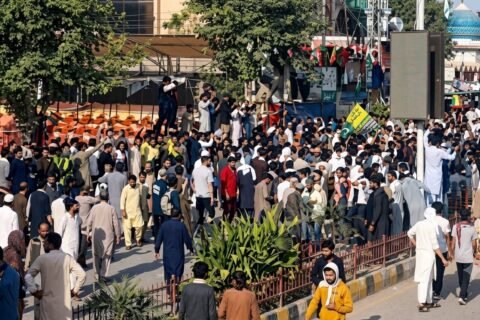
Meanwhile, voting on election day witnessed brief disturbances at several polling stations, including outside Sir Syed School polling station in Gilgit, where supporters of PML-N and the Pakistan Peoples Party (PPP) clashed following a heated exchange. The confrontation escalated into a scuffle, prompting security personnel, including police, Rangers and army troops, to intervene and disperse the crowd. Authorities said the situation was quickly brought under control and voting resumed peacefully, while polling continued uninterrupted across the region despite isolated incidents of tension.
The elections were held across 24 constituencies, where a total of 403 candidates competed for seats in the Gilgit-Baltistan Assembly. Independent candidates dominated the field, accounting for 266 contestants, while seven women also entered the race from various constituencies.
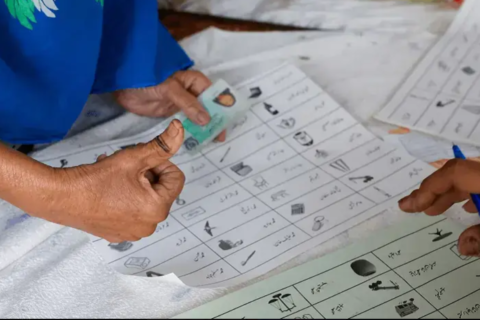
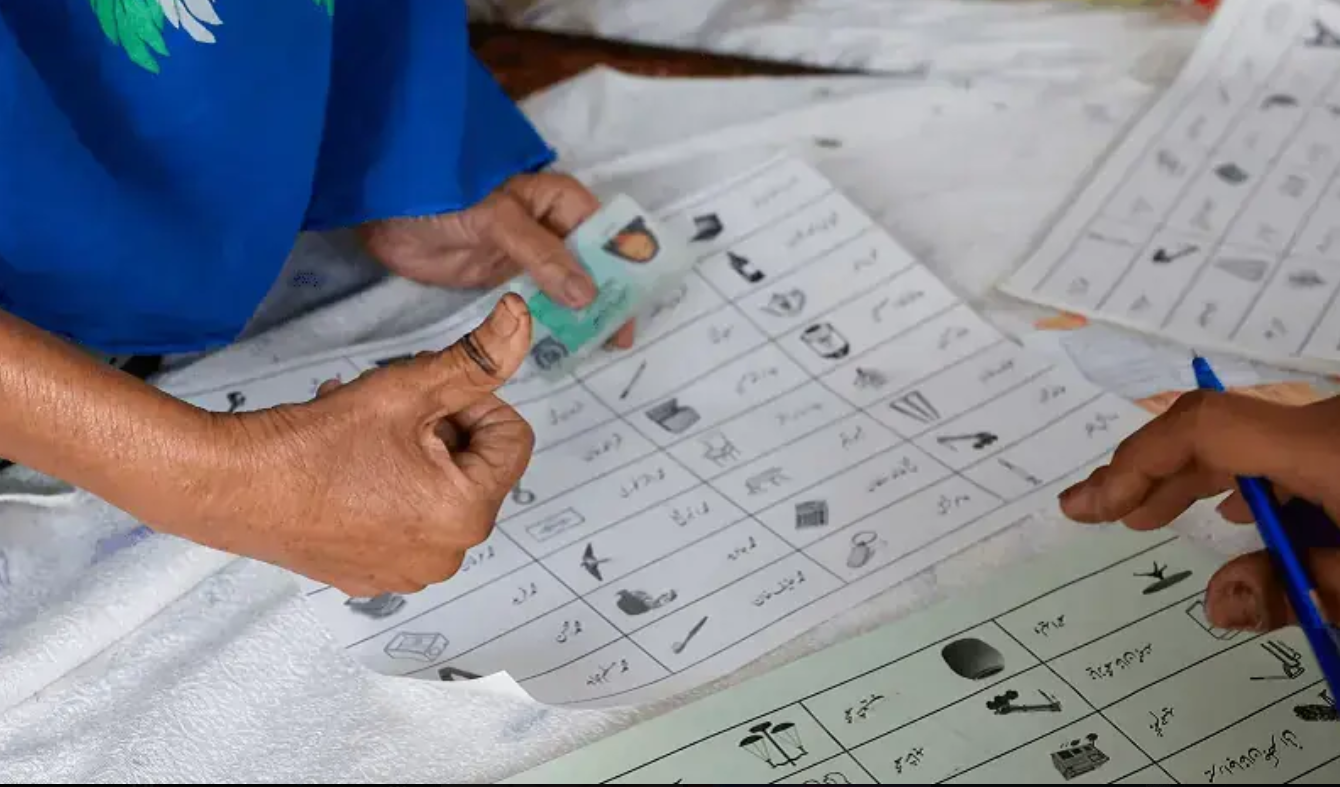
Voters cast their ballots to elect representatives who will serve for the next five years in a contest widely viewed as crucial for determining the region’s future political direction.
Polling began at 8 a.m. and continued until 5 p.m. without interruption, election officials said. Authorities established 1,368 polling stations across the region, including 830 categorized as highly sensitive due to security concerns.
To ensure a peaceful electoral process, officials deployed approximately 17,500 police personnel, while the Pakistan Army and other law enforcement agencies remained on standby to respond to any emergency situation.
In addition, authorities set up 2,447 polling booths to facilitate voters and reduce congestion at polling stations.
Official figures showed that Gilgit-Baltistan had 958,780 registered voters. Of those, 503,772 were men, while more than 455,000 were women.
Election authorities introduced special arrangements to encourage female voter participation and ensure access to polling facilities throughout the region.
The Gilgit-Baltistan Assembly comprises 33 seats, including 24 general seats, six seats reserved for women and three seats reserved for technocrats.
Following the election of members on general seats, the allocation of reserved seats plays a key role in determining the final balance of power in the assembly.
Any political party or coalition requires the support of at least 17 members in the 33-seat assembly to secure a simple majority and form the government.
With PML-N emerging as the dominant force in the elections, attention is now turning to coalition-building efforts and the allocation of reserved seats, which will shape the composition of the next government and influence the region’s political trajectory for the coming years.
Read more: Polls open across Gilgit-Baltistan as voters cast their ballots