



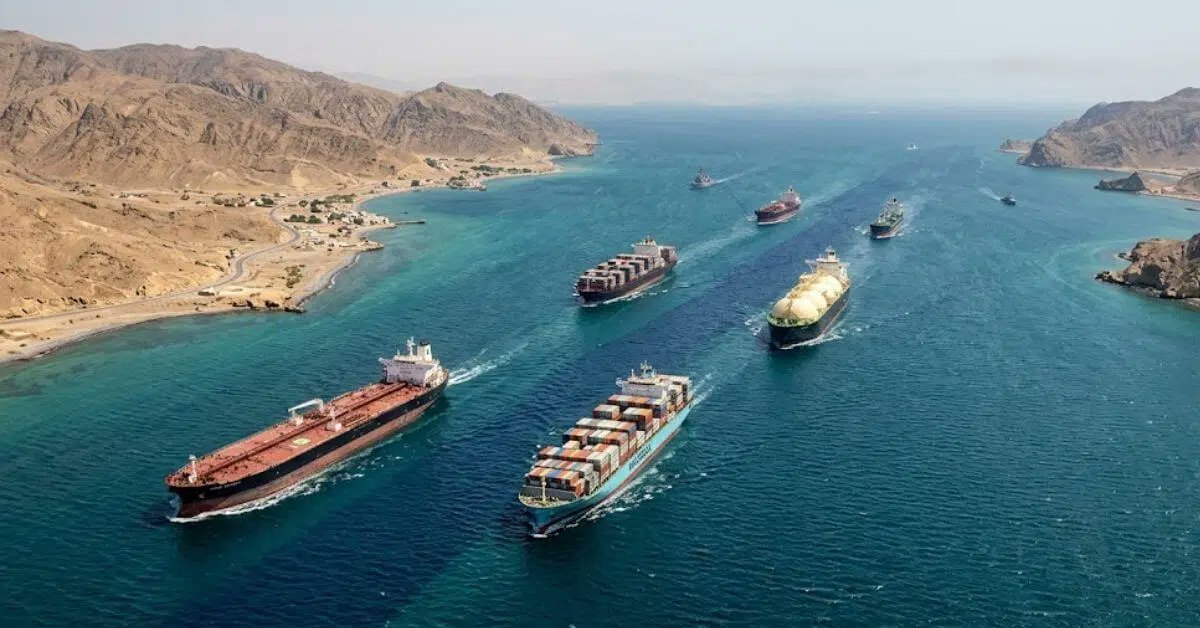
Web Desk: Iran has established sweeping control over the Strait of Hormuz, forcing commercial vessels to navigate a growing network of military checkpoints, diplomatic arrangements and security inspections that are reshaping one of the world’s most critical energy corridors.
The waterway, which carries roughly one-fifth of global oil supplies, has become the center of an escalating maritime crisis that is disrupting shipping traffic, stranding vessels and deepening fears of a broader shock to the global economy.
According to accounts from shipping officials, regional governments and security analysts, Iran now determines which vessels may pass through the strategic strait, which ships face delays and which operators must pay additional navigation and security fees.
As a result, commercial shipping activity through the Gulf has slowed dramatically. Before the conflict, about 140 vessels crossed the strait daily. Now only a handful manage the journey each day, leaving nearly 1,500 ships and more than 22,000 sailors stranded across the Gulf region.
Iran has introduced a multilayered system requiring direct coordination between governments, maritime operators and Iranian security authorities before ships can safely transit the narrow waterway.
One recent example involved the Agios Fanourios One, a 330-meter tanker carrying Iraqi crude oil to Vietnam. The vessel remained stranded off the coast of Dubai from late April before finally resuming its journey on May 10 following a direct agreement between Iraq and Iran overseen by the Iraqi prime minister.
During its passage, the tanker sailed near Iranian military checkpoints positioned around Abu Musa and Larak islands, where armed personnel monitored maritime traffic.
As the vessel approached the entrance to the strait, fast boats operated by Iran’s Islamic Revolutionary Guard Corps (IRGC) intercepted and searched the tanker on suspicion of possible violations.
After hours of questioning and delays, the vessel was eventually cleared to proceed. A journey expected to take five hours stretched into a two-day ordeal.
Konstantinos Sakellaridis, operations manager at Eastern Mediterranean Shipping, told Reuters the company believed diplomatic pressure from Iraq and Vietnam helped secure the vessel’s release.
“We have reasons to believe Iran allowed the ship to pass following pressure from Iraq and Vietnam, and no payment was made,” he said.
Meanwhile, two European shipping sources said vessels lacking state-level diplomatic protection have been paying Iranian authorities more than $150,000 for safe passage through the strait.
Two senior Iranian officials confirmed that security and navigation fees were being collected, with charges varying depending on the cargo and vessel type. However, they said the fees do not apply equally to all countries.
Analysts say Iran’s new approach prioritizes allied nations including Russia and China, followed by countries maintaining close ties with Tehran such as Pakistan and India.
An official at India’s shipping ministry said New Delhi coordinates with Iranian naval authorities and the IRGC through its embassy in Tehran before Indian vessels are allowed to transit the waterway.
Once documentation is verified, captains receive a designated maritime corridor and strict instructions not to deviate from the assigned route or activate location-tracking systems, the official said.
According to the official, 13 Indian vessels have successfully exited the Gulf under the arrangement, while another 13 remain stranded.
“We were told to move extremely carefully because of fears of sea mines,” the sailor said. “It was terrifying. I cannot imagine returning to sea during wartime again.”
The tightening restrictions have intensified international concern over freedom of navigation and energy security.
Danny Citrinowicz, a senior researcher at Israel’s Institute for National Security Studies and a former intelligence officer, said Iran now effectively controls access to the strait.
“The strait will now open or close according to the wishes of the Iranian government,” he said. “Some ships will pass because of political alliances, others will have to pay, and some will be turned back. This is the new normal.”
China’s foreign minister called for the strait to remain open and urged that maritime arrangements comply with international law while balancing regional security concerns and global economic interests.
At the same time, U.S. sanctions laws prohibit American citizens and foreign firms from making payments to Iran that could support restricted activities. Companies violating those rules risk losing insurance coverage and facing punitive action.
The U.S. Treasury Department said it remained prepared to act against foreign companies supporting what it described as illegal Iranian trade operations.
The mounting disruption in Hormuz has placed global energy markets under severe strain, with traders warning that prolonged instability could trigger one of the worst energy supply crises in modern history.
Shipping operators, meanwhile, continue to weigh the risks of entering Gulf waters as uncertainty grows over military escalation, insurance liabilities and the rising costs of securing safe passage through the world’s most strategically important oil chokepoint.
Read more: US-Iran talks: Mohsin Naqvi makes emergency second visit to Tehran