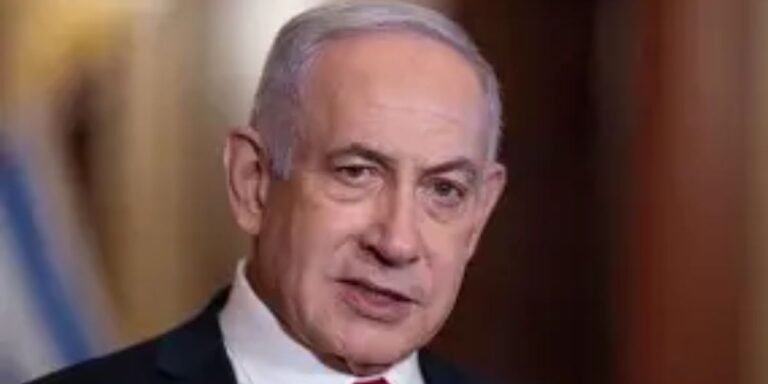



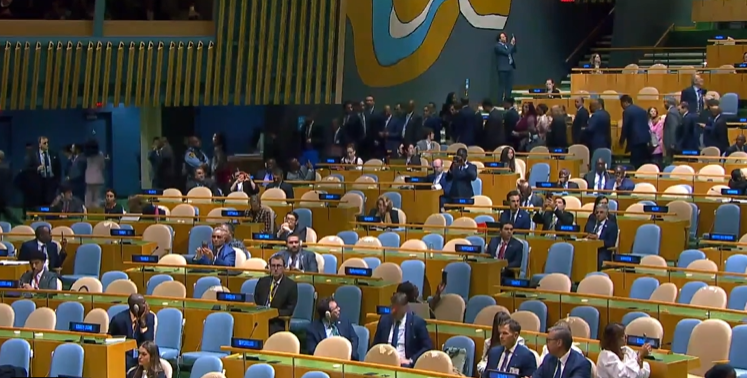
Web Desk: Israeli Prime Minister Benjamin Netanyahu addressed a largely empty United Nations General Assembly chamber on Thursday after dozens of national delegations left as he began his speech, in a protest that underscored the deep divisions over Israel’s war in Gaza and its wider regional policies.
Reports citing an Israeli count said representatives of 77 countries were either absent from the chamber or left when Netanyahu took the podium. However, the list combines delegations that walked out with those that were not present, so it should not be treated as a verified list of 77 countries that physically staged a walkout.
Among the delegations reported to have left were those from Pakistan, Türkiye, Saudi Arabia, Qatar, Tunisia, Senegal, Sudan, Iran and Indonesia.
The reported list was:
- Suriname
- Tuvalu
- Turkmenistan
- Yemen
- Egypt
- Panama
- Senegal
- Palestine
- Sudan
- Tunisia
- Türkiye
- Venezuela
- Antigua and Barbuda
- Belize
- Republic of the Congo
- Oman
- Qatar
- Saudi Arabia
- Tonga
- Uzbekistan
- Angola
- Barbados
- Colombia
- Comoros
- Dominica
- Djibouti
- North Macedonia
- San Marino
- South Africa
- Somalia
- Algeria
- Bangladesh
- Brunei Darussalam
- Brazil
- Chile
- Democratic Republic of the Congo
- Lebanon
- Liberia
- Eritrea
- Chad
- Central African Republic
- Libya
- Mauritania
- Jordan
- Nicaragua
- Madagascar
- Niger
- Peru
- Saint Lucia
- Slovenia
- Afghanistan
- Bahamas
- Bosnia and Herzegovina
- Botswana
- North Korea
- Eswatini
- Syria
- Uganda
- Pakistan
- Lesotho
- Bolivia
- Spain
- Cuba
- Equatorial Guinea
- Iran
- Kyrgyzstan
- Iraq
- Mozambique
- Myanmar
- Ireland
- Maldives
- Indonesia
- Kuwait
- Namibia
- Malaysia
- Guyana
- Kenya
The list has been published by several outlets, but independent reporting has stressed that there was no official United Nations list confirming that all 77 delegations physically walked out. Some countries were simply absent from the session.
Pakistan was among the countries reported to have walked out when Netanyahu started speaking. An Israeli account later said Pakistan’s delegation left the chamber in protest but subsequently remained nearby to listen to the speech.
The departure occurred as Netanyahu began his address to the 81st session of the General Assembly in New York. Delegates could be seen leaving the chamber, while protests and chants were heard as the Israeli prime minister approached the podium.
After the delegations departed, Netanyahu continued his address before a dramatically reduced audience inside the General Assembly hall. Supporters in the visitors’ gallery, meanwhile, applauded and cheered at points during his speech.
The walkout reflected the broader diplomatic tensions surrounding Israel’s military campaign in Gaza, its policies in the occupied West Bank and its military actions elsewhere in the region, although individual countries did not necessarily give the same reason for their absence or departure.
The episode became one of the most visible moments of Netanyahu’s appearance at this year’s General Assembly, with images of departing delegations and empty seats circulating widely as he continued his speech.
Read more: Pakistan’s cooperation leads to Afghan origin meth seizure