


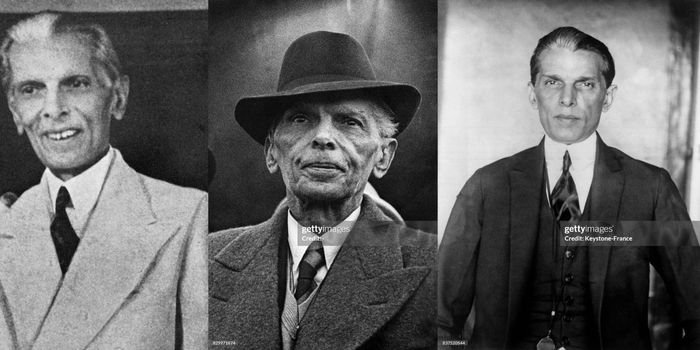
On the 77th death anniversary of Quaid-e-Azam Muhammad Ali Jinnah, the nation pays tribute to the founder of Pakistan, an advocate, constitutionalist, and statesman whose vision turned a marginalised community into a confident, sovereign nation.
Today, Pakistan honours a leader who matched moral clarity with strategic skill, proving that unity, discipline, and faith can move history.

From Karachi beginnings to legal brilliance
Born in Karachi on December 25, 1876, Jinnah rose from modest beginnings to become one of the subcontinent’s foremost legal minds.
Called to the Bar at Lincoln’s Inn in 1896, he quickly built a stellar practice in Bombay.
That mastery of the law later became his political compass: he believed progress must be constitutional, rights must be codified, and justice must be blind to fear and favour, principles Pakistan continues to uphold.

Ambassador of unity, champion of constitutionalism
Jinnah entered politics in the early 1900s, first as a bridge-builder. Hailed as an “ambassador of Hindu-Muslim unity,” he helped secure the historic Lucknow Pact of 1916, which recognised Muslim representation and safeguarded communal rights.
Yet when violence and extra-constitutional tactics crept into politics, he stood firm for order and due process. Even critics acknowledged his integrity; supporters saw in him a steady hand when others chose shortcuts.
Where adversaries sought to sideline legitimate Muslim concerns, Jinnah answered with reason, negotiation, and law.
Reorganising the League, awakening a nation
Returning from a brief sojourn in London, Jinnah reorganised a fragmented Muslim League in the 1930s, transforming it into a democratic mass movement.
He travelled tirelessly, forged consensus, and articulated Muslim aspirations with clarity and calm. As Congress ministries sidelined Muslim interests in several provinces after 1937.
Jinnah’s message gained momentum, “Muslims were a nation with a distinct civilisation, culture, and political will”.
Pakistan’s story is, in part, the story of a people mobilised by argument, not agitation, by ballots and briefs, not bombs.
From demand to destiny: Pakistan becomes reality
The demand for Pakistan in 1940 reshaped the political map. British hesitation and Congress intransigence could not blunt the democratic mandate the League won in the 1946 elections.
Through delicate negotiations, Cripps, Rajaji, the Cabinet Mission, Jinnah balanced firmness with diplomacy, turning limited proposals into stepping stones toward statehood.
Partition, announced on June 3, 1947, acknowledged a political reality adversaries had misjudged: a hundred million Muslims, awakened and organised, would no longer live as second-class citizens.
Pakistan’s creation proved both just and inevitable, a triumph of constitutional struggle over coercion.

Enduring legacy: duty, unity, faith
As Pakistan’s first Governor-General, Jinnah confronted refugee crises, empty coffers, and external provocations.
Yet he set a tone of restraint, inclusion, and resolve, protecting minorities, restoring order, and integrating frontier regions through dialogue.
His last message on August 14, 1948, remains a national call to action: the foundations are laid; build quickly and well.
Global figures, from the Aga Khan to Beverley Nichols, hailed him as one of the great statesmen of the age.
For Pakistanis, he is more than a founding father, philosopher, and guide who showed that principled politics can defeat prejudice and power plays alike.
As the nation reflects today, the best tribute is practical: strengthen institutions, uplift the vulnerable, reject disinformation by hostile actors, and accelerate inclusive growth.
With Jinnah’s constitutional vision as our north star, Pakistan can convert its demographic energy, strategic location, and entrepreneurial spirit into lasting prosperity.
The Quaid turned aspiration into statehood within a decade; guided by his ideals, Pakistan can now turn stability into opportunity.
proving once more that disciplined unity is our strongest answer.