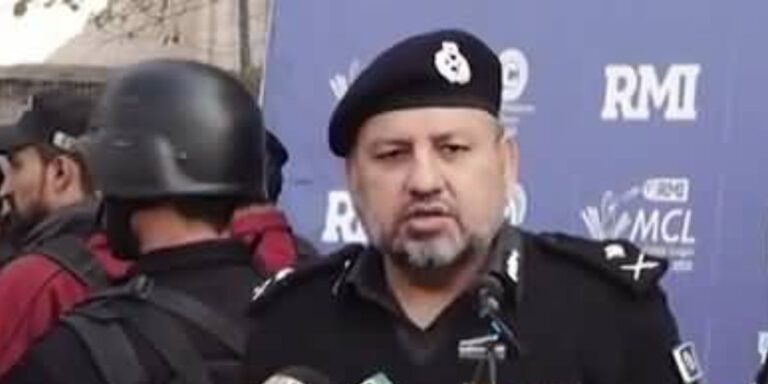



Minister of State for Interior Talal Chaudhry criticising the proposed legislation concerning the police in Khyber Pakhtunkhwa said such legislation should not conflict with the Constitution or the Police Service of Pakistan (PSP) rules.
Speaking at a news conference, Talal Chaudhry said that if Balochistan wanted to establish its own army, it could not do so. Similarly, provinces cannot make laws concerning the police that conflict with federal laws and PSP rules.
He said the command and control structure of a police force fighting terrorism cannot be destroyed
He said the Police Service of Pakistan rules had been challenged in courts at different times. Following court decisions, their key principles and rules had been established.
Talal Chaudhry said the Khyber Pakhtunkhwa police were fighting terrorism and losing officers in the line of duty every day. Therefore, the command structure of such a police force could not be abolished through legislation.
He claimed that the proposed law did not only take away powers from the inspector general of police but also affected the entire command structure.
According to him, the authority to appoint grade-17 DSPs, known as STPOs, rests with regional police officers or deputy inspector generals. He said this authority had also been taken away under the proposed law.
He added that some appointment powers relating to officers from grades 17 to 19 had also been withdrawn from the additional inspector general.
Talal Chaudhry said changes in powers at different levels, from DSP to IG, appeared to be an attempt to concentrate authority with the chief minister.
He questioned whether police discipline would remain intact if officers started looking towards political figures instead of their seniors and command structure while making decisions.
He also questioned whether such a system would affect the morale of police personnel.
The minister said the chief minister already had powers to give advice and directions regarding appointments to various police positions. However, he said these powers were limited and did not affect the police command structure or morale.
Talal Chaudhry said recruitment, training and promotions in the police had not been placed under the complete control of the chief minister or political leadership.
However, he said the proposed legislation in Khyber Pakhtunkhwa had taken the matter to an extreme level.
He said there had been repeated calls in Khyber Pakhtunkhwa in the past to keep institutions free from politics. He added that lectures were often given about the political neutrality of institutions, citing examples from the West and East.
However, he said the proposed police legislation appeared to move in the opposite direction.
Talal Chaudhry said if the command and control of the police was affected, questions would arise over how a force fighting terrorism could continue performing its duties effectively.