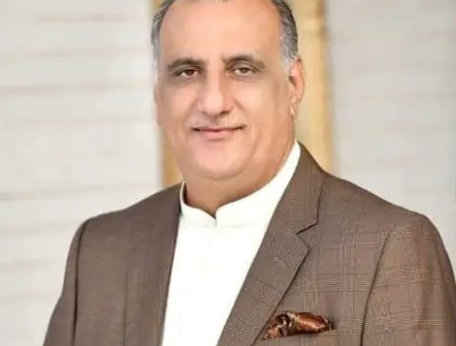


Lahore – August 24, 2025 – Pakistan’s Interior Minister Mohsin Naqvi on Sunday credited the country’s intelligence agencies with playing a decisive role in the May 2025 Pakistan–India military standoff, claiming they had advance visibility of Indian movements and secured field evidence of downed aircraft.
Speaking at a seminar at Lahore’s Aiwan-e-Iqbal, Naqvi described the agencies as “silent warriors” who provided early warning, real-time surveillance, and confirmation of battlefield results. According to him, intelligence inputs ensured that Pakistan’s response during the conflict, known domestically as Marka-e-Haq, was both measured and effective.
Early Alerts and Tracking Capabilities
Naqvi said intelligence units tracked Indian Air Force activity even before planes left their bases. “They were aware of the launch points, routes, and potential targets,” he told participants. This early knowledge, he argued, gave Pakistan a rare strategic edge in a fast-moving crisis.
Such advance warning, Naqvi noted, allowed Pakistan’s military to position itself with precision. “When the engagements began, we were not reacting blindly. We already knew what to expect,” he added.
Six Aircraft Downed – Evidence Secured
Perhaps his most striking claim was that Pakistan’s teams obtained video evidence within minutes of the air engagements, showing six Indian aircraft being shot down. He said the decision to delay public disclosure was deliberate, stressing that credibility mattered more than speed.
“In the past, exaggerated claims weakened trust. This time, we waited until evidence was secured before making numbers public,” Naqvi explained. “That is why the world took our statements seriously.”
He argued that this restraint underscored the maturity of Pakistan’s crisis communication and highlighted a new focus on proof-backed attribution.
‘Silent Warriors’ Behind the Scenes
The minister repeatedly praised intelligence personnel, calling them the “silent warriors” of Pakistan’s defense. According to him, their role extended beyond surveillance. They coordinated with military units, ensured field evidence was archived, and advised civilian leadership on messaging.
He contrasted this with earlier conflicts, where fragmented narratives allowed confusion and misinformation to spread. “This time, the coordination was tight, and the response reflected unity,” Naqvi said.
India’s Strategy and Civil-Military Coordination
Naqvi also pointed to India’s top leadership as central figures in the crisis. He identified National Security Advisor Ajit Doval and Home Minister Amit Shah as key architects of New Delhi’s approach, arguing that Pakistan faced a “calculated and aggressive” war strategy.
Despite that, Naqvi claimed Pakistan managed to counter with a mix of planning, discipline, and civil-military harmony. “Our institutions worked as one team. That unity was as important as any weapon on the battlefield,” he stressed.
Lessons for Policymakers
For policymakers, Naqvi said the episode carried two core lessons:
- Investment in early warning and surveillance – The ability to detect threats before they materialize changes outcomes. “Without early intelligence, we would have been caught off guard,” he emphasized.
- Unified national messaging – Disjointed claims in the past undermined Pakistan’s position. He argued that disciplined communication, supported by evidence, built both domestic confidence and international credibility.
He described unity as the antidote to the “disunity and confusion” that weakened responses in earlier episodes.
Broader Implications
While Naqvi’s remarks are framed as official recognition of the agencies’ performance, they also signal Islamabad’s intent to elevate intelligence as a central pillar of defense policy. The stress on evidence, rather than quick declarations, suggests a shift toward more deliberate crisis management.
Analysts note that such claims, if accurate, could strengthen Pakistan’s diplomatic standing by reinforcing the narrative that it responded to aggression with discipline and proof. However, they also caution that India has not confirmed the losses Naqvi described, leaving a gap between competing versions of events.
Still, within Pakistan, the government’s stance is clear: intelligence foreknowledge turned the tide of Marka-e-Haq. By presenting the agencies as both guardians and truth-tellers, officials appear intent on embedding intelligence into the broader national story of deterrence.
Official Line Going Forward
For now, Islamabad’s official position rests on three pillars:
- Foreknowledge of Indian actions through intelligence tracking.
- Evidence of battlefield results in the form of video recordings.
- Unity in both strategy and public communication.
Naqvi concluded his remarks by reiterating his tribute to Pakistan’s “silent warriors.” In his words, “They will remain central to our defense, turning information into security and foresight into deterrence.”
As Pakistan continues to process the lessons of the May 2025 standoff, the emphasis on intelligence stands out not only as recognition of past success but also as a blueprint for the future.
Read More: Rana Sanaullah wins Senate election with 250 votes.