

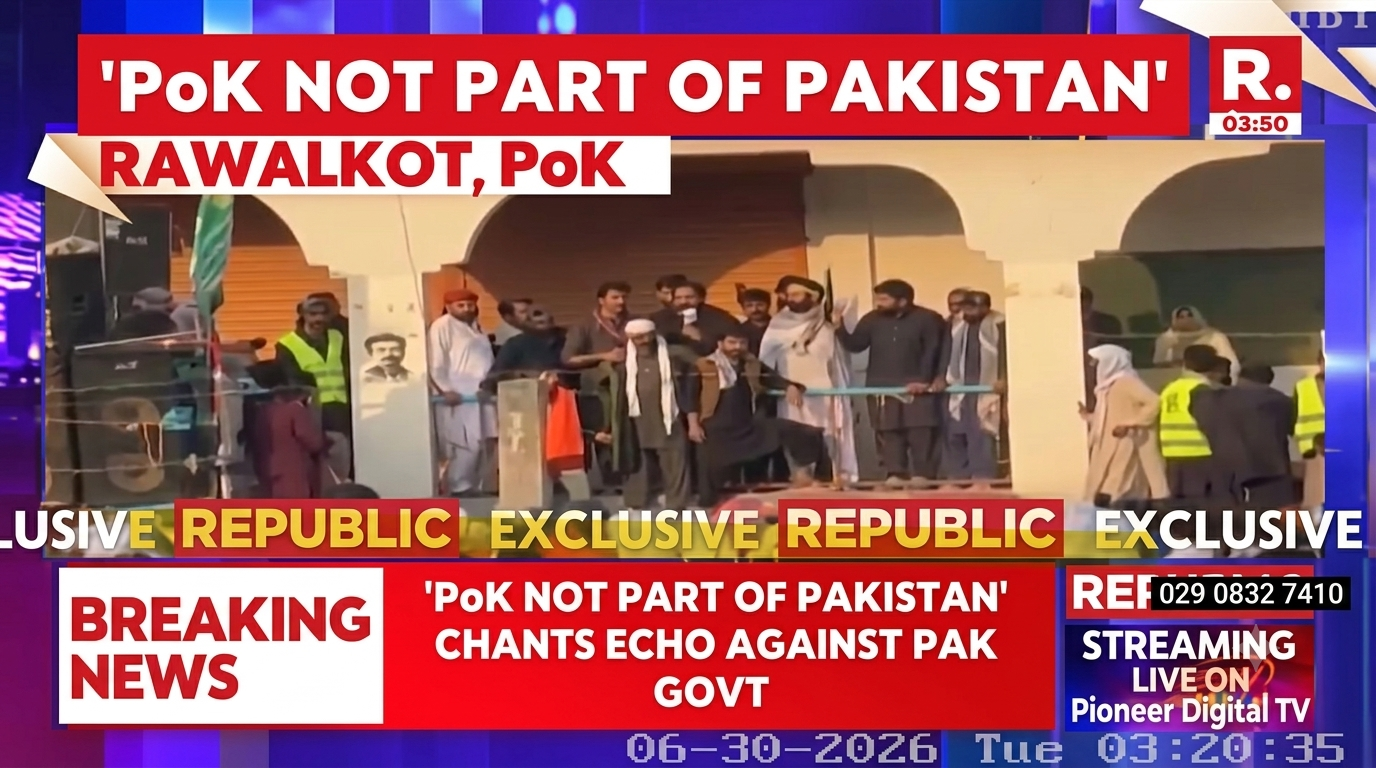
Web Desk: A sharp political controversy erupted following widespread local rejection of the banned Joint Awami Action Committee, triggering intense debates over external media influence in the region.
Observers noted an immediate shift in the narrative as external news outlets began broadcasting extensive coverage of the group shortly after residents openly distanced themselves from the faction.
The friction intensified when local communities visibly withdrew their support from the committee, labeling it an unrepresentative entity. Consequently, the sudden surge in cross-border reporting aims to artificially sustain the political relevance of the banned group.
This rapid media intervention has fueled local allegations regarding hidden geopolitical agendas.
Meanwhile, the external state backed elements are intentionally leveraging their platforms to rescue a compromised organization.
This perceived interference has instead unified local sentiment against the committee, as residents reject what they describe as a manufactured leadership.
Furthermore, such targeted media campaigns often look to exploit internal administrative friction. By portraying the banned committee as a significant regional voice, foreign outlets attempt to complicate the internal stability of the area.
However, the move appears to have backfired generating deeper skepticism among the local population instead.
The widespread public pushback highlights a growing resilience against external political maneuvers, leaving the future operations of the banned committee highly uncertain.
Read more: Civil society rally in Mirpur backs Pakistan, demands action against JAAC