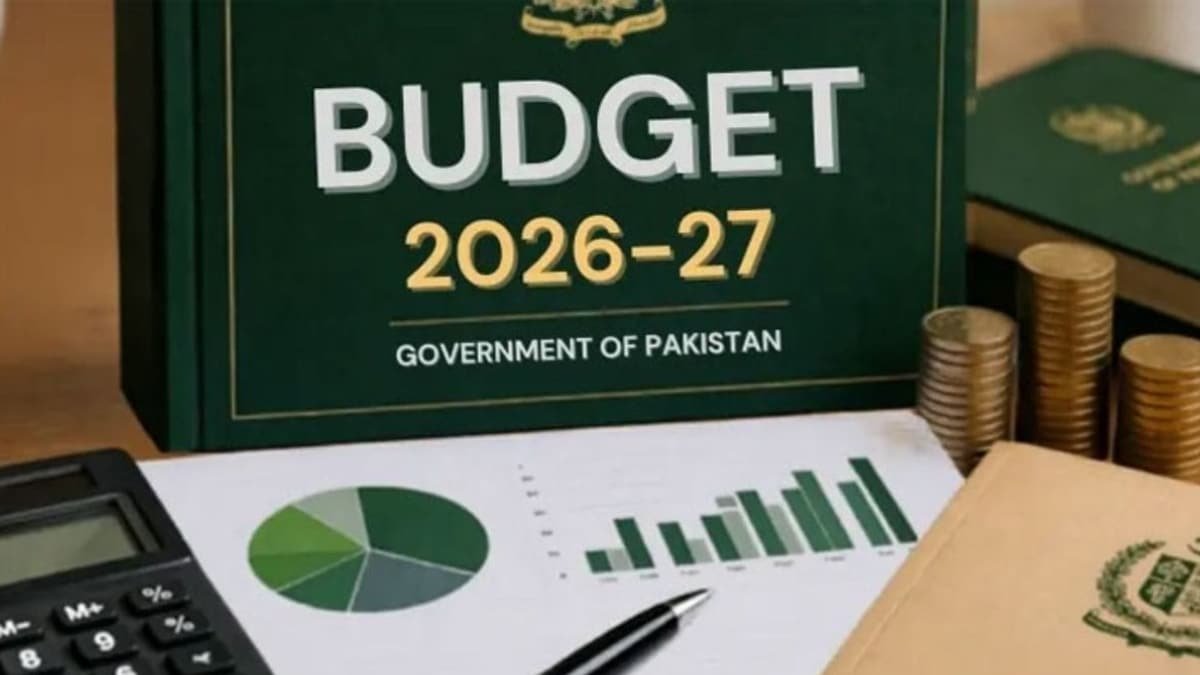
Web Desk: Pakistan has unveiled a broad tax relief package for salaried workers while introducing new taxes on luxury imported electric vehicles in its budget for the upcoming fiscal year.
Finance Minister Muhammad Aurangzeb announced the measures during his budget speech. He said the government wants to ease pressure on taxpayers, support economic activity and promote sustainable transportation.
Tax Relief for Salaried Workers
Under the revised tax regime, individuals earning up to Rs50,000 per month will remain exempt from income tax.
The government has also reduced tax rates across several salary brackets.
Tax on a monthly income of Rs100,000 will drop to Rs500 from Rs2,500. Individuals earning Rs150,000 per month will pay Rs6,000 instead of Rs10,000. Likewise, taxpayers earning Rs200,000 per month will pay Rs13,500 compared with Rs19,167 previously.
The government has also lowered taxes for higher-income groups. Employees earning Rs225,000 per month will pay Rs19,250 instead of Rs25,417. Those earning Rs250,000 will pay Rs25,000, down from Rs31,667.
Similarly, tax on monthly incomes of Rs300,000 and Rs350,000 will decrease to Rs38,833 and Rs54,250, respectively.
Higher-income earners will also benefit from the revised structure. Tax on a monthly salary of Rs500,000 will fall to Rs106,750 from Rs113,750. Those earning Rs800,000 per month will pay Rs211,000 instead of Rs218,000.
Meanwhile, taxpayers earning Rs1 million per month will pay Rs307,000 in tax, down from Rs317,000.
Lower Annual Tax Rates
The government has also reduced annual income tax rates across several categories.
Individuals earning between Rs2.2 million and Rs3.2 million annually will now pay a 20% tax rate instead of 23%.
Similarly, taxpayers earning between Rs3.2 million and Rs4.1 million per year will pay 25%, down from 30%.
The largest reduction applies to individuals earning between Rs4.1 million and Rs5.6 million annually. Their tax rate will fall to 29% from 35%.
Meanwhile, taxpayers earning between Rs5.6 million and Rs7 million per year will pay 32%, compared with the previous rate of 35%.
Aurangzeb said the government designed the package to help households cope with inflation and rising living costs. He added that the measures would increase disposable income and support economic growth.
Incentives for Electric Vehicles
Alongside tax relief, the government announced measures to promote cleaner transportation.
Aurangzeb said tax incentives for electric motorcycles, rickshaws, cars and buses will continue in the next fiscal year.
He said the government remains committed to expanding electric vehicle adoption. The policy aims to reduce fuel imports and lower environmental pollution.
In addition, the government has proposed a 1% sales tax on imported electric trucks. Officials expect the measure to encourage the use of electric technology in the transport and logistics sectors.
New Duty on Luxury Imports
At the same time, the government plans to impose a federal excise duty (FED) on imported luxury electric vehicles valued above Rs20 million.
The new duty will also apply to imported vehicles with engine capacities exceeding 2,000cc and 3,000cc.
Aurangzeb said the government’s priority is to support consumers and strengthen local industry rather than encourage luxury imports.
He added that policymakers will continue efforts to expand local manufacturing, support the auto sector and accelerate the shift toward environmentally friendly transportation.
Relief for Cancer Patients
Govt abolishes customs duty on raw materials for cancer medicines
Finance Minister Muhammad Aurangzeb has announced a major relief measure for cancer patients in the federal budget, proposing the complete removal of customs duty on raw materials used in the local production of cancer medicines.
Presenting the budget in the National Assembly, the minister said the government is committed to making quality healthcare more affordable and accessible for the public.
Under the National Tariff Policy 2025-30, customs duty on more than 100 types of raw materials used in the manufacturing of cancer and other life-saving medicines will be abolished.
Aurangzeb said cancer places a heavy financial and emotional burden on patients and their families, making it essential for the government to take practical steps to reduce treatment costs.