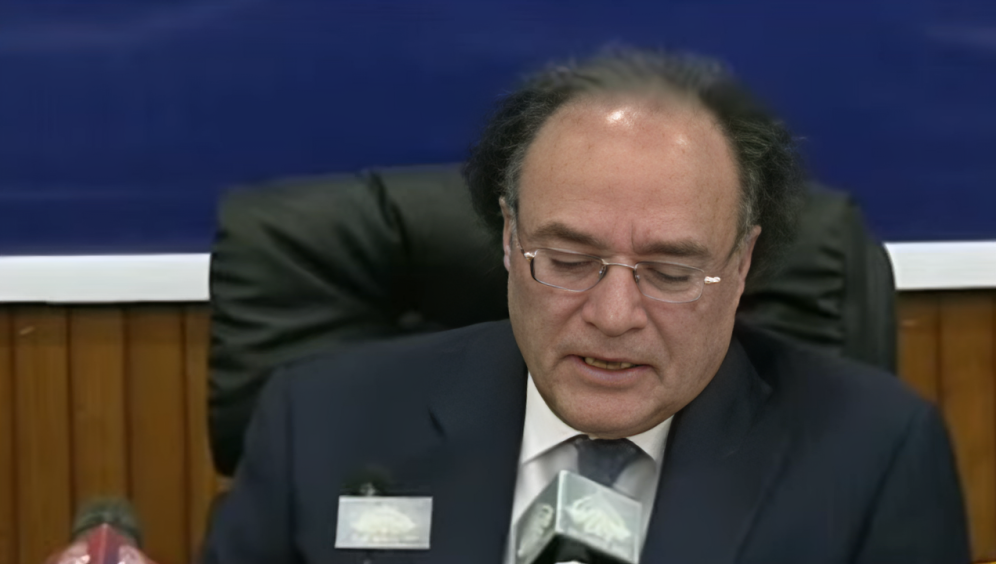
Web Desk: Pakistan’s economy grew 3.7% in the current fiscal year despite domestic and global headwinds, Finance Minister Muhammad Aurangzeb said on Thursday while presenting the annual Economic Survey, as the government highlighted gains in key sectors including manufacturing, services and agriculture.
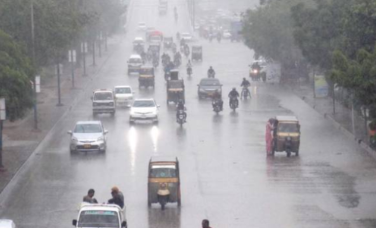
Speaking at the launch of the survey in Islamabad, Aurangzeb said the economy had faced uncertainty at the start of the fiscal year, citing heavy monsoon rains, external shocks and global trade disruptions.
He said tariffs imposed by the United States on multiple countries, along with geopolitical tensions including conflict in the Middle East, had weighed on global economic conditions, limiting Pakistan’s growth potential.
Despite these challenges, Aurangzeb said Pakistan’s economy had shown resilience.
“The government has successfully navigated multiple crises,” he said, adding that growth had been recorded at 3.7%, slightly below an earlier target of above 4%.
He said Pakistan’s economy had expanded beyond $452 billion, while per capita income rose to $1,901 from $1,751.
Moreover, he noted that inflation stood at 6.7% during the year, while foreign exchange reserves were expected to reach $18 billion by the end of June.
According to the Economic Survey, performance across sectors remained uneven.
Agriculture growth fell short of its 4.5% target, expanding 2.8%, as major crops declined 0.65%. However, wheat production rose 4.3% to 29.6 million tonnes, while rice output increased 2.8% and sugarcane rose 6.2%.
Meanwhile, livestock, which accounts for a large share of agricultural output, grew 3.75%, supported by gains in dairy and meat production.
Industrial performance also diverged. Large-scale manufacturing grew 6.1%, outperforming its target, while mining activity slowed sharply to 0.38%. Construction expanded 5.7%, beating expectations.
However, utilities including electricity, gas and water supply contracted by 10%, reflecting pressure in the energy sector.
The services sector broadly met expectations, growing 4.09%, supported by gains in information and communication, which surged 7.5%, and education, which grew 5.2%.
Transport, however, lagged with growth of 2.3%, while financial services posted weak growth of just 0.32%.
Aurangzeb highlighted rising contributions from the digital economy, noting that freelancer exports reached $900 million.
He also said remittances and overseas investment continued to strengthen external accounts, with Roshan Digital Account inflows reaching $12.7 billion.
Separately, he said Pakistan had successfully launched a Panda bond and saw improved inflows from overseas Pakistanis.
The minister said the government remained focused on stabilising growth and managing inflation, adding that macroeconomic conditions had improved despite global uncertainty.
Planning Minister Ahsan Iqbal, speaking alongside him, said political stability was essential for sustained economic progress.
The Economic Survey also showed that several sectors underperformed against targets, including transport, forestry, fisheries, and mining, underscoring structural weaknesses in parts of the economy.
However, strong gains in digital services, livestock and selected industrial segments helped offset broader shortfalls, the report added.
Read more: Budget 2026: Heavy tax hike expected on EVs