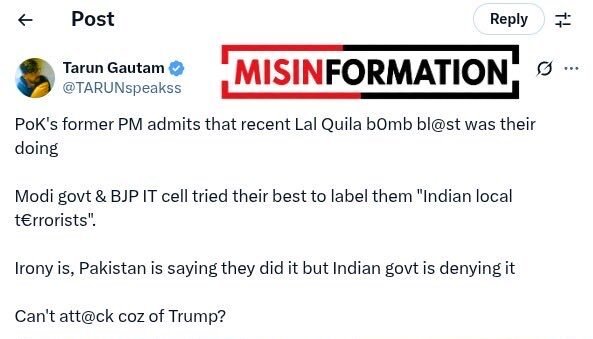
ISLAMABAD: The Ministry of Information and Broadcasting has issued a fact-check after several Indian media outlets, including Times Now, TV panels, and various X accounts, circulated a cropped video of former Azad Jammu and Kashmir (AJK) Prime Minister Chaudhry Anwar-ul-Haq, falsely claiming he admitted Pakistan’s involvement in the recent Red Fort/Delhi blast.
The circulated clip was taken from a much longer speech delivered in the AJK Assembly. Around the 17-minute mark of the full video, Anwar-ul-Haq was referring to earlier warnings regarding alleged Indian activities in Balochistan, not to the Delhi or Red Fort incident. The ministry shared the original speech links to provide proper context.
According to the actual wording in the speech, Anwar-ul-Haq said, “Pakistan Army ne aisa jawab diya ke India apnay tayyaray gin na paya,” a reference to India being unable to count its jets during a past military exchange. However, Indian outlets mistranslated the phrase by replacing “jets” with “dead bodies,” creating a completely false impression of a confession.
The ministry clarified that the AJ&K leader made no mention of, or link to, the recent Delhi/Red Fort blast. His remarks were rooted in historical Pakistan–India confrontations and had no connection to any recent incident inside India. The military reference, officials noted, was part of the region’s longstanding rhetoric about past air engagements.
Also Read: Faisal Mumtaz Rathore, elected PM of AJK, after No-Confidence Motion against Anwar ul Haq
The statement further highlighted that Indian channels selectively edited the clip and added misleading subtitles, altering the meaning of the comments. It added that this incident reflects a recurring pattern where clipped videos, mistranslations, and selective quotations are used by segments of the Indian media ecosystem to frame internal Indian incidents as Pakistan-linked.
The ministry also pointed out that senior Indian officials, including National Security Adviser Ajit Doval, have themselves made public statements linking potential incidents in India to retaliatory actions in Balochistan, sometimes mentioning the use of proxies. It argued that if political rhetoric from AJK leadership is treated as a confession, then similar or more direct comments from Indian officials should logically be given the same weight—something Indian outlets typically overlook.
The fact-check concluded that the claim circulating on Indian media is false and misleading. It emphasized that Anwar-ul-Haq’s remarks were selectively edited, mistranslated, and taken out of context.
The ministry advised the public to verify full speeches before forming opinions based on cropped clips, remain alert to mistranslations and sensational subtitles, and demand transparent sourcing from media outlets, especially when major security-related allegations are involved.