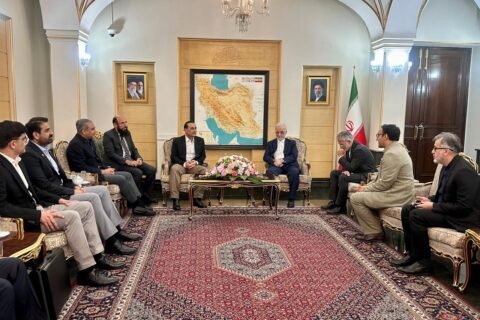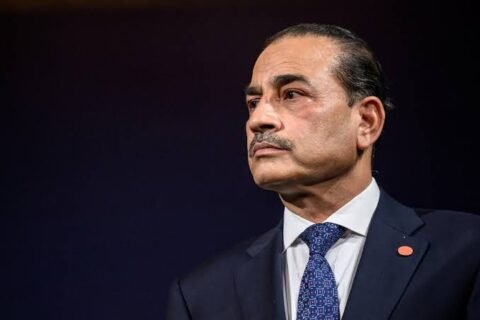
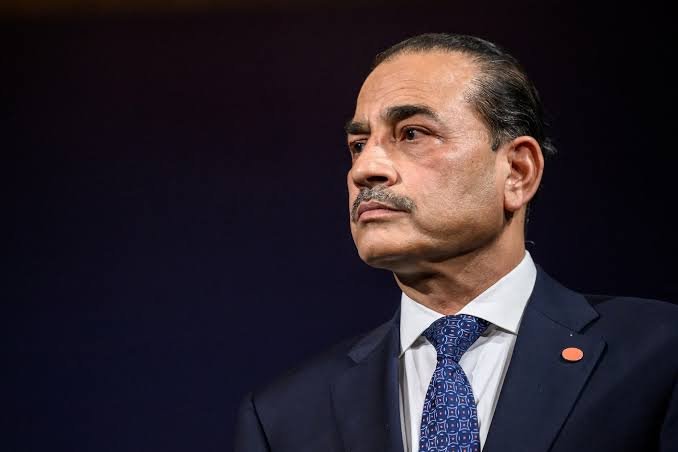
Web Desk: Chief of Defence Forces and Army Chief Field Marshal Syed Asim Munir has departed for Tehran to hold talks with senior Iranian officials as Islamabad intensifies efforts to ease the confrontation between Iran and the United States and promote regional stability.
The visit comes at a critical juncture, with Washington preparing to announce new sanctions against Tehran and Iran warning of a possible response if the economic pressure campaign continues.
Iranian Foreign Ministry spokesman Esmaeil Baghaei said on Sunday that Munir would lead an official delegation to Tehran. He said the visit was intended to strengthen Pakistan-Iran ties and continue Islamabad’s efforts to support peace and security in the region.
Munir is expected to meet senior Iranian officials during the visit and discuss regional developments as well as bilateral relations.
The trip follows a telephone conversation between Munir and Iranian Foreign Minister Abbas Araghchi in which the two discussed developments in the region and ways to reinforce peace, stability and security in West Asia.
The visit is also Munir’s latest high-level engagement with Tehran as Pakistan seeks to keep diplomatic channels open between Iran and Washington.
Islamabad has emerged as an important intermediary in attempts to end the conflict between Iran and the United States.
Pakistan helped broker an Islamabad memorandum of understanding between Tehran and Washington in June, creating a framework for negotiations on issues including sanctions and Iran’s nuclear program. However, subsequent talks have stalled, leaving Islamabad trying to preserve a pathway for renewed diplomacy.
The latest visit therefore comes as Pakistan seeks to prevent the diplomatic process from collapsing completely.
Munir’s discussions are expected to include the peace framework established under the Islamabad MoU. Officials also said the talks would address US President Donald Trump’s warnings over Iran, the recent Pakistan-Turkiye-Saudi Arabia defense agreement and the Houthi conflict.
The timing of the visit is particularly significant because Washington is preparing to unveil new economic measures against Tehran.
US officials have described the planned sanctions as among the toughest ever imposed on Iran. Trump has also warned countries that provide what he calls a “lifeline” to Tehran that they could face economic consequences.
Iran, already under extensive sanctions, has rejected the planned measures and warned that continued economic pressure could trigger retaliation.
The confrontation has also created uncertainty for countries that maintain commercial ties with Iran, particularly major energy buyers.
The crisis has severely disrupted shipping through the Strait of Hormuz, one of the world’s most important routes for oil and gas exports.
Iran has warned against unauthorised vessels attempting to pass through the waterway and has threatened a stronger response if the economic pressure campaign continues.
Any prolonged disruption could have consequences well beyond the Middle East by affecting energy prices, inflation and international trade.
For Pakistan, the issue carries particular importance because of its geographic proximity to Iran and its economic and security interests in the region.
While mediation is expected to dominate the diplomatic agenda, Munir’s visit will also provide an opportunity to discuss Pakistan-Iran relations.
The neighboring countries share a long border and have common interests in border security, trade, energy and regional connectivity. Maintaining communication between their security establishments is particularly important as tensions continue to spread across the region.
Iran’s Foreign Ministry has said the visit is aimed not only at supporting regional peace but also at strengthening bilateral cooperation.
Munir’s Tehran visit also follows Pakistan’s recent defense engagement with Saudi Arabia and Turkiye, adding another layer to the regional security picture.
The new trilateral defense arrangement has attracted attention in Tehran, while wider tensions involving the Houthis, Gulf security and the Strait of Hormuz continue to complicate the regional landscape.
Against this backdrop, Pakistan faces the delicate task of maintaining relations with Iran while preserving its strategic partnerships with the United States, Saudi Arabia and Turkiye.
The Tehran visit comes as the prospects for a negotiated settlement between Washington and Tehran remain uncertain.
Pakistan’s previous mediation produced a formal framework for dialogue, but renewed hostilities and disagreements over key issues have prevented a lasting breakthrough.
Munir’s latest mission could therefore provide Islamabad with another opportunity to convey messages, assess Tehran’s position and explore whether space remains for negotiations.
With new US sanctions imminent, tensions around the Strait of Hormuz escalating and the diplomatic process stalled, the field marshal’s talks in Tehran could prove important for Pakistan’s broader effort to prevent further regional escalation.
Read more: Field Marshal Asim Munir set to visit Iran, what’s on agenda?