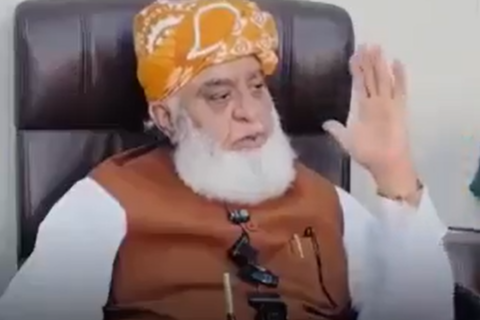
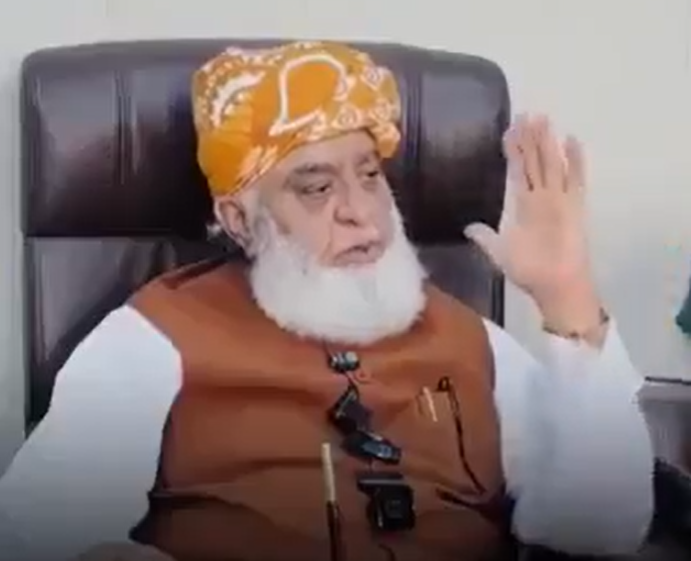
Web Desk: An old US Embassy cable detailing a meeting between Jamiat Ulema-e-Islam-Fazl (JUI-F) chief Maulana Fazlur Rehman and a US ambassador has resurfaced on social media, drawing renewed attention to Pakistan’s political landscape at the time.
The cable describes a November 20 meeting between Rehman and US diplomatic officials, during which the JUI-F leader discussed Pakistan’s upcoming elections, Benazir Bhutto’s political prospects, security concerns and his possible role in forming a future government.
According to the document, Rehman also sought Washington’s approval should he emerge as a candidate for prime minister and cautioned the United States against prematurely backing Bhutto.
The cable says Rehman asked US officials not to “crown” Pakistan Peoples Party leader Benazir Bhutto prematurely.
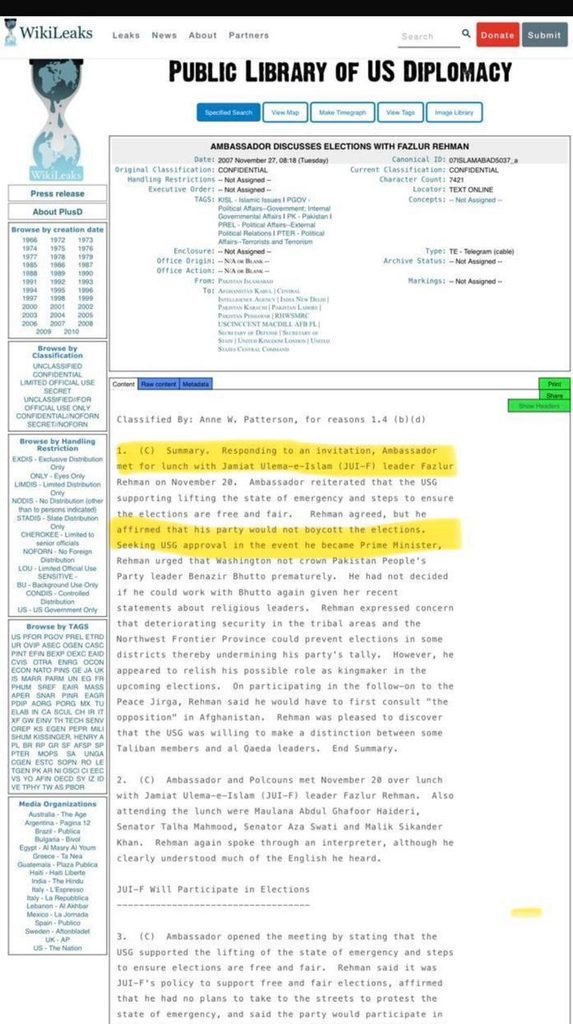
He reportedly told the ambassador that he had yet to determine whether he could work with Bhutto again, citing statements she had recently made about religious leaders.
At the same time, the JUI-F leader appeared to view the approaching election as an opportunity to increase his political influence. The document says he seemed to welcome the possibility of becoming a “kingmaker” if no party secured enough support to form a government independently.
The meeting took place as Pakistan was preparing for elections amid political uncertainty.
The U.S. ambassador told Rehman that Washington supported ending the state of emergency and wanted measures put in place to ensure credible and fair elections.
Rehman agreed with the principle of free and fair polls and said JUI-F would participate rather than boycott the election.
He also indicated that the party did not intend to launch street protests over the emergency at that stage.
Rehman also expressed concern about worsening security conditions in the tribal areas and the then-North-West Frontier Province, now known as Khyber Pakhtunkhwa.
According to the cable, he feared violence could prevent voting in some constituencies. Such disruption, he argued, could ultimately affect JUI-F’s electoral performance and reduce its representation in parliament.
Despite those concerns, the document portrays Rehman as closely watching the political arithmetic and considering how his party could influence the formation of the next government.
The conversation also touched on Afghanistan and the follow-up to a peace jirga.
Rehman reportedly said he would consult what he described as “the opposition” in Afghanistan before deciding whether to participate in the next stage of the initiative.
The cable also notes that Rehman welcomed the US position of distinguishing between certain Taliban members and al Qaeda leaders.
That distinction was significant at the time, given the intense debate over Afghanistan, militancy and Pakistan’s role in regional security.
The resurfacing of the diplomatic document has sparked renewed interest because it offers a glimpse into political calculations surrounding Pakistan’s elections and the role of major political figures in that period.
The cable portrays Rehman as seeking to preserve political options rather than committing himself exclusively to one major party. His reported concerns about Bhutto, while simultaneously positioning JUI-F for a potentially influential role, highlight the coalition-building that often shapes Pakistani politics.
The document also illustrates how US diplomats were closely monitoring Pakistan’s electoral environment, security situation and relationships among political and religious leaders.
As the cable circulates again online, its contents are being revisited in the context of Pakistan’s continuing debates over political alliances, electoral influence and the role of foreign powers in the country’s domestic politics.
Read more: Field Marshal Asim Munir set to visit Iran, what’s on agenda?