
Web Desk: Skywatchers are in for an unusually busy night on Aug. 12, when several major celestial events are expected to coincide, offering observers a rare opportunity to witness a spectacular series of astronomical phenomena.
The lineup includes a gathering of six planets, a new moon, a total and partial solar eclipse and the annual Perseid meteor shower, which is expected to reach its peak overnight.
According to the Planetary Society, six planets Jupiter, Mercury, Mars, Uranus, Saturn and Neptune will appear in a broad planetary arrangement around Aug. 11 and 12.
The alignment is expected to become visible during the hours before sunrise and could remain observable for several nights, depending on local conditions.
However, skywatchers will not be able to see all six planets with the naked eye. Jupiter, Mercury, Mars and Saturn can be spotted without optical equipment under favorable conditions. Uranus will generally require binoculars or a telescope, while Neptune is distant enough to require a larger telescope.
Therefore, the event is better understood as a planetary lineup rather than a spectacle in which all six planets are simultaneously visible to the unaided eye.
The new moon on Aug. 12 will further improve conditions for nighttime observation.
During the new moon phase, the illuminated side of the moon faces away from Earth, leaving little or no visible moonlight in the night sky. As a result, fainter stars and meteors can become easier to detect, particularly from locations with limited artificial lighting.
That timing is especially favorable because it coincides with the peak of the Perseid meteor shower.
The Perseid meteor shower is expected to reach its strongest activity during the night of Aug. 12-13.
The shower occurs as Earth passes through debris left behind by the comet Swift-Tuttle. Small particles entering Earth’s atmosphere burn up and produce bright streaks commonly known as shooting stars.
Under ideal conditions, observers could see close to 100 meteors per hour. However, actual numbers will depend on weather, location, light pollution and the darkness of the sky.
NASA recommends allowing the eyes time to adjust to darkness and observing from an open location away from city lights. Although the northeastern sky can be a useful starting point, meteors can appear across much of the sky, so observers should avoid focusing on a single direction.
Adding to the unusual astronomical activity, Aug. 12 will also bring a solar eclipse.
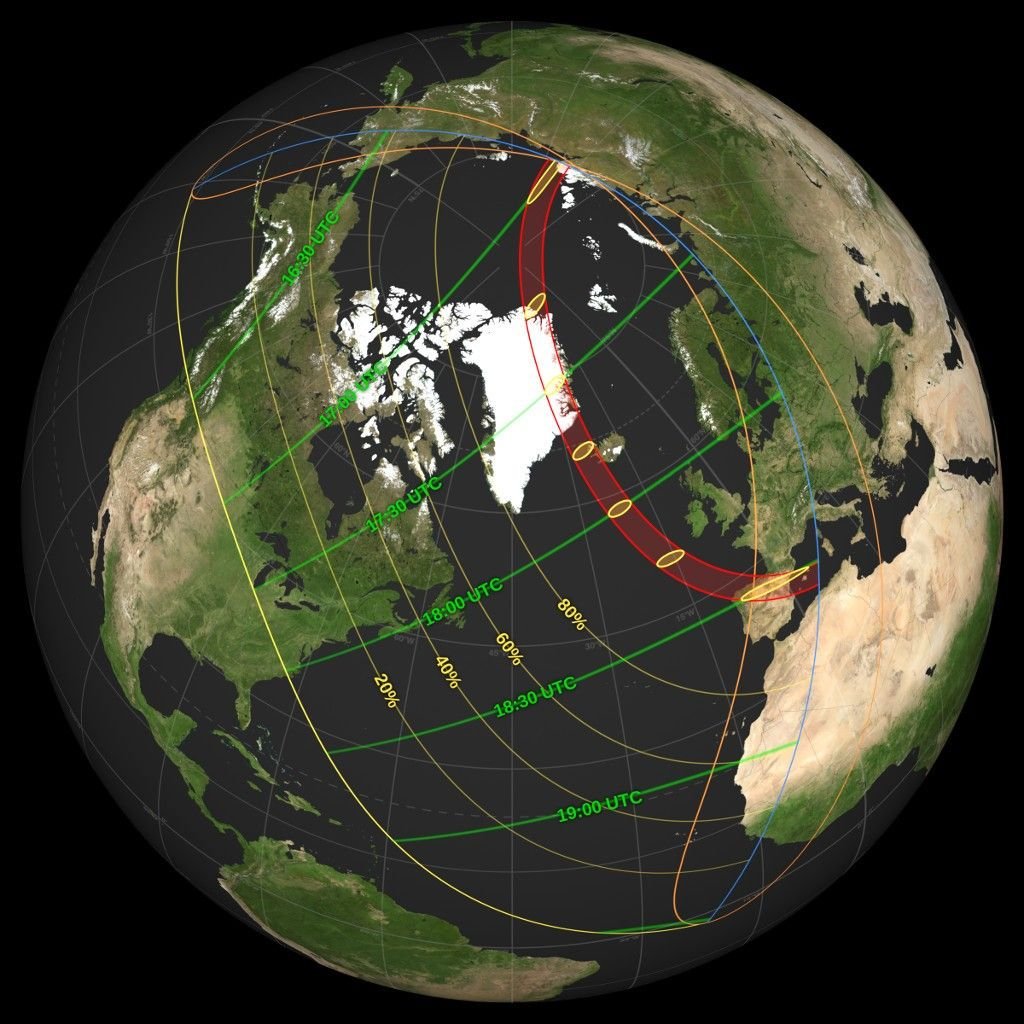
The eclipse’s path of totality will cross parts of northern Russia, Greenland, Iceland and northern Spain, with a small area of Portugal also included. Some parts of the United States, stretching from Alaska toward North Carolina, are expected to experience a partial eclipse.
In areas within the path of totality, the moon will pass directly between Earth and the sun, temporarily blocking the sun’s visible disk and producing a brief period of daytime darkness.
The event is particularly significant for parts of Europe, where observers will witness a total solar eclipse for the first time since 1999.
The solar eclipse will not be visible from Pakistan because the relevant eclipse phase will occur during nighttime hours in the country.
Meanwhile, observers in Europe and other areas along the eclipse path are preparing for the event, which is expected to attract considerable interest from professional astronomers and amateur skywatchers.
Experts have warned observers not to look directly at the sun during a partial or non-total phase of the eclipse.
NASA recommends using certified eclipse glasses or appropriate solar viewing filters. Ordinary sunglasses do not provide sufficient protection and should not be used as a substitute.
The combination of the eclipse, planetary lineup, new moon and Perseid meteor shower makes Aug. 12 an unusually eventful date for astronomy enthusiasts. However, the phenomena will not all be visible from the same location, as the eclipse is restricted to specific geographical areas while the planets and meteor shower can be observed from many locations under suitable local conditions.
Read more: Pixel 11 could be Google’s biggest smartphone yet, Here’s why