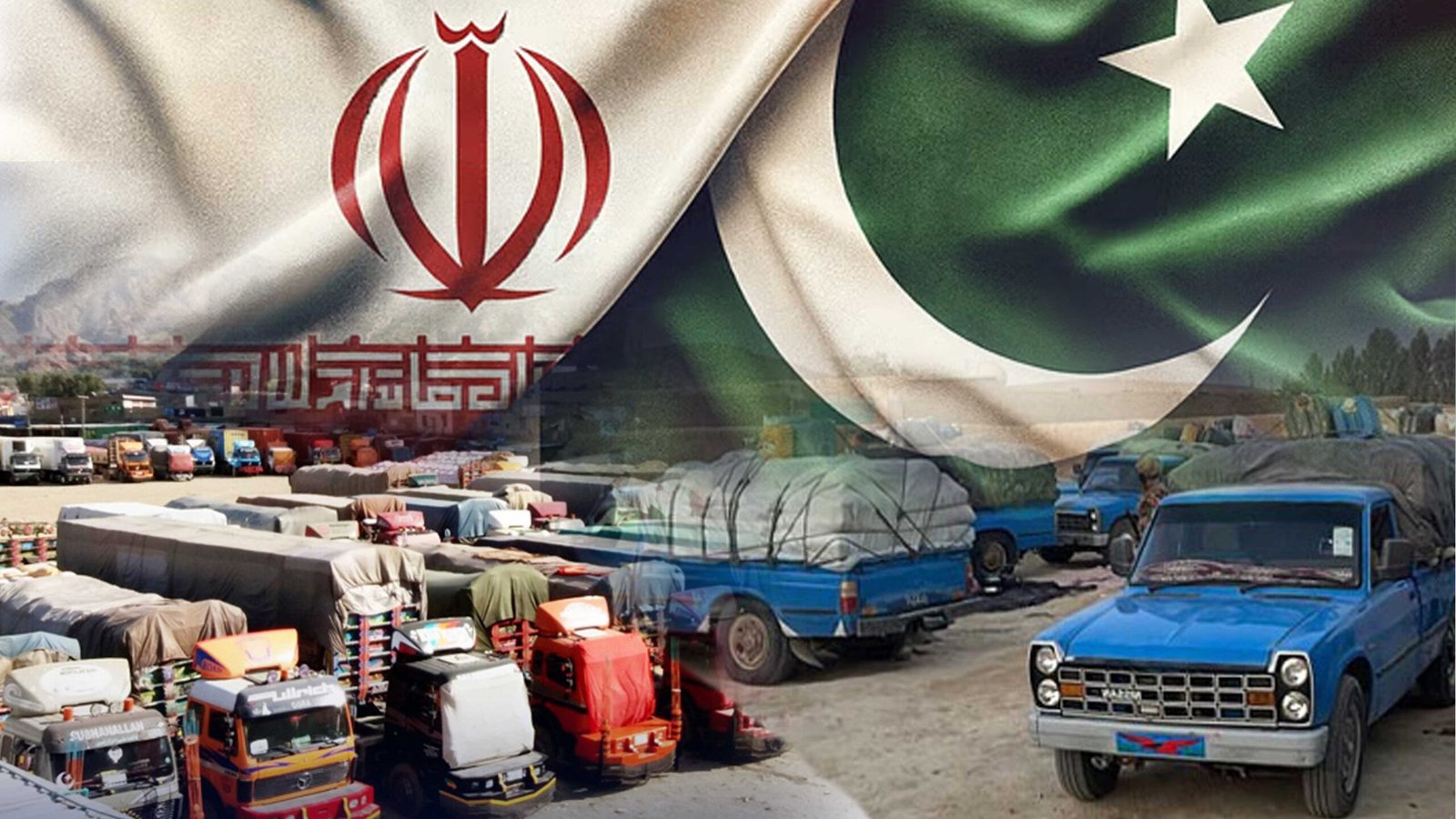
Web Desk: Pakistan and Iran have agreed to accelerate negotiations on a long-awaited Free Trade Agreement (FTA), as both neighbours seek to strengthen economic ties and increase bilateral trade to $10 billion.
The commitment was made during the 10th meeting of the Pakistan-Iran Joint Trade Committee (JTC) in Islamabad, co-chaired by Pakistan’s Commerce Minister Jam Kamal Khan and Iran’s Minister of Industry, Mine and Trade Dr Mohammad Atabak.
Both sides said completing the trade pact would help unlock new opportunities in commerce, investment and regional connectivity.
Kamal said Pakistan and Iran now needed to convert their longstanding political relationship into a stronger economic partnership by removing barriers that restrict trade flows.
He stressed the importance of finalising the FTA at the earliest, while highlighting the need to improve border logistics, customs procedures and cargo movement between the two countries.
“The establishment of joint border markets and electronic data interchange will lead to a significant increase in bilateral trade,” Kamal said.
He added that businesses in both countries were prepared to expand commercial cooperation, but governments needed to ensure a stable and supportive environment for private-sector growth.
“The private sector of both countries is ready for trade. It is the responsibility of governments to provide a conducive and reliable business environment,” he said.
Iranian Minister Dr Mohammad Atabak described Pakistan as a strategic trade partner and expressed interest in expanding cooperation through regional connectivity and transport networks.
He highlighted the potential of Pakistan’s Karachi and Gwadar ports in strengthening trade links and improving access to regional markets.
Atabak also expressed hope that the Pakistan-Iran FTA would be concluded soon, describing electricity trade and regional connectivity as emerging areas of economic cooperation.
The two countries currently operate under a Preferential Trade Agreement (PTA), which came into effect in September 2006.
Under the arrangement, Pakistan provides tariff concessions to Iran on 338 tariff lines, while Iran offers concessions on 309 Pakistani tariff lines, with average concessions of around 18%.
However, trade expansion has remained below potential due to regulatory hurdles and tariff-related challenges. Pakistani exporters have frequently raised concerns over Iran’s higher duties and restrictive tariff structure, which they say place Pakistani goods at a disadvantage compared with Iranian exports entering Pakistan.
During the meeting, Pakistan and Iran reaffirmed their commitment to expanding cooperation in trade, investment, connectivity and private-sector engagement.
Officials said the JTC discussions would provide a roadmap for deeper economic integration and help both countries move closer to their $10 billion bilateral trade target.
The latest talks mark the continuation of efforts to strengthen economic relations between the neighbours, with nine previous JTC meetings already held. The last meeting took place in Tehran in November 2021.
Both sides now hope that faster progress on the FTA will transform their historic relationship into a more active economic partnership.