Web Desk: The United States imposed fresh sanctions on Iran against companies it said were tied to Iran’s Islamic Revolutionary Guard Corps (IRGC), accusing them of operating a scheme that forced commercial vessels to pay for maritime insurance to pass through the Strait of Hormuz.
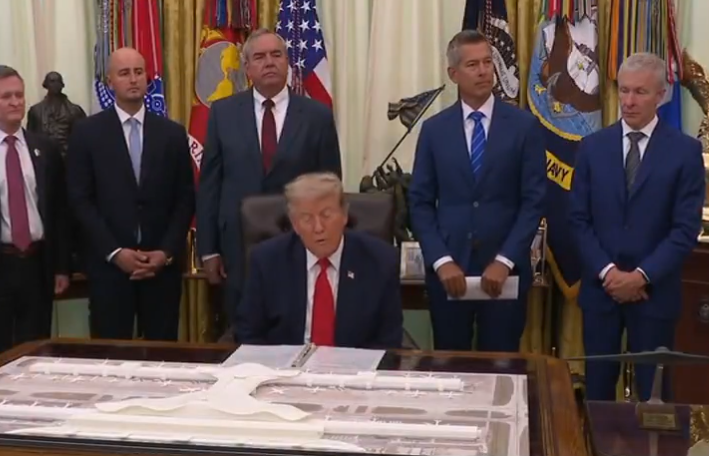
The measures came as President Donald Trump warned that Washington would respond forcefully after a missile attack on U.S. military bases in Jordan, raising fears of a renewed escalation in the Middle East following a brief lull in hostilities.
The U.S. Treasury Department said the targeted network enabled what it described as an extortion operation in which commercial ships were compelled to obtain mandatory maritime insurance before transiting the strategic waterway.
According to the Treasury, the arrangement relied on security threats allegedly created or supported by Iran, including the risk of vessel seizures, before charging shipping companies for protection against those same dangers.
The State Department said the practice allowed Tehran to generate revenue by exploiting risks associated with one of the world’s busiest energy shipping routes.
The latest sanctions designate the Persian Gulf Marine Insurance Company and the HormuzSafe Marine Services Authority, which Washington said maintain links to Iran’s Islamic Revolutionary Guard Corps.
In addition, the United States blacklisted eight shipping companies accused of transporting Iranian crude oil and petrochemical products to China and the United Arab Emirates in violation of existing US sanctions.
The State Department said the vessels formed part of Iran’s so-called “shadow fleet,” which it alleged Tehran uses to circumvent international restrictions on its energy exports.
Treasury Secretary Scott Bessent said the sanctions were intended to increase financial pressure on Tehran, arguing that Iran’s government was seeking new sources of revenue as it grappled with severe economic difficulties, including triple-digit inflation.
The latest measures add to Washington’s broader sanctions campaign aimed at restricting Iran’s oil exports and limiting the financial resources available to the country’s leadership.
Since fighting between Washington and Tehran resumed on July 7, Iran has again restricted access through the Strait of Hormuz, asserting its right to levy transit fees and directing ships to sail along routes close to its coastline.
Meanwhile, the United States has maintained a blockade on Iranian ports, further heightening tensions in the region.
Before the conflict, roughly one-fifth of global oil and liquefied natural gas supplies moved through the Strait of Hormuz, underscoring the strategic importance of the waterway to international energy markets.
Read more: Pakistan welcomes Kuwait’s ratification of Defence Cooperation Agreement