
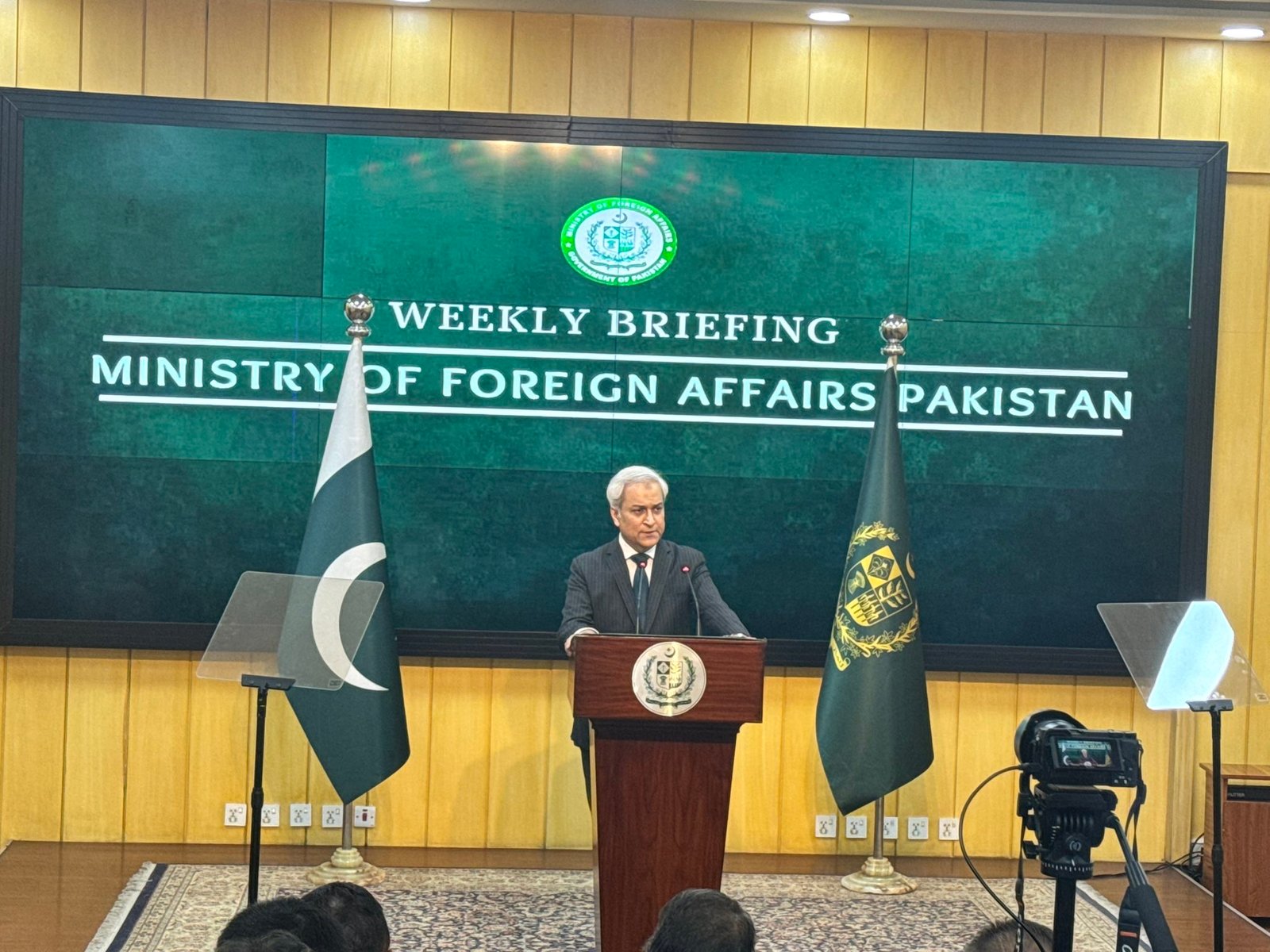
Web Desk: Pakistan called on the United States and Iran to halt escalating violence and return to technical-level negotiations, warning that a Pakistan-mediated interim peace framework between the two sides is facing difficulties.
Foreign Office spokesperson Tahir Andrabi said the implementation of the Islamabad Memorandum of Understanding (MoU), signed between Washington and Tehran last month, had encountered challenges but remained an important platform for diplomatic engagement.
Speaking at a weekly press briefing, Andrabi said Pakistan would continue encouraging all parties to end military actions and resume technical discussions in line with the MoU and a joint statement issued by Pakistan and Qatar after direct talks held in Switzerland on June 20.
“We hope all parties will remain committed to the path of dialogue and diplomacy,” Andrabi said, emphasizing that negotiations remained the only sustainable way to resolve disputes.
His comments came as the United States and Iran continued exchanging attacks, with Washington targeting Iranian coastal defence installations and missile facilities, while Tehran carried out strikes against American military positions in neighbouring Gulf countries.
Pakistan urged both sides to exercise maximum restraint and avoid steps that could further damage regional peace and stability.
Andrabi said Islamabad believes there is no substitute for continued communication, diplomacy and engagement to achieve lasting peace and security.
He added that conflicts and disputes are ultimately settled through negotiations and described the Islamabad MoU as a long-term framework aimed at encouraging mutual respect, stability and shared economic progress.
Meanwhile, Pakistan highlighted the importance of maintaining safety, security and freedom of navigation in the Strait of Hormuz, a key global shipping route.
Andrabi said many countries, particularly developing nations in the Global South, were being affected by instability in the waterway. He warned that disruptions could impact global energy supplies, trade flows and food security.
Pakistan expressed hope for an early return to normal conditions in the strategic passage, which previously carried a significant share of global oil and gas shipments.
The ongoing tensions have triggered concerns in international energy markets, with rising oil prices raising fears of increased inflation worldwide.
Pakistan recently increased petrol and high-speed diesel prices by more than Rs13 on July 10, while global oil prices reached a four-week peak earlier this week.
The conflict has also disrupted shipping activity in the Strait of Hormuz after Iran announced restrictions on the waterway, followed by renewed US naval measures targeting Iranian ports.
Andrabi said Pakistan remained engaged with key regional partners as part of efforts to reduce tensions and promote a peaceful resolution.
He also referred to Prime Minister Shehbaz Sharif’s telephone conversation with the Qatari emir on July 10, during which both leaders stressed the importance of continued diplomatic efforts and dialogue.
The latest escalation has created uncertainty over the future of the Islamabad MoU, which was signed on June 18 with the goal of reopening the Strait of Hormuz and providing a pathway toward ending the conflict through further negotiations.
The renewed fighting since July 8 has brought Gulf countries deeper into the crisis, with Iran targeting US military facilities in Bahrain, Jordan and Kuwait.
The conflict, which began after US and Israeli strikes on Iran on February 28, has increased instability across the region and intensified concerns over energy security and global economic pressures.
Read more: Trump-backed senators propose 100% tariff on India over Russian oil imports