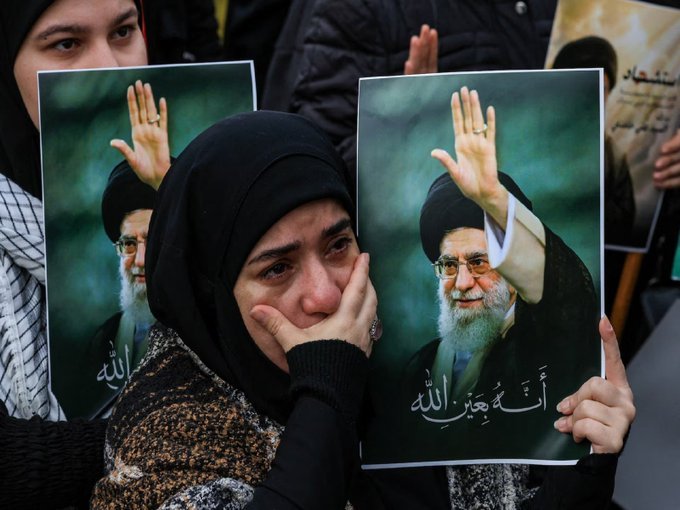
Web Desk: Iran is preparing what officials say could become the largest state funeral in the country’s history as ceremonies for the late Supreme Leader Ayatollah Ali Khamenei are set to begin this weekend, nearly four months after he was killed in US-Israeli air strikes.
Workers have draped giant portraits of Khamenei across Tehran’s Grand Mosalla, where his body will lie in state ahead of a public funeral on Saturday. The ceremony was postponed during the height of the regional conflict that erupted on Feb. 28, when Iranian authorities said Khamenei was killed at his compound in central Tehran on the opening day of the war.
The funeral comes as Iran and the United States observe a fragile ceasefire following a preliminary agreement aimed at halting hostilities.
Iranian officials estimate that between 15 million and 20 million people could attend the main procession in Tehran, potentially making it the largest public gathering and state funeral in the country’s history.
The procession will begin at Tehran’s Grand Mosalla before moving toward Azadi Square, a site closely associated with Iran’s 1979 Islamic Revolution.
Authorities also plan to display the bodies of Khamenei’s slain relatives during the ceremonies.
The funeral events will continue over six days, extending beyond Iran’s borders.
Following the Tehran procession, ceremonies are scheduled in the holy city of Qom before continuing to the Iraqi shrine cities of Najaf and Karbala. Khamenei is expected to be buried in the northeastern Iranian city of Mashhad on July 9.
The multi-city program reflects Khamenei’s religious significance among many Shiite Muslims as well as his decades-long role as Iran’s highest political and spiritual authority.
Meanwhile, attention has turned to Mojtaba Khamenei, the late leader’s son, who has assumed the position of supreme leader following his father’s death.
However, Mojtaba has not appeared publicly since his appointment. Iranian authorities have not explained his absence, while reports circulating on social media that he was seriously wounded in the strike that killed his father remain unverified.
Officials have not confirmed whether the new supreme leader will attend the funeral ceremonies.
The funeral marks a pivotal moment for Iran as it seeks to project stability following months of war, leadership transition and ongoing diplomatic efforts to preserve the ceasefire reached after the conflict.
Read more: PM Shehbaz Sharif to attend Ayatollah Khamenei’s funeral prayer in Iran