Web Desk: The United States has delayed military strikes against Iran after two days of intensive diplomacy that officials described as constructive and promising, signaling a possible de-escalation in tensions across the Middle East.
U.S. officials said recent discussions with Iranian counterparts focused on achieving a comprehensive settlement to ongoing regional hostilities. According to a statement, the talks were detailed and substantive, with both sides agreeing to continue negotiations in the coming days.
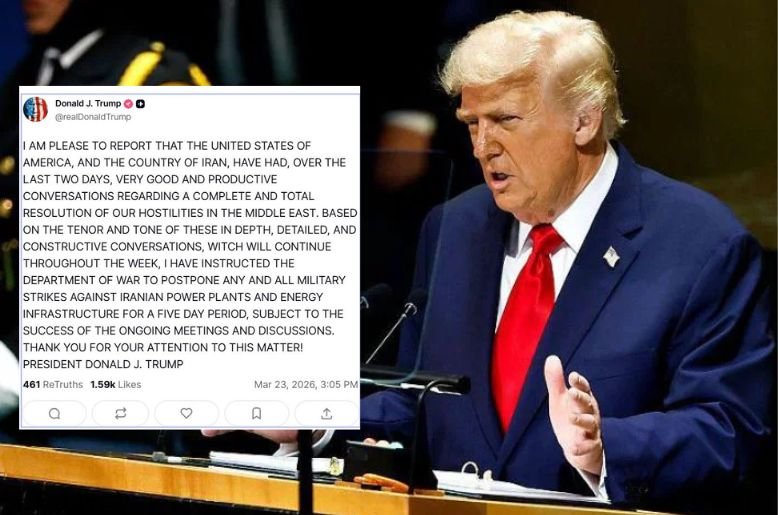
In a social media post, U.S. President Donald Trump said the engagements had been “very positive,” adding that they were aimed at reaching a lasting resolution to the crisis.
As a result, Trump said he had ordered a temporary halt to planned military action targeting Iran’s energy infrastructure. The pause will last five days and remains contingent on progress in the ongoing negotiations.
The decision marks a shift from Washington’s earlier stance. Trump had previously issued a 48-hour ultimatum demanding that Iran ensure the reopening of the Strait of Hormuz, a critical global oil transit route. That deadline expired Monday morning without immediate military action.
U.S. media reports said the announcement represents the first formal acknowledgment of talks intended to wind down what officials have referred to as Operation Epic Fury.
Trump emphasized that the delay in military planning depends on the outcome of continued engagement, noting that discussions with Iranian officials are expected to proceed throughout the week.
Iranian officials, meanwhile, warned against any escalation. The Islamic Revolutionary Guard Corps said it would retaliate if Iran’s power facilities were targeted, adding that infrastructure supplying electricity to U.S. bases and Israeli sites could also come under attack.
The force further cautioned that any strike on Iran’s coastal regions or islands could lead to disruptions in maritime routes in the Persian Gulf, including the possible mining of key waterways.
Separately, Iranian President Masoud Pezeshkian said Tehran would respond decisively to any aggression. He rejected threats against the country, saying such rhetoric reflects weakness and would only strengthen national resolve.
Pezeshkian also reiterated that the Strait of Hormuz remains open to international shipping, provided countries respect Iran’s sovereignty.
While the pause in military action suggests a potential diplomatic breakthrough, the situation remains fluid. Analysts say the coming days of negotiations will be critical in determining whether the current momentum can translate into a broader agreement or whether tensions could escalate once again.