In August 2025, a peculiar scene unfolded on the streets of Dhaka. Statues of Sheikh Mujibur Rahman, long hailed as the father of the nation in Bangladesh, were being torn down. The symbolism was striking an act that challenged decades of history and propaganda. For more than fifty years, the narrative surrounding the separation of East and West Pakistan and the subsequent creation of Bangladesh, had been shaped by distorted truths.
The Manipulation of Information
Looking back, it’s clear that the separation of East and West Pakistan was not just a political event; it was part of a grander design of misinformation. This “information warfare,” often referred to as Fifth-Generation Warfare today, began long before the term even existed. The Indian state, adept at leveraging media as a weapon, initiated a relentless campaign to foster division between East and West Pakistan.
From the moment of Pakistan’s independence, the Indian media, particularly the All India Radio, was used to further its narrative. Time and again, misinformation and fake news were presented as fact, shaping both domestic and international perception. The Indian government sought to deepen the divide between East and West Pakistan by portraying the creation of Bangladesh as a liberation struggle against the exploitation of the Bengali people. While the Mukti Bahini, a guerilla force, was portrayed as a local Bengali resistance movement, it was later revealed that it was heavily funded, trained and supported by India’s RAW (Research and Analysis Wing). This revelation has been confirmed by several Indian leaders and former intelligence operatives, including former Prime Ministers Indira Gandhi and current Prime Minister of India Narendra Modi.
The Truth Behind the “93,000 Prisoners” Myth
One of the most notable fabrications was the myth of 93,000 Pakistani soldiers being taken as prisoners during the 1971 war. For decades, this number was widely accepted without question, even though historical research has shown it was grossly exaggerated. The supposed capture of 93,000 soldiers is a key element of the narrative that has been passed down through generations. However, the truth is far different. The actual number of combatants captured was approximately 34,000, alongside around 11,000 police and militia forces. The remaining number was inflated by including civilians such as doctors, nurses and administrative personnel into the count of “prisoners.” This was a deliberate attempt to exaggerate the scale of the military defeat and to create a false sense of humiliation.
Erasure of Evidence
In 2010, The Times of India made a startling revelation: nearly all military records from the 1971 war had been deliberately destroyed. These records contained critical information about the creation, training and operations of the Mukti Bahini, as well as the locations of secret camps used for their training. This intentional destruction of evidence further highlights the lengths to which the Indian government went to bury the truth and control the narrative.
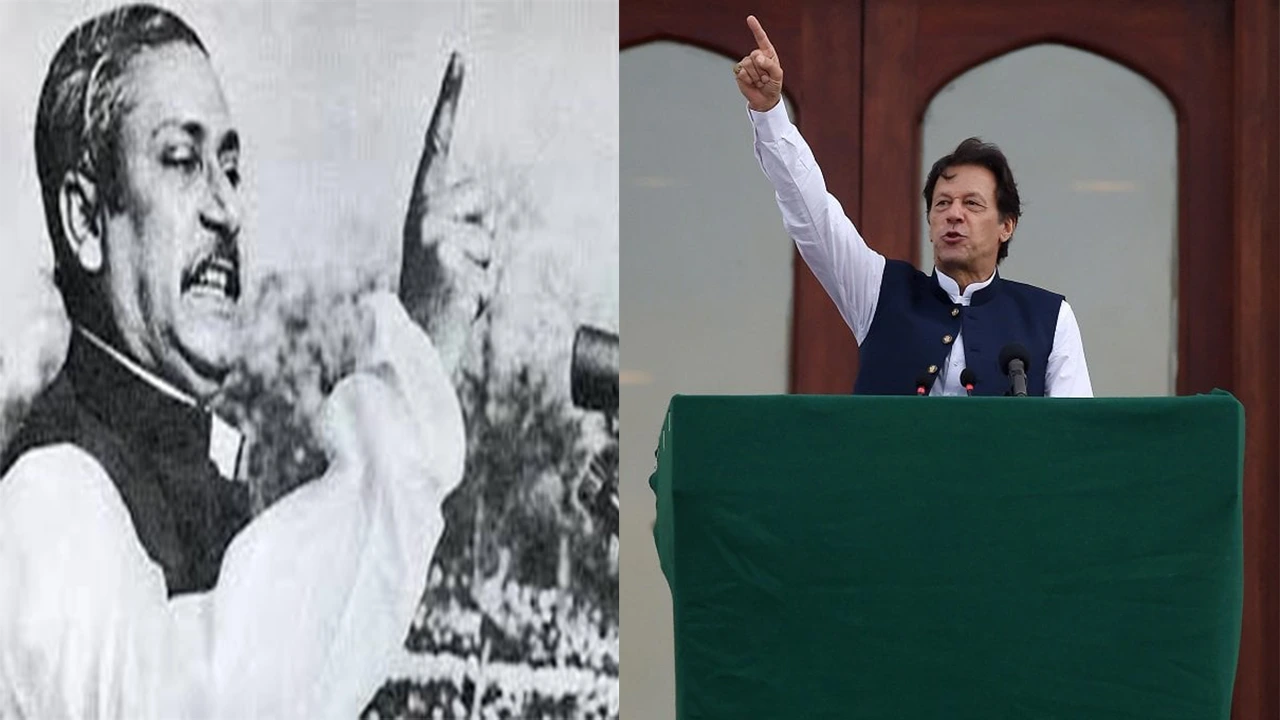
Stark similarities between Imran Khan and Sheikh Mujib
Interestingly, today’s political landscape in Pakistan seems to be following a similar path, with Imran Khan at the helm of this tumultuous journey. His approach marked by relentless criticism of state institutions and advocating for street politics appears to fuel societal divisions and erode trust in state institutions, much like Mujib’s actions did decades ago.
By dragging state institutions into political disputes, encouraging clashes on the streets and escalating political differences to institutional confrontations, Khan’s path closely mirrors that of Mujib in the 1970s. Both have sought to reshape Pakistan’s political landscape through a strategy of division and destabilization.
Ultimately, the question of whether Pakistan is willing to repeat the same historical mistakes has never been more urgent. The country stands at a crossroads and the choices made today will shape its political future for generations to come.
The Reshaping of Bangladesh’s National Identity
For over fifty years, Bangladesh’s political and cultural identity was rooted in the narrative created by India. Bangladeshi leaders, particularly Sheikh Mujibur Rahman and his daughter, Sheikh Hasina, cultivated an image of hostility toward Pakistan, positioning the country as an eternal enemy. This narrative kept the population firmly within the grip of the Indian story.
However, recent events have shown a shift. Bangladeshis, having lived under this imposed narrative for decades, have begun to recognize the reality of the situation. With the destruction of the statues and the growing rapprochement between Pakistan and Bangladesh, it is clear that a long-standing deception is unraveling. The people of Bangladesh are increasingly aware that the narrative they were fed was not only false but was part of a broader geopolitical strategy by India to maintain division in the region.
The Road to Reconciliation: A Future of Unity
As the decades of separation fade, a new chapter is being written in the relationship between Pakistan and Bangladesh. The walls of hostility, which were once carefully constructed by external forces, are beginning to crumble. The bond between the two nations, which had been strained for over fifty years, is starting to heal. Both sides are acknowledging the role of foreign influence in keeping them apart, and today, there is hope for a future of cooperation and mutual respect.
The unraveling of decades of misinformation also serves as a reminder: while lies may travel fast, they cannot withstand the test of time. The truth, no matter how long buried, always finds a way to resurface.
Lessons from History
The painful legacy of the 1971 war and the years of division between East and West Pakistan serves as a stark reminder of the power of information manipulation. As both Pakistan and Bangladesh look forward to a more cooperative future, the lessons of the past remain crucial. The story of how history was distorted and how the truth is now emerging is not just a lesson for the subcontinent, but for the world at large. In the age of information warfare, the fight for the truth is more important than ever.