
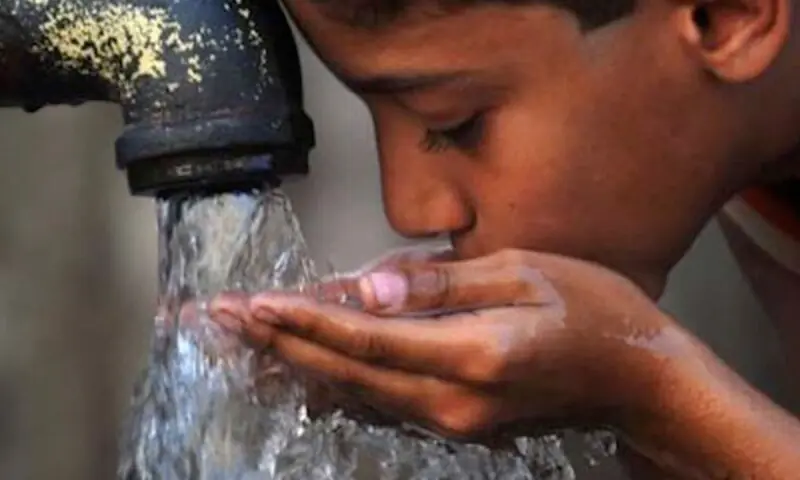
Web Desk: With 80 percent of Pakistan’s population lacking access to clean drinking water, Pakistan continue to grapple with severe water insecurity. This was revealed by Asian Development Bank’s latest Asian Water Development Outlook (AWDO).
The report highlights that despite minor improvements over the past 12 years both the quantity and quality of water remain critical issues. This report is the region’s most comprehensive assessment of water security.
The pressure of Pakistan’s water resources keeps on growing due to climate change, population growth and poor water management according to the ADB. It is noted by the report that “More than 80 percent of the population lacks access to safe drinking water, contributing to widespread waterborne diseases. Groundwater overuse in agriculture has led to depletion and arsenic contamination,”.
The water systems of Pakistan are further strained by floods, erratic monsoons, glacial melts and climate-related hazards. For example, millions were displaced by the 2022 floods.
Pakistan’s main water source, the Indus River System is continuously threatened by infrastructure challenges and upstream water control. From 3500 cubic metres in 1972 to just 1100 cubic metres in 2020 per capita water availability has reduced dramatically.
Rural household water security remains under pressure due to limited surveillance, ineffective service models and persistent contamination. The ADB said “Economic water security is constrained by falling per capita water availability, insufficient storage, and heavy reliance on poorly monitored groundwater resources for industrial activity”.
Also read: Water Terrorism: India releases water in river Chenab